
Lieferung heute & morgen

Qualitätsgarantie

Willkommens-Angebote freischalten: KOSTENLOSE Lieferung | Bis zu 80 % RABATT | Kostenlose 30-Tage-JoyPlus-Testphase
App herunterladen
A USB-C car charger might look like a simple accessory at first glance. In practice, however, car chargers differ significantly in charging speed, port configuration and compatibility. A high wattage figure alone doesn't automatically mean your smartphone, tablet or laptop will charge faster.
Typical buying pitfalls come down to three key points:
For a single smartphone, 20 to 30 W is often sufficient. If you also want to charge a tablet or a USB-C-compatible laptop, check the specifications for the individual USB-C port. A PD car charger with Power Delivery can support different profiles such as 5 V, 9 V, 12 V or higher voltage levels, depending on the model.
It's also important to consider how power is distributed when using multiple ports. With a multi-port USB car charger, the stated total power is shared across the active ports. This can reduce the charging speed for each connected device.
USB-C is the current standard for many smartphones, tablets and compact laptops. However, a USB-A car charger remains practical if you already have older cables, sat-nav devices or headphones with a USB-A connector.
For families and travellers, a car charger with multiple ports can be a smart choice. Check the following:
A USB-C port alone doesn't guarantee a specific fast-charging function. What really matters are the technical specifications of the charger, the cable and your device.
Look for protection against overcurrent, overvoltage, overheating and short circuits. According to the product descriptions, these features are included in the models below; they do not replace proper usage.
The charger should fit securely in the 12- or 24-volt socket and have adequate ventilation. Do not use damaged cables, and disconnect the charger if you notice unusual heat, smoke or visible damage. A display can show the on-board voltage as an extra feature, but it is not a substitute for a professional vehicle diagnosis.
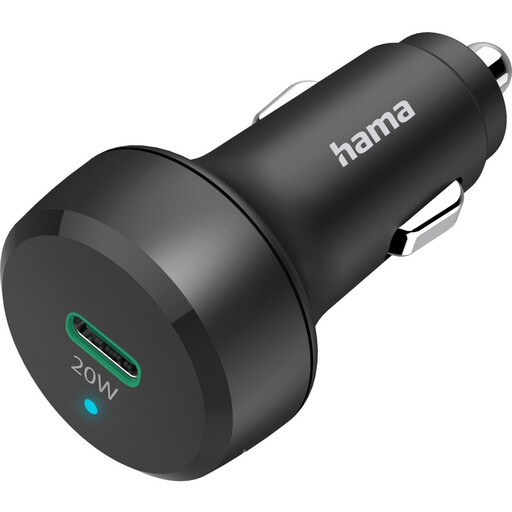
Why this product fits the profile: This compact car charger focuses on a single USB-C port with 20 W and is ideal for users who mainly need to charge a smartphone.
The stated 20 W refers to the single USB-C port. The product description also mentions PD, QC 2.0/3.0 and protection features against overcurrent and overheating.
USB-C with up to 20 W, LED indicator and compatibility with 12–24 V sockets.
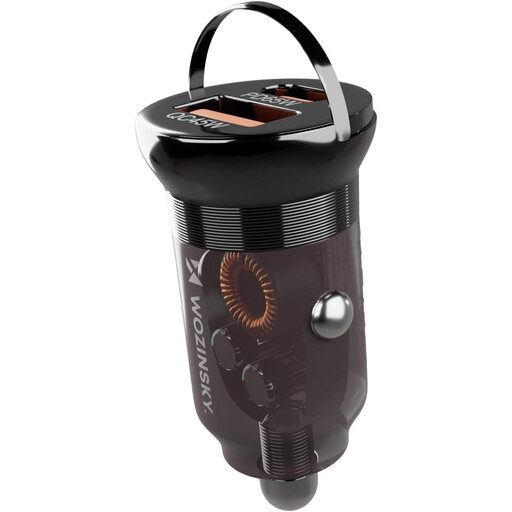
Why this product fits the profile: Commuters and frequent drivers get two different ports for modern USB-C devices and older USB-A cables.
The product data lists the power output separately: USB-C PD up to 65 W and USB-A QC 3.0 up to 45 W. This makes the port distribution clearer than a single total power figure.
Aluminium-ABS housing, two ports, 12–24 V compatibility and simultaneous charging according to the product description.
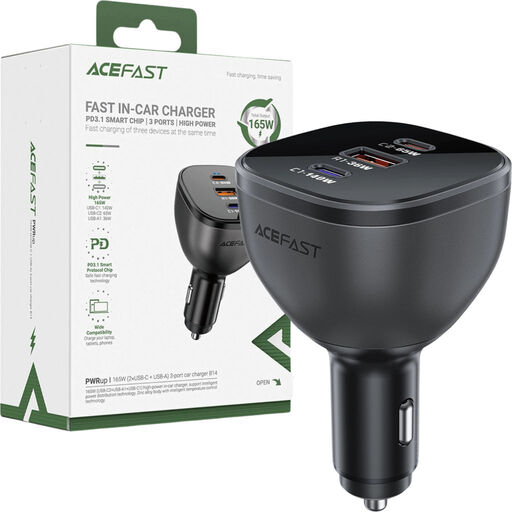
Why this product fits the profile: This model is designed for families, travellers and users who need to power multiple devices, including high-performance USB-C laptops, while on the road.
The product description specifies two USB-C ports and one USB-A port, with a total power output of 165 W. However, you should still check how the power is distributed when three devices are connected.
Three ports, 165 W total power and compatibility with 12- or 24 V vehicles according to the manufacturer.
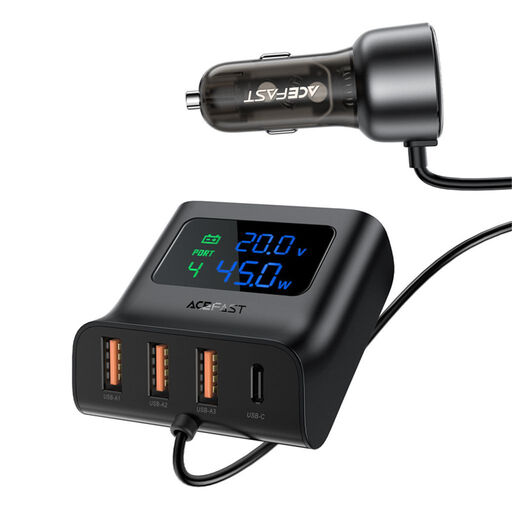
Why this product fits the profile: Six ports make it ideal for vehicles where multiple smartphones, tablets or other USB devices need to be charged at the same time.
Four USB-A and two USB-C ports make the port selection clear. Power is distributed automatically, so you should consider the actual port allocation when all ports are in use.
138 W total power, six ports, display for voltage and power, and 12–24 V input according to the product data.
We've put together a complete, regularly updated list of products that fully meet these strict selection criteria and the safety regulations in force in the EU.
For a single smartphone, 20 to 30 W is often sufficient, depending on the device. For a car charger for smartphone and laptop, you should check the maximum USB-C power output and the required PD profiles. A higher rated power doesn't automatically mean faster charging if your device or cable doesn't support it.
Many models are designed for 12 to 24 V and are therefore suitable for a wide range of cars, SUVs, vans and lorries, according to product specifications. What matters is your vehicle's actual on-board voltage and the correct socket type. For specialist vehicles or unusual electrical systems, check compatibility against your vehicle documents before buying.
This depends on the vehicle socket and the charger itself. Some sockets remain active even when the ignition is switched off. To avoid any potential drain on your vehicle battery, it's a good idea to remove the car charger from the socket during longer periods of non-use.