
Lieferung heute & morgen

Qualitätsgarantie

Willkommens-Angebote freischalten: KOSTENLOSE Lieferung | Bis zu 80 % RABATT | Kostenlose 30-Tage-JoyPlus-Testphase
App herunterladen
The search for a new USB-C charger can quickly become overwhelming. Manufacturers advertise with terms like Power Delivery, GaN technology, and high wattages. But not every charger that makes big promises is the right choice for your devices. Making the wrong decision not only leads to slow charging times but, in the worst-case scenario, can damage the batteries of your valuable tech.
As your Joybuy Product Recommendation Officer, I'm here to help you identify the common pitfalls and make an informed decision. We'll focus on the facts that truly matter.
Before we dive into the technical details, let's highlight the three most common mistakes that lead to a bad purchase:
To avoid these traps, you should check three core parameters. These determine whether a charger is suitable, efficient, and safe for your needs.
Power, measured in watts (W), is the most important factor. It determines how fast your device will charge. Modern USB-C devices use a charging standard called Power Delivery (PD). This allows the charger and the device to negotiate the optimal charging power.
A Power Delivery power adapter is therefore the foundation for universal and fast charging.
GaN stands for Gallium Nitride, a semiconductor material that is increasingly replacing traditional silicon in modern chargers. A GaN charger offers key advantages:
For users looking for a powerful yet portable charger, GaN technology is a clear selection criterion.
Consider exactly which devices you want to charge simultaneously. A charger with a mix of USB-C and USB-A ports offers flexibility for older and newer devices. However, pay close attention to the power distribution: a good multi-port charger will prioritise one port (often the first USB-C port) to ensure high power for a primary device like a laptop, even when multiple ports are in use. The product description should specify how the wattage is split when several ports are used at the same time.
Here are some recommendations tailored to specific use cases that meet the criteria mentioned above.
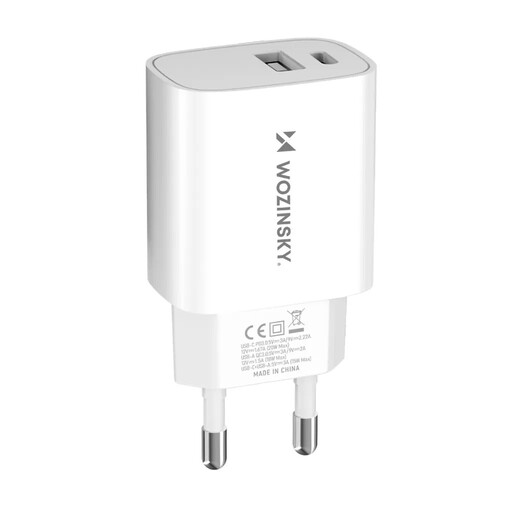
Why This Fits Their Persona: Ideal for users who primarily want to fast-charge their smartphone but appreciate the flexibility of an additional USB-A port for headphones or a smartwatch. Its compact design makes it a hassle-free companion for everyday life.
It avoids the power trap by delivering exactly the right amount of power with 20W for modern smartphone fast charging via Power Delivery, without the unnecessary cost of higher wattages.
Supports multiple fast-charging protocols (PD, QC 3.0) and offers high compatibility with both USB-C and USB-A in a very compact package.
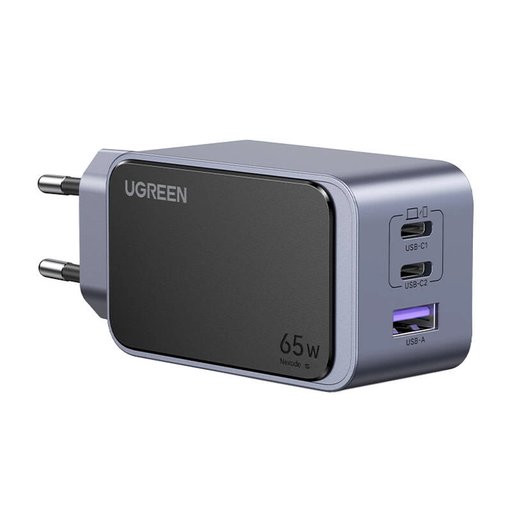
Why This Fits Their Persona: Perfect for power users who want to power their laptop, smartphone, and tablet with just one adapter. GaN technology ensures this powerful charger remains compact enough for a laptop bag, replacing the bulky original MacBook charger.
It solves the port illusion problem with smart power distribution. According to the manufacturer, even with three devices connected, it can still provide enough power to fast-charge a MacBook Air.
High power output of 65W in a compact GaN body. Three ports (2x USB-C, 1x USB-A) for maximum flexibility and broad protocol support (PD 3.0, PPS, QC 4+).
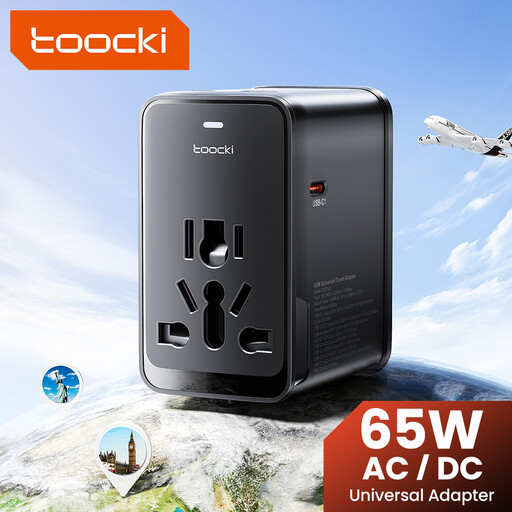
Why This Fits Their Persona: The all-in-one solution for frequent flyers. This device combines a universal travel adapter for EU, UK, US, and AUS outlets with a powerful 65W GaN charger. It eliminates the need for separate adapters and chargers.
It solves the compatibility problem when travelling and combines it with a powerful fast charger. Instead of carrying multiple parts that can get lost, it offers an integrated and secure solution.
Global plug compatibility, 65W PD fast-charging capability, and four ports (3x USB-C, 1x USB-A) in a single, compact device.
We have compiled a complete, up-to-date list of products that fully meet these strict selection criteria and rigorous safety standards.
Yes, this is generally safe. Thanks to protocols like Power Delivery (PD), your smartphone communicates with the charger and only requests as much power as it can safely handle. A 65W charger won't "overcharge" an iPhone; it will simply charge it at its maximum designed speed (approx. 20W).
The main difference lies in the material used. GaN chargers use Gallium Nitride instead of silicon. This allows for higher efficiency, resulting in smaller, lighter, and cooler chargers with the same or higher power output. They are especially beneficial for high-power, multi-port chargers.
Yes, the cable is an often-overlooked but crucial part of the charging system. To take full advantage of a fast charger's power, you need a cable rated for that output. For example, with a 65W charger, you should use a USB-C to USB-C cable that is explicitly certified for 65W or 100W. A low-quality cable can throttle charging speed or pose a safety risk.