
Lieferung heute & morgen

Qualitätsgarantie

Willkommens-Angebote freischalten: KOSTENLOSE Lieferung | Bis zu 80 % RABATT | Kostenlose 30-Tage-JoyPlus-Testphase
App herunterladen
A USB charger should reliably power your smartphone, tablet or laptop. In practice, unclear power ratings, missing cables and incompatible fast-charging protocols can easily lead to the wrong purchase. With compact chargers in particular, wattage isn’t the only thing that matters. You should also consider the number and type of ports, the standards supported and whether the charger is suitable for how you plan to use it.
A 65 W charger often delivers that much power through just one USB-C port. When you connect several devices at once, the power is shared between them. For example, the Wozinsky CGWCW 65W USB-A / 2 x USB-C GaN Wall Charger is rated for up to 65 W total output. Its USB-C ports support different power levels, while the USB-A port provides a maximum of 30 W.
If you’re charging a laptop, it’s important to check which port delivers the power it needs. A 65W charger won’t necessarily work as a full-power laptop adapter from every port.
A fast charger needs to be compatible with both your device and your cable. USB Power Delivery, PPS, Quick Charge and manufacturer-specific standards determine how voltage and current are negotiated. If either the charger or the device doesn’t support the relevant standard, your device will usually charge at a lower power level.
Depending on the model, an iPhone charger may require a suitable USB-C cable. PPS can be important for many Samsung devices. For tablets and laptops, USB-C Power Delivery and sufficient wattage are key requirements.
Not every USB-C power adapter comes with a cable. The Apple USB-C Power Adapter 20W and Samsung EP-T1510NWEGEU are both described as chargers supplied without a cable. Before buying, check:
Small accessories such as Bluetooth headphones or smartwatches often need just 5 to 10 W. A 20W charger is suitable for many smartphones and smaller tablets. A 45W charger offers extra capacity for powerful smartphones, tablets and some compact computers. For a charger for a tablet and laptop, 65 W or more is often suitable.
Actual charging speed depends on the device, battery level, cable and charging protocol. A higher-rated charger won’t automatically make a compatible device draw power at its maximum rate.
A USB-A charger is suitable for older cables and accessories. USB-C is generally more versatile for current smartphones, tablets and laptops, particularly when used with Power Delivery. A multi-port charger with two USB-C ports and one USB-A port can power several devices, but should clearly state how the power is shared between them.
If you regularly charge your smartphone, headphones and tablet at the same time, check not only the number of ports but also the combined output.
A GaN charger uses gallium nitride instead of traditional semiconductor materials. This allows for compact designs and efficient circuitry. However, GaN alone doesn’t guarantee a particular charging speed or operating temperature.
Look for documented safety features such as overcurrent, overvoltage, short-circuit and overheat protection. An input voltage of 100–240 V is useful when travelling. The charger should also be kept uncovered and never used under clothing or paper.
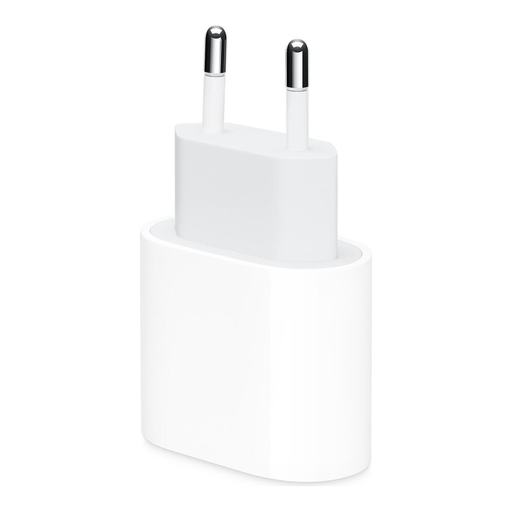
Why this product suits this profile: This compact, single-port adapter is a good choice if you’re looking for a straightforward USB-C charger for your smartphone or tablet.
Its 20 W rating and single USB-C port are clearly specified. There’s no ambiguity about power being split between multiple outputs.
USB-C output, up to 20 W of power and compatibility information for various iPhone and iPad models.
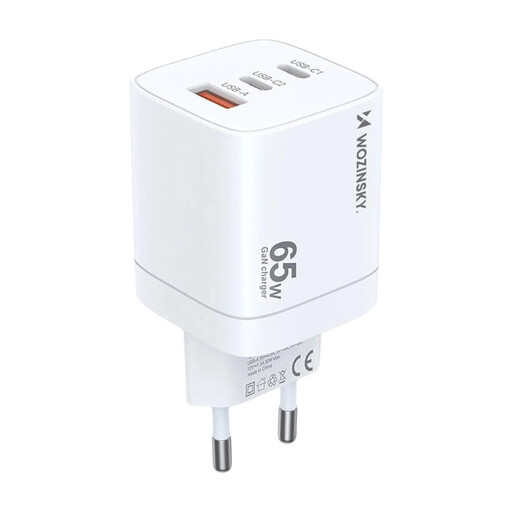
Why this product suits this profile: Two USB-C ports and one USB-A port support different cable types around the home, in the office or when you’re travelling.
The product details specify the total output, port types and power distribution. This makes it easier to plan how you’ll charge several devices at once.
GaN technology, up to 65 W total output and stated protection against overcurrent, overvoltage and overheating.
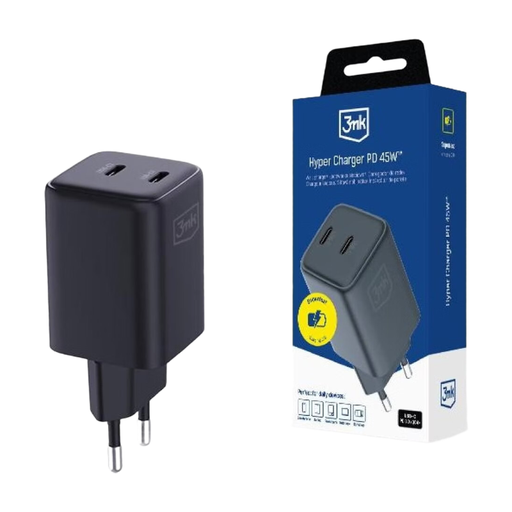
Why this product suits this profile: Two USB-C ports are useful if you want to charge your smartphone and tablet, or another accessory, at the same time.
PD, QC4+ and PPS are all listed. To benefit from the stated fast-charging performance, your device and cable must also support these standards.
45 W output, two USB-C ports and PPS support for compatible devices.
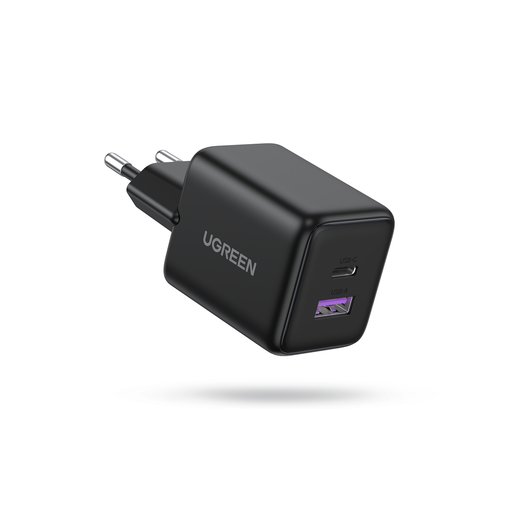
Why this product suits this profile: The combination of USB-C and USB-A is handy when you need to use newer and older cables on the go.
The 30 W output and protection against overvoltage, short circuits and overcurrent are specified.
GaN design, 1 USB-C and 1 USB-A port, and compact dimensions of approximately 44 × 38 × 33 mm.
We’ve put together a complete, regularly updated list of products that meet these strict selection criteria and fully comply with the safety regulations in force in the EU.
Basic accessories often need just 5 to 10 W. Depending on the model, smartphones can benefit from 20 to 30 W. Tablets and compatible laptops commonly use 45 to 65 W or more. Check the device manufacturer’s recommendations and the charging protocol it supports.
A USB-C plug only describes the shape of the connector. Power, voltage and protocols can vary. You’ll need a suitable cable and a compatible charger. For laptops, also check whether the device supports charging via USB-C Power Delivery.
Its lifespan depends on how it’s used, heat, physical wear and how it’s stored. Keep your charger dry and well ventilated, and don’t use it if it has any visible damage. Stop using it if you notice cracks, unusual heat, an odour or a loose plug.