
Lieferung heute & morgen

Qualitätsgarantie

Willkommens-Angebote freischalten: KOSTENLOSE Lieferung | Bis zu 80 % RABATT | Kostenlose 30-Tage-JoyPlus-Testphase
App herunterladen
Wall lights often serve two purposes in the home: they provide extra light and help shape the feel of a room. However, poor purchases are often down to overlooked technical details rather than the design. A striking shade, for example, may be too large for a hallway, a built-in LED may not be replaceable, and a stylish E27 wall light may need a suitable bulb bought separately.
Check these three potential pitfalls before you buy:
For living rooms, bedrooms and decorative wall lighting, warm white light between around 2,700 and 3,000 Kelvin is a popular choice. It can work well for soft ambient lighting. A more neutral colour temperature may be more practical in a study, kitchen or beside a mirror.
For lights with built-in LEDs, look out for the following details:
For example, the Pheashine LED Indoor Wall Light is listed as 12 W and 3,000 K warm white. This round aluminium light has a diameter of 20 cm, making it a compact option for a living room, bedroom, hallway or stairwell. Check the product page directly for details of its light output before you buy.
E27 wall lights use a common bulb fitting with a larger screw base. E14 fittings are more compact and are often used in smaller wall lights. Neither type of light is automatically dimmable.
So, check the following:
The black Atmosphera Keli wall light has an E27 fitting, a 180 cm cable and, according to the product details, is not dimmable. The bulb is not included, and the maximum wattage is 40 W. These details are worth considering for bedroom wall lights, reading lights or extra lighting in the living room.
Many wall lights for indoor use are listed as IP20. This rating is intended for dry indoor areas. Bathrooms and sheltered outdoor areas have different requirements. Don’t assume that a light without an IP rating is suitable for a bathroom, balcony or outdoor use.
Before you buy, measure:
The visible CE mark indicates that the manufacturer has issued a declaration of conformity, but it is not an independent quality mark. If you’re connecting the light to your home’s electrical wiring, it must be installed in line with the applicable safety requirements. If you’re unsure, contact a qualified electrician.
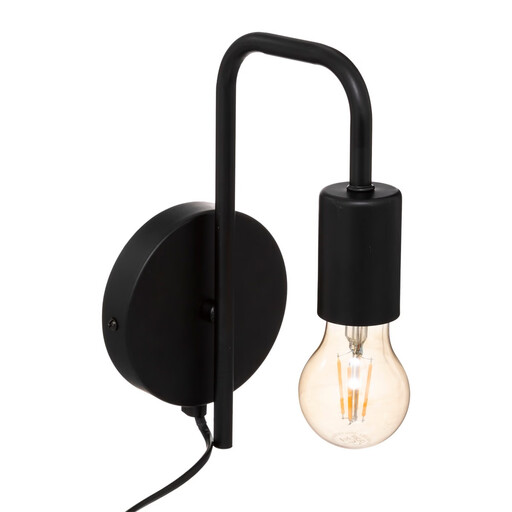
Why this product suits you: This compact metal light has an E27 fitting, making it a good choice if you’d like to choose your own bulb.
The product details clearly list the fitting, cable length, maximum wattage and lack of dimmability. Remember to buy a bulb separately.
Black metal, E27 fitting, 180 cm cable and dimensions of 12 × 12 × 25 cm.
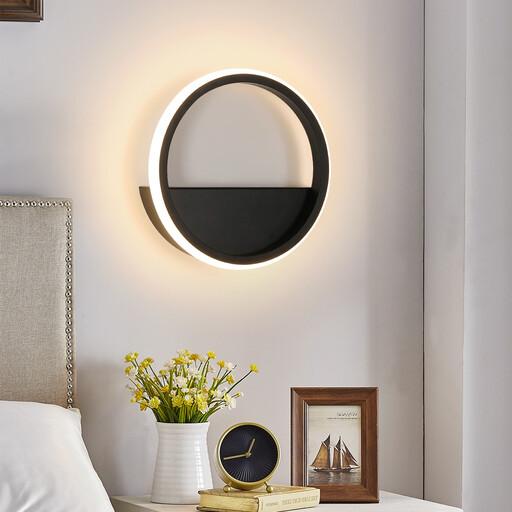
Why this product suits you: The built-in 3,000 K LED and round aluminium design are a good fit for carefully planned warm white ambient or accent lighting.
The power consumption, colour temperature, material and diameter are all clearly listed. This makes it easier to check that the light will suit your wall space and lighting plan.
12 W, 3,000 K warm white light, aluminium and a compact 20 cm diameter.
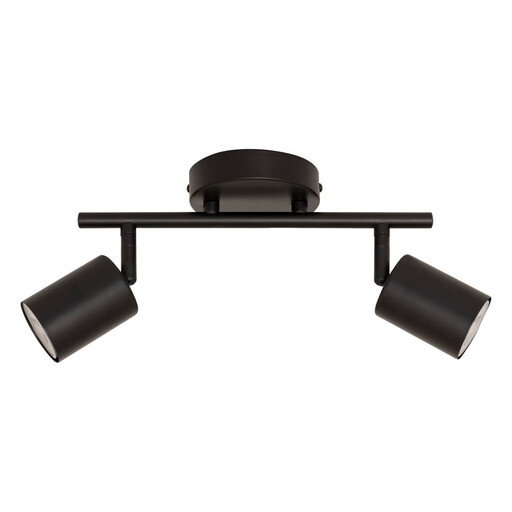
Why this product suits you: The two adjustable spotlights are suited to hallways, kitchens, studies or anywhere you want to direct the light precisely.
The adjustable heads help you avoid being stuck with a fixed light direction that doesn’t suit your needs. The product details also specify indoor use and note that there is no IP rating.
Black metal, adjustable spotlights and a length of 28 cm with a width of 10 cm.
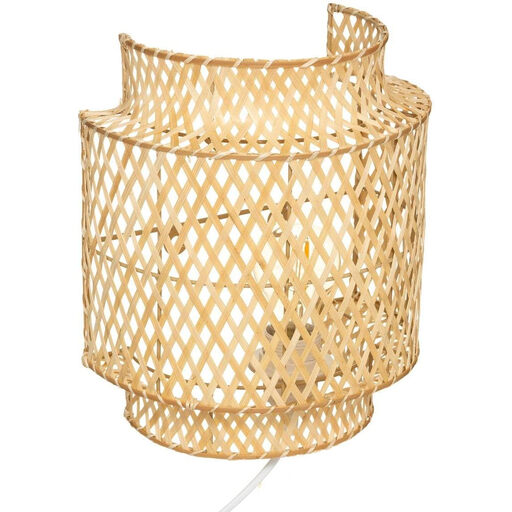
Why this product suits you: The bamboo shade is ideal if you’d like to pair decorative wall lighting with natural materials and an E27 fitting.
The product details list the material, indoor use, E27 fitting, maximum wattage of 40 W and the fact that no bulb is included.
Bamboo shade, E27 base, dimensions of 23 × 15 × 28 cm and an FSC mention in the product information.
We’ve put together a complete, regularly updated list of products that meet these strict selection criteria and fully comply with the safety regulations in force in the EU.
Warm white bedroom wall lights with a colour temperature of around 2,700 to 3,000 Kelvin are a good option. As well as the colour temperature, consider glare, the position of the switch and how far the light projects from the wall. An adjustable wall light can work well as a reading light, as long as you can direct it towards your reading position.
There’s no fixed height. For general room lighting, the light shouldn’t cause glare at eye level or be blocked by furniture. Beside a bed, sofa or mirror, the best position depends on the height of the furniture, the shade and the direction of the light. Before drilling, mark the position with masking tape and check that doors can open fully and walkways are clear.
Energy use depends on the power consumption and how long the light is on each day. For the same amount of time in use, a 12 W LED wall light uses less electrical power than a 40 W light. However, a true comparison also depends on the light output in lumens and the brightness you need. So don’t choose on wattage alone; consider watts, lumens and how long you’ll use the light together.