
Lieferung heute & morgen

Qualitätsgarantie

Willkommens-Angebote freischalten: KOSTENLOSE Lieferung | Bis zu 80 % RABATT | Kostenlose 30-Tage-JoyPlus-Testphase
App herunterladen
A wall shelf is more than just a storage surface. It's a design element that lends character to empty walls and creates valuable storage without taking up any floor space. However, the sheer number of options can quickly become overwhelming. Many products look great at first glance but soon prove to be a poor investment. Before you make a decision, you should be aware of the typical weaknesses often hidden behind an attractive exterior.
As your Joybuy Product Recommendation Officer, I'm here to help you separate marketing promises from hard facts. In this guide, we'll focus on the crucial criteria to help you find a durable and functional wall shelf that perfectly matches your needs.
Disappointment often sets in only after installation. A wobbly shelf, a swollen surface, or a bracket that can't handle the load—these problems can be avoided if you know what to look for.
To avoid these pitfalls, you should focus on three objective characteristics. These form the basis for a sound purchasing decision.
The core material determines stability and longevity.
The type of installation affects both the look and the stability.
Always check if the mounting hardware is suitable for your wall type. For drywall, special hollow-wall anchors are required.
Measure the available space accurately and consider what will be placed on the shelf. A deep living room wall shelf is well-suited for books and larger decorative items, while a narrow wall board in the hallway won't get in the way. Colours like a white wall shelf or black wall shelf are versatile and complement many interior styles. For specific needs, such as in a child's room, models with rounded corners and additional features like hooks are a thoughtful choice.
Here are some recommendations tailored to different needs and living situations.
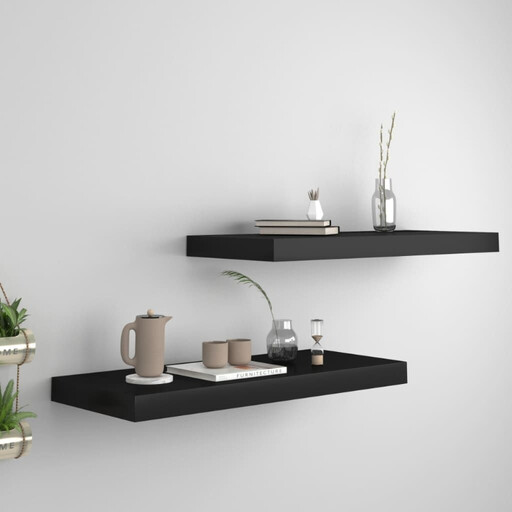
Why This Fits Their Persona: Ideal for anyone looking for a functional and stylish solution without breaking the bank. The set of 2 offers excellent value for money, perfect for a first apartment or for decorating multiple walls.
The honeycomb MDF construction with an internal metal frame provides a more stable structure than simple hollow-core shelves and prevents sagging when loaded correctly.
Invisible mounting system for a clean, floating look. Delivered as a practical set of 2.
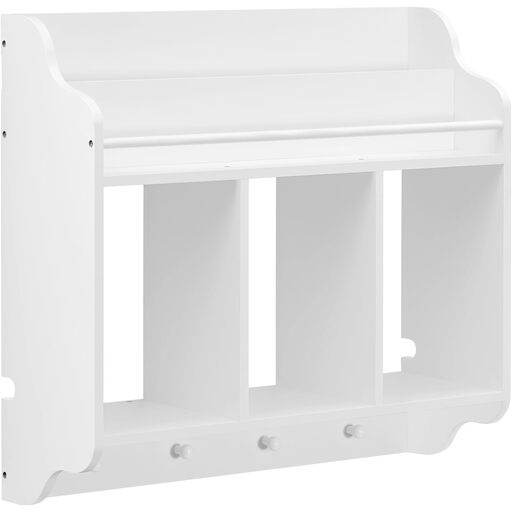
Why This Fits Their Persona: This shelf was designed specifically for the needs of a child's room. It combines storage for books and toys with practical hooks for bags or clothes, all while prioritizing safety.
Safety features are front and center: all corners are rounded to prevent injuries. An additional rail on the top shelf stops items from falling off—a detail often missing from standard shelves.
Multifunctional design with compartments and hooks. Made from E1-Class MDF and solid wood with a water-resistant lacquer finish.
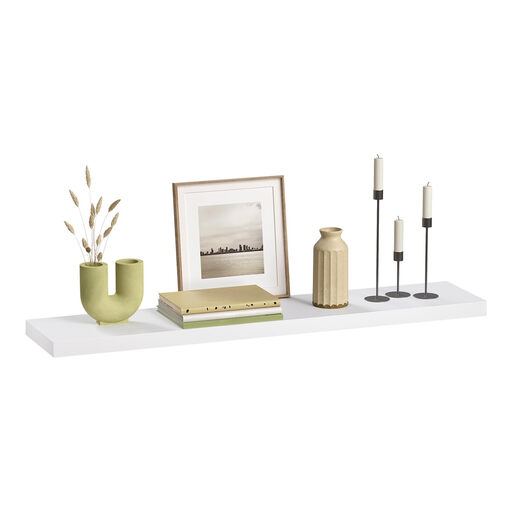
Why This Fits Their Persona: For lovers of a clean, modern aesthetic. The long, slim profile and invisible bracket create a seamless, floating look that integrates perfectly into minimalist living concepts.
The sturdy metal bracket and the clear specification of a 13 kg maximum load capacity (with correct installation on a solid wall) provide transparency where other manufacturers remain vague.
Generous 110 cm length for a continuous display surface. The moisture-resistant finish is easy to clean.
We have compiled a complete, up-to-date list of products that fully meet these strict selection criteria and safety regulations.
1. Can I mount a wall shelf on drywall (plasterboard)? Yes, it's possible, but it requires special care. Never use the standard plugs designed for concrete walls. You need special hollow-wall anchors (e.g., toggle bolts or metal expansion anchors) that anchor themselves behind the plasterboard. Note that the maximum load capacity on drywall is significantly lower than on a solid wall. Only load the shelf with lightweight items.
2. What is the real maximum load capacity of a floating shelf? The stated load capacity is a maximum value under ideal conditions: installation on a solid wall (e.g., concrete) with the correct, often not included, mounting hardware. As a rule of thumb, you should treat this value with caution and allow for a safety margin for everyday use. Stability also depends on the leverage effect—the deeper the shelf, the greater the force exerted on the bracket.
3. What material is suitable for a wall shelf in a bathroom or kitchen? In rooms with higher humidity, the surface seal is crucial. Shelves made of MDF with a water-repellent melamine or lacquer coating are recommended. Solid wood that has been appropriately treated (e.g., lacquered or oiled) can also be suitable. Avoid uncoated particle board, as it will quickly swell upon contact with moisture.