
Lieferung heute & morgen

Qualitätsgarantie

Willkommens-Angebote freischalten: KOSTENLOSE Lieferung | Bis zu 80 % RABATT | Kostenlose 30-Tage-JoyPlus-Testphase
App herunterladen
Condensation on the windows, musty air or washing that takes ages to dry indoors: a 10L dehumidifier can be a good solution for smaller rooms. However, the figure on the box isn’t the only thing that matters. Claims such as ‘10 litres per day’ usually refer to specific temperature and humidity conditions, so they may not reflect performance in every British home.
That’s why the Joybuy Product Recommendation Officer’s selection focuses on clear, useful details such as room size, noise level, water tank, power consumption, drainage and safety features.
A dehumidifier rated at 10 litres per 24 hours will usually remove that amount only under specified test conditions. In a cool basement or a moderately damp bedroom, it may collect less water. So, for a room of around 16 m², don’t focus on the stated capacity alone. Check the recommended room size and operating temperature range too.
Noise levels should be considered in dB(A) and, where possible, alongside the operating mode. A quiet dehumidifier may run at a lower volume in sleep mode, while its highest fan setting may be much more noticeable. Figures such as 36 dB(A) or 40 dB(A) are only useful for comparison if you know which setting they apply to.
A compact dehumidifier with a 2.5-litre water tank will often fit into a smaller room, but it needs emptying regularly. In a basement or utility room, a continuous drainage connection is more convenient. Make sure the drain hose is positioned with enough of a downward slope. A larger tank on its own is no substitute for a safe drainage set-up.
For a dehumidifier for 16 m², or around 40 m³, a stated capacity of 10 litres per day is often suitable if the room isn’t unusually damp. For larger basements, multiple rooms or very high humidity, 12, 16 or 20 litres per day may be a better choice. Always check the conditions used by the manufacturer for its capacity claims.
For bedrooms and children’s rooms, look for a night or sleep mode, a low dB(A) rating and an auto shut-off or timer function. A dehumidifier with a timer can be set to run only at certain times, for example. A dehumidifier for drying clothes should also have a dedicated laundry mode that adjusts the airflow or dehumidifying function for this use.
A dehumidifier with a 2.5-litre water tank offers a practical balance between compact size and capacity. Look for a visible water-level indicator, a full-tank alert and automatic shut-off. In a basement, a drain hose supplied with the dehumidifier can make it easier to use.
Ice can form on the internal cooling surface in cooler rooms. Automatic defrosting interrupts this process and helps the dehumidifier continue running. Dehumidifiers that use R290 contain a natural refrigerant. R290 is flammable, so take care not to damage the cooling circuit or casing. Place the dehumidifier on a level surface with enough space around it, and keep it away from splashes of water.
A child lock prevents accidental changes to the settings, but it doesn’t replace supervision. Before moving the dehumidifier, switch it off, unplug it and empty the tank.
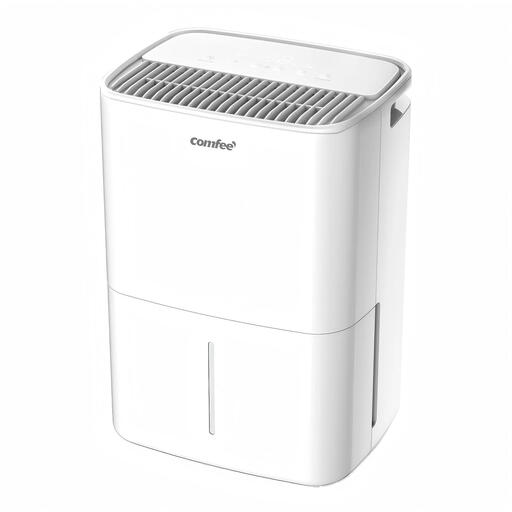
Why this product suits this type of buyer: Designed for rooms up to around 40 m³ or 16 m², this model combines a 10-litre daily capacity with a 2.5-litre tank. That makes it suitable for a bedroom, kitchen or smaller basement room.
The stated room size gives you a clear idea of where the dehumidifier is suitable. The product description also says it switches off automatically when the tank is full and has automatic defrosting.
36 dB(A) in sleep mode, 24-hour timer, child lock, three operating modes and R290 refrigerant.
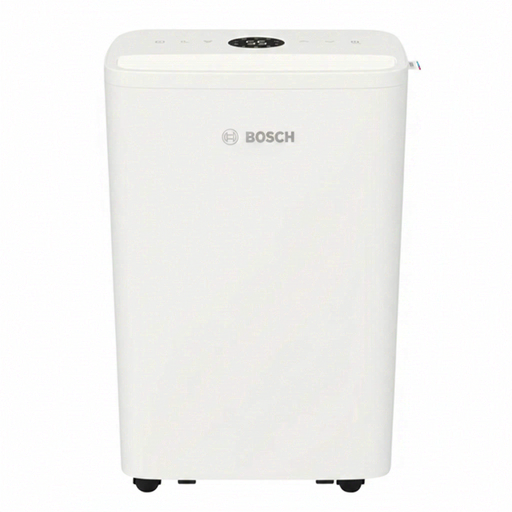
Why this product suits this type of buyer: Its stated room size of up to 17 m² is a close match for a typical bedroom or small home office. It’s operated using a touch control panel with an LED display.
The maximum noise level is stated as 36 dB. It also has night mode, a laundry mode, continuous dehumidifying and a drain hose.
2.5-litre tank, two fan speeds, automatic defrosting, R290 refrigerant and four castors.
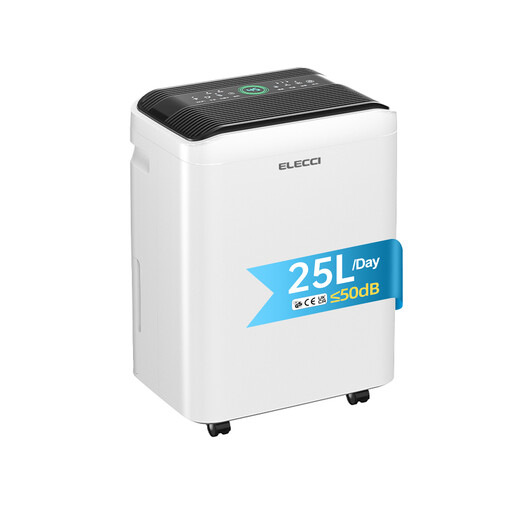
Why this product suits this type of buyer: Its higher rated capacity and 4.8-litre tank are designed for larger or more demanding spaces, such as basements, utility rooms and living areas where washing is dried frequently.
Its stated coverage of up to 50 m² and continuous drainage option reduce the risk of choosing a dehumidifier that’s too small for the space.
25 litres per day, 4.8-litre tank, stated noise level of 36 dB, three fan speeds, timer, laundry mode and automatic defrosting.
We’ve put together a comprehensive, regularly updated list of products that meet these strict selection criteria and fully comply with the safety regulations in force in the EU.
For a normally damp room of up to around 16 m², a dehumidifier with a daily capacity of 10 litres may be suitable. If humidity is consistently high, temperatures are very low or the room opens directly into other spaces, you may need a higher capacity.
Consumption depends on the rated power, how long it runs, the target humidity and the room conditions. For a realistic estimate, multiply the power consumption in watts by the planned running time. An energy-efficient dehumidifier won’t necessarily need to run constantly if it has automatic humidity control.
Its lifespan depends on how long it runs, how well the filter is maintained, whether it’s set up correctly and how carefully the refrigerant circuit is handled. Regular cleaning, a dry location and emptying the tank before moving the dehumidifier all help it continue to work as intended.