
Lieferung heute & morgen

Qualitätsgarantie

Willkommens-Angebote freischalten: KOSTENLOSE Lieferung | Bis zu 80 % RABATT | Kostenlose 30-Tage-JoyPlus-Testphase
App herunterladen
Slow charging or a faulty cable can be a major disruption to your daily routine, especially when you rely on your devices. However, the market for USB-C charging cables is filled with technical promises that don't always deliver. Many buyers invest in a supposedly fast-charging cable, only to find that its performance is disappointing or that it fails after a short time.
As your Joybuy Product Recommendation Officer, I'm here to help you identify the most common pitfalls and make an informed decision. We'll focus on the objective criteria that truly matter and steer clear of the typical marketing traps.
The 3 most common mistakes when buying a cable:
To avoid these problems, you should check three core technical parameters before buying. These will determine the speed, functionality, and lifespan of your cable.
Charging power is measured in watts (W) and is the product of voltage (volts) and current (amps). Modern devices use charging protocols like Power Delivery (PD) to optimise the charging process.
Important Note: The entire charging chain—power adapter, cable, and end device—must support the same PD standard to achieve maximum speed.
Many users assume that a powerful charging cable is also suitable for fast data transfers. This is often a misconception. Most cables optimised for charging only support the USB 2.0 standard, with a transfer rate of 480 Mbps. This is impractical for transferring large files (e.g., videos or backups). If you need both, look for cables that are explicitly rated for USB 3.1 (5-10 Gbps), USB 3.2 (20 Gbps), or higher standards.
A cable's durability depends heavily on its sheathing and the construction of its connectors.
Based on these objective criteria, we have curated a selection of products suitable for specific use cases.
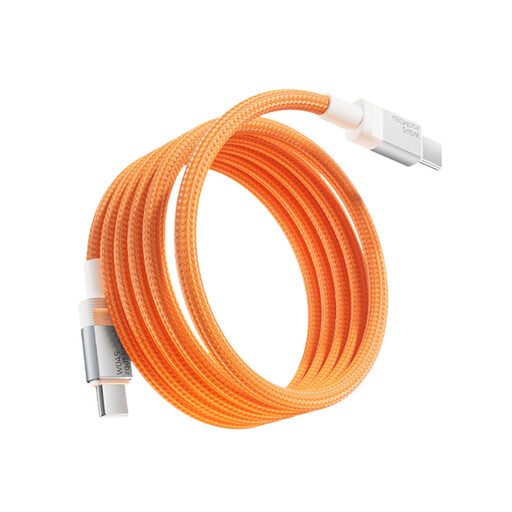
Why It's a Match: Ideal for users who need to charge laptops, tablets, and smartphones at maximum speed. The 240W support makes it future-proof for upcoming device generations and is a high-performance option as a MacBook charging cable or for high-end Android devices.
According to the manufacturer, an integrated E-Marker Pro Chip safely negotiates the high 240W power output, thus avoiding the missing-chip pitfall.
Supports the PD 3.1 standard for up to 240W. The 48-strand nylon braiding and aluminium alloy housing are designed for durability.
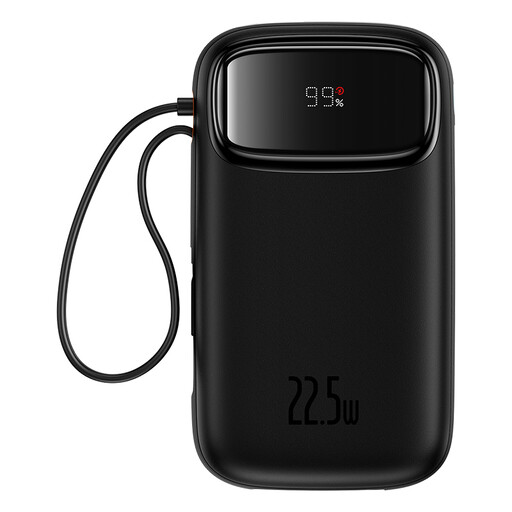
Why It's a Match: For users who need a reliable power source on the go without carrying extra cables. This 10000mAh capacity power bank has integrated cables for USB-C and Lightning, making it extremely convenient for travel.
Solves the problem of cable management. The integrated cables are matched to the power bank's output, which prevents compatibility issues.
Two integrated cables (USB-C to Lightning and USB-C) plus additional USB-A and USB-C ports. The digital display shows the remaining capacity with precision.
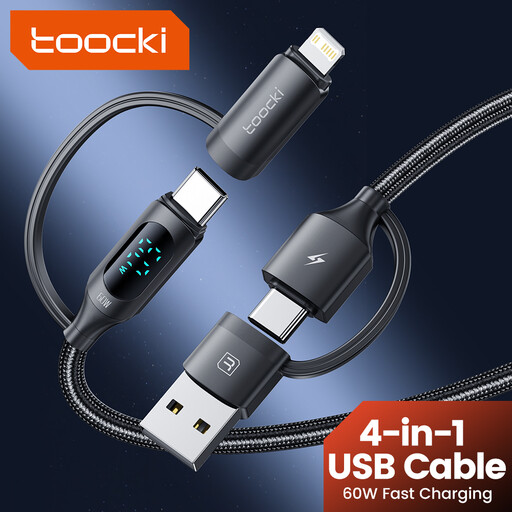
Why It's a Match: The ideal solution for anyone who owns devices with different connectors, such as a charging cable for iPhone 15, a Samsung charging cable, and other accessories. This 3-in-1 charging cable (technically 4-in-1) reduces cable clutter and is perfect for families or the desktop.
It eliminates the need to buy and manage multiple individual cables, sidestepping the compatibility and cost trap.
Combines USB-A/C inputs with USB-C/Lightning outputs in a single, braided cable. This offers maximum flexibility for charging a variety of devices.
We have compiled a complete, up-to-date list of products that fully meet these strict selection criteria and all relevant safety standards.
The most common cause is a mismatched power adapter. To take full advantage of a fast-charging cable, your charger must also support the corresponding fast-charging standard (e.g., Power Delivery) and the required wattage. The charging speed is always determined by the weakest link in the chain (device, cable, power adapter).
No. A cable with a higher wattage rating is perfectly safe for devices with lower power requirements. Thanks to smart charging protocols like Power Delivery (PD), the charger and your phone communicate with each other to deliver only as much power as the device can safely handle. A cable with an E-Marker chip provides an extra layer of safety here.
A braided charging cable is more resistant to abrasion and daily wear than a standard cable with PVC sheathing. However, the most critical component for longevity is the strain relief at the connector. A well-constructed braided cable with reinforced connectors can have a significantly longer lifespan because it better withstands the mechanical stress of everyday use.