
Lieferung heute & morgen

Qualitätsgarantie

Willkommens-Angebote freischalten: KOSTENLOSE Lieferung | Bis zu 80 % RABATT | Kostenlose 30-Tage-JoyPlus-Testphase
App herunterladen
A 4-zone 60 cm induction hob fits many kitchens, but it won’t necessarily be compatible with every existing worktop cut-out or electrical connection. Extra costs often arise because buyers focus only on the number of cooking zones and overlook technical details such as the connection type, cut-out dimensions or pan compatibility.
This buying guide explains which details matter when choosing a built-in induction hob and which features make a practical difference in everyday use.
A hob around 59 cm wide doesn’t necessarily need a 59 cm-wide cut-out in the worktop. The key measurement is the cut-out size specified by the manufacturer. For many 60 cm models, this is around 56 to 56.5 cm wide and 49 to 49.5 cm deep.
Before ordering, measure the existing cut-out. You should also check that the installation height, worktop thickness and required clearance beneath the hob meet the instructions in the installation manual.
A 7200 W induction hob may have a high total power rating, but individual cooking zones have different rated and boost power levels. When several zones are in use at the same time, power management may distribute the available power between them.
So, check the following:
A hob supplied with a connection cable but no plug must be connected by a qualified electrician. Making changes to the electrical connection yourself isn’t recommended for a permanently installed hob.
A ceramic glass induction hob heats the pan using a magnetic field. The surface itself gets hot mainly from the heat transferred back from the cookware. Traditional ceramic glass hobs, by contrast, use heating elements and take longer to transfer heat.
For induction to work, the base of the pan must be magnetic. A simple magnet test on the base will give you an initial indication. Suitable materials include cast iron and magnetic stainless steel. Aluminium, copper and ceramic pans will only work if they have a suitable magnetic base.
When choosing a 60 cm hob, check all the installation dimensions, not just the width:
Don’t simply enlarge or reduce an existing cut-out without taking the stability of the worktop and the installation requirements into account.
An induction hob with touch controls usually operates via touch-sensitive buttons or a digital control panel. Nine power settings are common on many entry-level models, while other appliances offer more precise adjustment.
The booster function temporarily increases the power of a zone, for example to heat water more quickly. How long the boost stays on, and whether several zones can use it at the same time, depends on the model.
Useful features to look for in an induction hob with a child lock include:
An induction hob with a timer can switch off an individual cooking zone after the set time. However, it doesn’t replace supervision while cooking, particularly when using oil or fat.
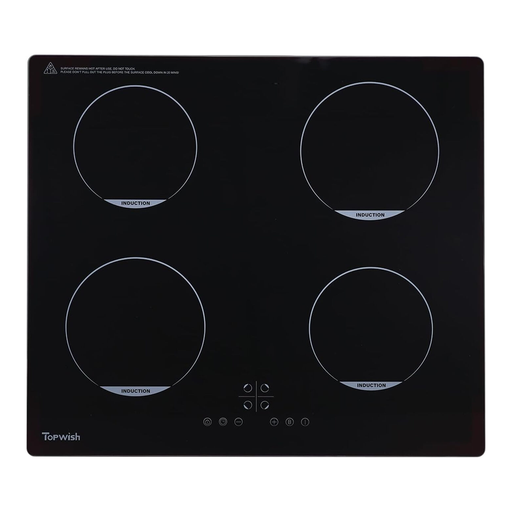
Why this product suits this profile: This 60 cm built-in hob has four cooking zones, nine power settings and a stated total power rating of 7200 W. The timer, touch controls and child lock cover the essential needs of a family kitchen.
The product details specify the overall dimensions, cut-out size, connection without a plug and the need for professional installation. This makes it easier to check installation and connection requirements before you buy.
Four zones, booster function, 1–99-minute timer, residual heat indicator and automatic shut-off, according to the stated technical specifications.

Why this product suits this profile: According to the product details, this model has four zones, 17 power settings, Touch Select, Quick Start, Restart, a timer and four boosters. The cooking zone diameters range from 145 to 210 mm.
Detailed information on the zones, power settings, cut-out and connected load makes it easier to compare the technical specifications. The Restart function can restore settings after an accidental switch-off.
17 power settings, digital timers with shut-off, residual heat indicator, child lock and a stated connected load of 7400 W.
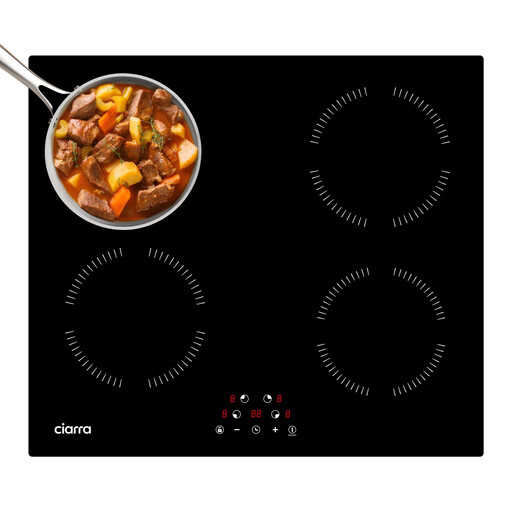
Why this product suits this profile: Designed for frequent cooking, this model has four zones, nine power settings, individual timers and automatic pan detection. The product details list a total power rating of 6000 W and a cut-out size of 560 × 490 mm.
Pan detection, overheating and overflow protection, as well as automatic shut-off, are all explicitly listed. This helps reduce the risk of overlooking important safety features when comparing models.
Individual 99-minute timers, nine power settings, touch controls, child lock and residual heat indicator.
We’ve put together a complete, regularly updated list of products that meet these strict selection criteria and fully comply with the safety regulations in force in the EU.
A permanently installed hob should be connected by a qualified electrician in the UK. Before installation, check that the voltage, connected load, fuse rating and cable connection are suitable for your existing electrical installation. Models without a plug are connected directly.
For cleaning:
Running costs depend on factors including power, length of use, electricity tariff and cooking habits. A high maximum power rating doesn’t automatically mean high energy consumption, as actual power use depends on the setting selected and how long the hob is in use.
No. Overall dimensions and cut-out sizes vary between models. Measure the existing cut-out and compare it with the installation manual for the hob you’re considering.
The connection type depends on the model and your electrical installation. A qualified electrician should check and connect a hob with a 7200 W rating. Always follow the appliance’s technical specifications and local electrical installation regulations.
There’s no single expected lifespan that applies to every hob. It depends on factors such as how often it’s used, ventilation, care, the electrical connection and how the ceramic glass is treated. Keeping the control surface dry, using suitable pans and following the installation instructions can help ensure reliable use.