
Lieferung heute & morgen

Qualitätsgarantie

Willkommens-Angebote freischalten: KOSTENLOSE Lieferung | Bis zu 80 % RABATT | Kostenlose 30-Tage-JoyPlus-Testphase
App herunterladen
An 800W balcony solar system can be an appealing option for homeowners, tenants and flat owners who want to generate solar power for their own use. But the figure on the box isn’t the only thing that matters. The panel output, inverter, mounting system and connection all need to work together and be suitable for the intended location.
A kit with 2 x 450W solar panels has a panel output of 900 Wp under standard laboratory conditions. However, the actual AC output may still be limited to 800 W if the system uses an 800W microinverter. Both figures are therefore important when choosing a kit:
Higher panel output doesn’t automatically mean more power is fed into the grid. It can, however, help you access more power when sunlight is weaker.
A plug-and-play solar system is usually supplied with pre-assembled components and an AC connection. Even so, you need to check the installation location, cable routing, plug connection and electrical requirements. If you’re buying a balcony solar system with a Schuko plug, you should also follow the manufacturer’s instructions. Depending on the building, the grid connection and the type of installation, you may need a qualified electrician.
In Germany, buyers should also check the current requirements for plug-in solar devices, registration in the Market Master Data Register and any rules set by the property manager or owners’ association. It wouldn’t be appropriate to say that every kit can be used on every balcony.
A balcony solar system with a mounting system needs to be suitable for your balcony parapet, railing or intended outdoor surface. Before buying, check:
Flexible panels may be an option where load capacity is limited. Glass panels have different mechanical properties and need a suitable, sturdy mounting system.
The inverter converts the panels’ direct current into grid-compatible alternating current. For an 800W balcony solar system with an 800W inverter, the maximum continuous output should be clearly stated. Relevant specifications include:
These markings should appear in the technical documentation for the specific model. A brand name alone isn’t a substitute for clear, verifiable product information.
A kit with four 200W panels distributes its output differently from one with two 450W panels. This affects the space required, weight, shading and installation effort. If you’re fitting panels on a balcony, compare the dimensions of each panel with the space available.
Where some shading is unavoidable, the panel layout can matter more than the rated output. Orientation, tilt angle, dirt and the time of year also affect performance. Manufacturers’ panel output figures are generally based on standard test conditions and don’t guarantee a specific amount of electricity each day.
For outdoor use, check the IP rating, the cables’ UV resistance and the system’s mechanical stability. The mounting system should come with suitable screws, clamps and brackets, or be clearly compatible with them. Never continue using damaged cables, plugs or casings in an outdoor installation.
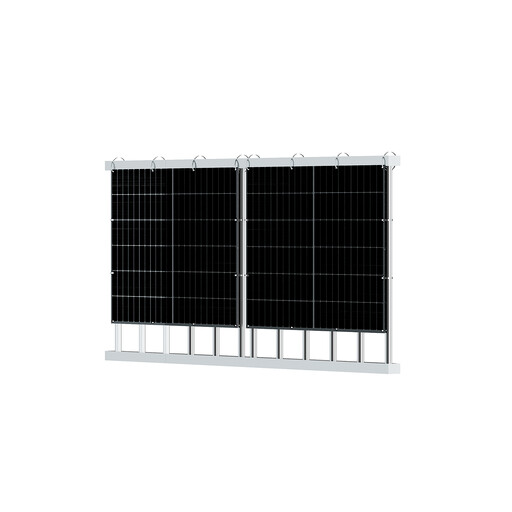
Why this product suits this profile: This kit is aimed at households looking to start with a lower output and keep installation straightforward. The two flexible 200W panels may be a good fit for balconies with limited load capacity.
The maximum system output of 400 W is clearly stated. The kit includes mounting brackets, an MS400 microinverter and a Schuko plug.
Two 200W panels, IP67 protection and optional monitoring via a Wi-Fi wattmeter.
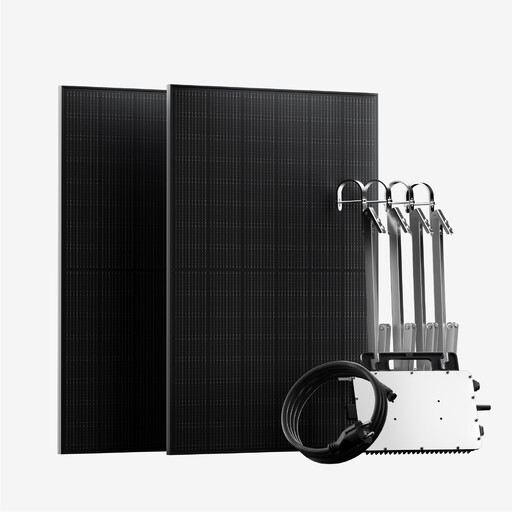
Why this product suits this profile: With two 450W solar panels, an 800W microinverter and a mounting system, this kit will appeal to buyers who want plenty of panel capacity and a well-matched set.
The product name distinguishes the 900 W panel output from the 800 W inverter output, so the two figures aren’t confused.
Two 450W panels, an 800W microinverter and a compatible mounting system included in the kit.
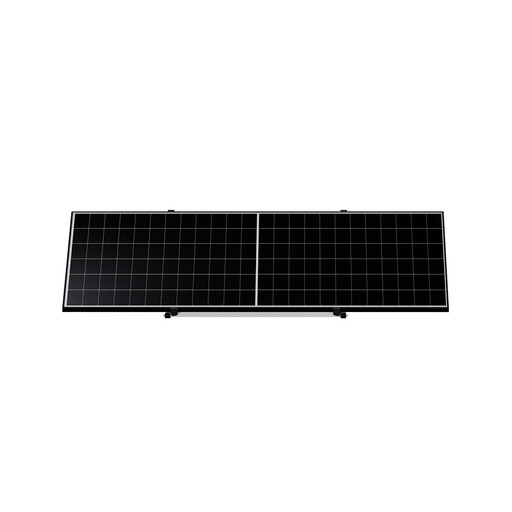
Why this product suits this profile: This pre-assembled system has an adjustable stand and is designed for level surfaces such as gardens, courtyards or temporary outdoor spaces.
The product specifications explicitly state that it’s designed for level surfaces and has a maximum output of 350 W.
Adjustable angle, pre-assembled components, 400W panel output and IP67 protection.
Solar power can reduce the amount of electricity you draw from the grid when appliances are running at the same time. The actual benefit depends on factors including household consumption, orientation, shading and the time of year. A balcony solar system won’t produce 800 W constantly. It only reaches its rated output under certain conditions.
You can use a compatible energy meter or the manufacturer’s app to keep track of performance. Before buying, check whether monitoring accessories are included or need to be purchased separately.
We’ve put together a complete, regularly updated list of products that meet these strict selection criteria and fully comply with the safety regulations in force across the EU.
That depends on the specific device, the type of connection and the current requirements in Germany. Check the manufacturer’s instructions, the technical certifications and the latest requirements for plug-in solar devices. If you’re unsure, ask a qualified electrician to assess the installation.
Its lifespan depends on the solar panels, inverter, cables, mounting and weather conditions. A secure mounting system, regular visual checks and the prompt replacement of damaged components are particularly important. There’s no single lifespan that applies to every complete kit.
Not necessarily. An 800W microinverter is most useful when you have enough panel space, suitable sunlight and a good level of self-consumption. If your household uses little electricity or the location is heavily shaded, a smaller kit may be a better fit financially.