
Lieferung heute & morgen

Qualitätsgarantie

Willkommens-Angebote freischalten: KOSTENLOSE Lieferung | Bis zu 80 % RABATT | Kostenlose 30-Tage-JoyPlus-Testphase
App herunterladen
Rising electricity prices and a desire for greater independence from the energy market are motivating many people in Germany to seek out practical alternatives. A plug-in solar system with 900W or more in module capacity is an effective way to lower your electricity bill and contribute to the energy transition. This article serves as a guide, presenting selected components and kits that are ideal for renters and homeowners with a balcony, terrace, or garden.
The decision to invest in a balcony solar system should be based on several technical and practical considerations. Here are three key points to help you make an informed choice.
A common point of confusion relates to power ratings. A 900W balcony solar system typically refers to the total output of the solar modules (e.g., 2 x 450 Watt-peak, Wp). However, the inverter, which converts the generated DC power into grid-compliant AC power, has its own output limit. In Germany, the maximum feed-in power for systems registered under the simplified process is currently set at 800 watts. Therefore, a kit with 900Wp of module power and an 800W inverter is a common and sensible configuration. The higher module capacity ensures that the inverter's maximum output can be better utilised even in non-optimal light conditions (e.g., on cloudy days or with less-than-ideal orientation).
For beginners, a balcony solar kit is the most straightforward solution. Such a complete mini PV system includes all the essential, matched components: solar modules, a microinverter, and the necessary connection cables. This saves you from time-consuming research and ensures that all parts are compatible with each other. The focus here is on a simple plug-and-play installation that most users can perform themselves.
The visual appearance of a solar system is a key factor for many users, especially when it's mounted on a highly visible facade or balcony railing. Models with black solar panels (all-black design) blend particularly seamlessly into modern architecture. They appear more discreet and elegant than modules with visible silver grid lines and a white backsheet. Furthermore, look for robust materials and solid build quality to ensure the system's longevity.
Based on the criteria mentioned, we have compiled a selection of products suitable for getting started with private solar power generation.
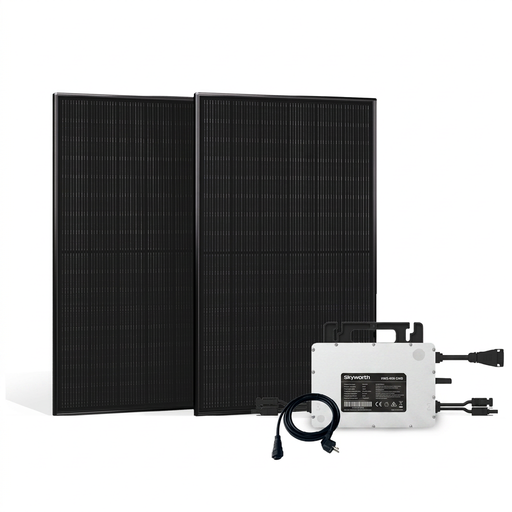
Why It Stands Out The Skyworth balcony solar system is designed as an all-in-one package, aimed at users looking for a straightforward and aesthetically pleasing solution. It combines two high-performance 450W solar modules in a subtle all-black design with a matching microinverter.
Product Details
Who Is It For? This kit is ideal for beginners and design-conscious users who want to install a ready-to-use, complete mini PV system without the hassle of sourcing components. It is perfectly suited for balconies, terraces, or garden areas.
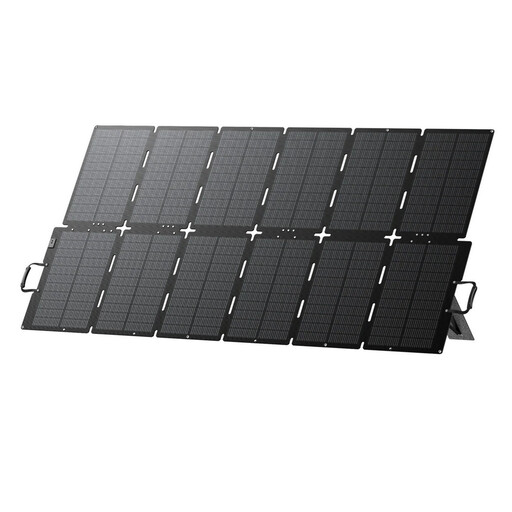
Why It Stands Out The BLUETTI SORA 500 is a single, very powerful solar module. It is not part of a fixed grid-tied kit but instead offers flexibility for custom projects, especially when paired with portable power stations.
Product Details
Who Is It For? This panel is aimed at users who already own a power station or want to build a custom system. It's a great choice for those who need maximum power in a limited space or prefer a flexible, non-permanent solution. It is not a complete plug-in solar system.
As you optimise your home's energy efficiency with solar power, other energy-saving technologies might also be of interest. For instance, if you're looking for outdoor lighting solutions, you'll find a selection of efficient options for your garden and balcony in our Low-Voltage Spotlights category.
Discover our selection of low-voltage spotlights here
The "900W" rating usually refers to the combined nominal power of the solar modules (e.g., 2 x 450Wp). In contrast, "800W" denotes the maximum output power of the inverter that is allowed to be fed into the home's grid. A combination of 900Wp modules and an 800W inverter is common to achieve a high energy yield even under less-than-ideal conditions.
The registration process for balcony solar systems up to 800 watts has been significantly simplified in Germany. A permit is generally not required. The system simply needs to be registered in the Market Master Data Register (Marktstammdatenregister) of the Federal Network Agency and with the local grid operator. The process is usually straightforward and can be completed online.
Most kits are designed for easy DIY installation. The modules are mounted in a sunny location (balcony railing, facade, roof), connected to the microinverter, which is then plugged into a standard household outlet using a connection cable. Always follow the manufacturer's installation manual and adhere to all applicable safety regulations.