
Lieferung heute & morgen

Qualitätsgarantie

Willkommens-Angebote freischalten: KOSTENLOSE Lieferung | Bis zu 80 % RABATT | Kostenlose 30-Tage-JoyPlus-Testphase
App herunterladen
A balcony solar system is an effective way to generate your own solar power and lower your electricity bill. However, most energy is produced during the day, when household consumption is often at its lowest. A balcony solar system with storage solves this problem by storing excess energy for use in the evening or at night. This allows you to maximise your self-consumption and further reduce your reliance on the grid.
This article serves as a guide. We'll explain the key technical features you should look for and present a selection of storage solutions suitable for various needs.
Choosing the right storage system depends on your existing setup, your electricity consumption, and your goals. Three criteria are particularly important.
The type of coupling determines how the storage unit is integrated into your system.
A storage unit's capacity is measured in kilowatt-hours (kWh) and describes how much energy it can store. To increase self-consumption, the capacity should match your basic overnight consumption. For a typical household with a mini PV system, a capacity of 1.5 to 2.5 kWh is often a good starting point. Look for modular systems that allow you to expand the capacity later if your needs increase.
Before buying, check if the storage unit is compatible with your existing microinverter. Many modern storage solutions are designed as plug-and-play solar storage. This means they can be easily connected to a wall socket and configured via an app, without needing an electrician. This significantly simplifies commissioning and makes them an attractive option for renters as well.
Based on the criteria mentioned, we have compiled a selection of storage solutions that stand out for their technical features and applications.
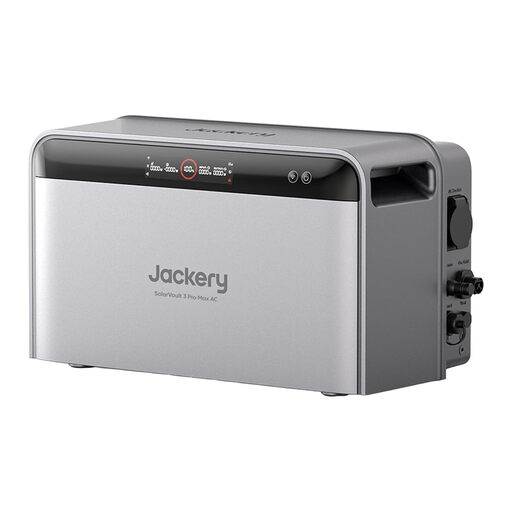
Why This Model Stands Out The Jackery SolarVault 3 Pro Max AC is a high-performance AC-coupled storage unit designed specifically for easily retrofitting existing PV systems. Its high output power of 2500 W allows it to run high-demand appliances. The capacity is modularly expandable from 2.52 kWh up to 15.12 kWh, making it a future-proof home storage system. According to the manufacturer, its AI-powered energy management optimises the use of low-cost grid power and stored solar energy.
Pros:
Who is it for? For users who already own a balcony solar system or another PV installation and are looking for a powerful, flexible storage solution that can be integrated without complex modifications.
View the Jackery SolarVault 3 Pro Max AC
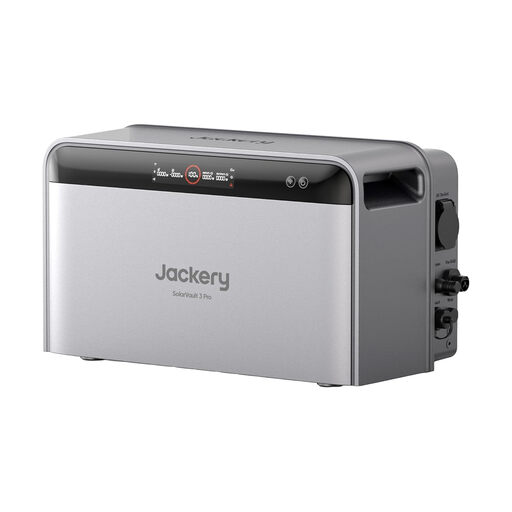
Why This Model Stands Out This model is an all-in-one system that combines storage and an inverter in a single unit. With four MPPT inputs, it can optimally process the output from up to four solar panels with a total power of up to 4000 W, even with different orientations or partial shading. A special feature is the integrated 1200 W emergency power supply. The all-in-one design and quiet operation (≤30 dB, according to the manufacturer) make it a discreet solution for living areas.
Pros:
Who is it for? For users planning a new, high-performance mini PV system with storage or looking to completely upgrade an existing system. Ideal for households with high energy demands or the desire for backup power security.
View the Jackery SolarVault 3 Pro Max Balcony
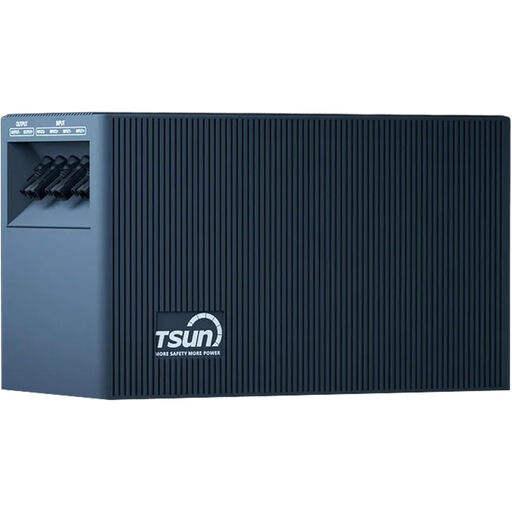
Why This Model Stands Out The TSUN SolarCan is a DC-coupled storage system designed for high efficiency in converting solar power. It features a dual-MPPT input for up to four solar panels with a maximum output of 2400 W. The capacity is modularly expandable from 2 kWh to 10 kWh. Smart features like the zero-export function (prevents feeding power into the grid) and Active Cell-Level Control to optimise battery lifespan make it a technologically advanced solar power storage solution.
Pros:
Who is it for? For tech-savvy users who prioritise maximum efficiency when installing a new system and want to leverage the flexibility of a DC-coupled system.
View the TSUN SolarCan TSOL-DCU2000Lite
The models presented cover common use cases. If you haven't found the right solution for your specific requirements or budget, you can find more models with different capacities and technical features in our broader selection.
Discover More Storage Batteries on Joybuy
Generally, yes. AC-coupled storage systems, in particular, are designed for retrofitting and are compatible with most microinverters because they operate in parallel with the home grid. For DC-coupled systems, the compatibility between the storage unit and the inverter must be carefully checked. It is essential to consult the technical data sheets for both devices.
The ideal size depends on your overnight electricity consumption and the output of your PV system. As a rule of thumb, for an 800-watt balcony solar system, a capacity between 1.5 and 2.5 kWh is a good starting point. This is usually enough to cover the household's base load during the evening and night. Modular systems offer the flexibility to start small and upgrade later if needed.
A plug-and-play solar storage unit is designed for easy installation by the end-user, without the need to hire an electrician. Typically, the storage unit is connected to a standard household socket and communicates wirelessly (e.g., via Wi-Fi) or through a direct cable connection with the microinverter to manage the storage and release of energy. This significantly simplifies retrofitting a storage unit for a mini PV system.