
Lieferung heute & morgen

Qualitätsgarantie

Willkommens-Angebote freischalten: KOSTENLOSE Lieferung | Bis zu 80 % RABATT | Kostenlose 30-Tage-JoyPlus-Testphase
App herunterladen
A fine wine deserves proper storage. For those who can't keep their collection in a cellar, a wine cooler offers a functional and stylish alternative. However, the market is crowded, and many units fail to live up to their advertising. Before you make a decision, it's crucial to understand the typical pitfalls that often lead to disappointment and unnecessary expense.
As your Joybuy Product Recommendation Officer, I'm here to help you separate marketing hype from reality. In this guide, we'll focus on the essential features and show you how to avoid the most common mistakes when choosing a wine cooler for around 36 bottles.
Many buyers are swayed by advertising claims that often don't hold up in practice. Pay close attention to these two points to avoid making a poor purchase:
To find the right model, don't let design be your only guide. The following technical specifications are decisive for the functionality and longevity of your appliance.
This is one of the most important decisions. The choice depends on how you want to store and enjoy your wine.
For an appliance intended for a living area, the noise level is a critical criterion.
Here are some models tailored to different requirements and collection sizes.
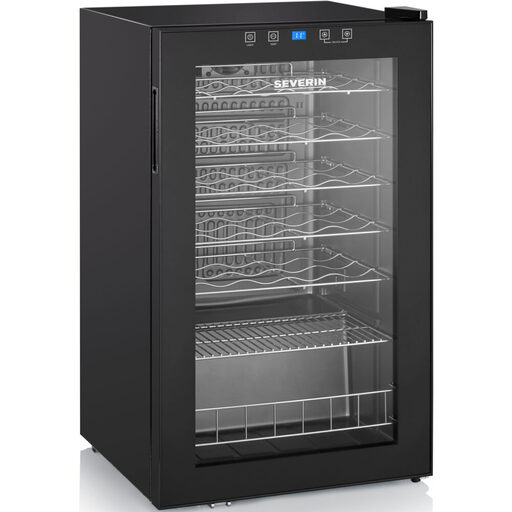
Why it's a good fit: This model perfectly meets the requirements for a wine cooler for 36 bottles. Its sleek, black design integrates discreetly into modern living concepts. With a single temperature zone, it's ideal for storing a growing collection at a constant temperature.
The capacity is clearly specified for standard 0.75L bottles. The noise emission of 42 dB(A) is transparently stated and suitable for living areas, sidestepping the "quiet trap."
Offers a balanced ratio of capacity, compact size, and living-space-friendly noise level. The touch display and LED lighting are practical features.
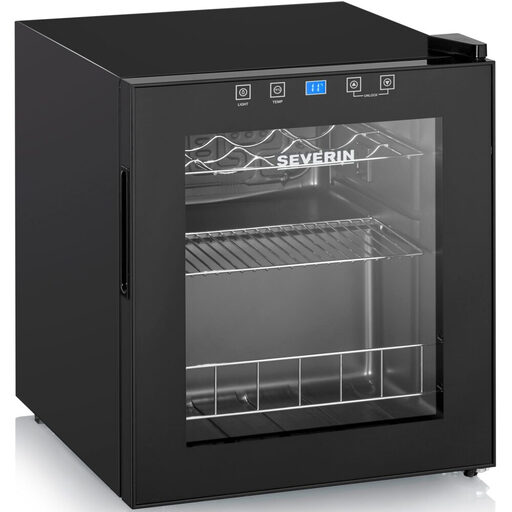
Why it's a good fit: For wine lovers just starting their collection or those with limited space, this small wine cooler is an excellent choice. It offers essential features in a compact format.
The 15-bottle capacity is clearly defined, preventing false expectations. With a noise level of also 42 dB(A), its sound output is transparent and suitable for apartments.
Very compact dimensions (51.5 x 43 x 48 cm) allow for placement even in smaller kitchens or living areas without sacrificing proper wine storage.
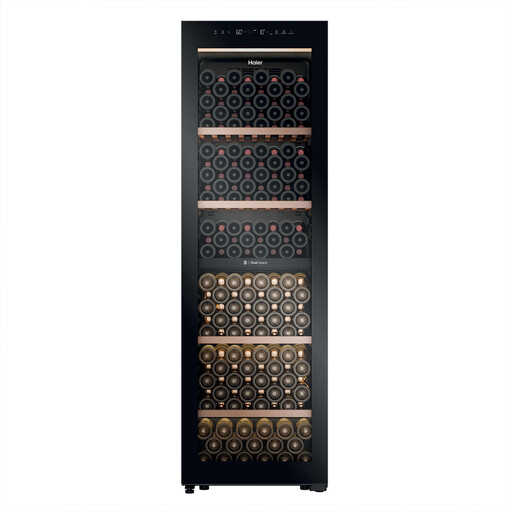
Why it's a good fit: For collectors with a large collection, this unit provides professional storage conditions. With a capacity for up to 201 bottles and two separate temperature zones, it is designed for long-term aging and simultaneous tempering of different wine varieties.
This model goes beyond the basic pitfalls, offering professional features like UV-protective glass, an anti-vibration system, and active humidity control (50–80%), which are crucial for serious storage.
Two separate zones for red and white wine, a very high capacity, and cellar-like storage conditions make it a solution for discerning collectors.
We have compiled a complete, up-to-date list of products that fully meet these strict selection criteria and German safety regulations.
The terms are often used interchangeably. Technically, a wine climate cabinet is designed for long-term storage and simulates cellar conditions (constant temperature, humidity, UV protection, low vibration). A wine serving cabinet is primarily used to bring wines to their optimal drinking temperature and often has less complex features. Most consumer-grade units are hybrids of both.
This is crucial for the efficiency and lifespan of the appliance. As a rule of thumb, leave about 5 to 10 cm of space on the sides and at the back of the unit. This allows for sufficient air circulation for the compressor to dissipate heat effectively. Blocked ventilation slots lead to higher energy consumption and can damage the appliance.
The costs depend on the energy efficiency class and your local electricity price. Let's take the Severin WKS 8908 as an example, with a stated annual consumption of 140 kWh (Energy Efficiency Class G). Assuming an electricity price of 40 cents per kWh, the annual operating costs would be approximately €56 (140 kWh * €0.40/kWh). Models with a better energy efficiency class can further reduce these costs.