
Lieferung heute & morgen

Qualitätsgarantie

Willkommens-Angebote freischalten: KOSTENLOSE Lieferung | Bis zu 80 % RABATT | Kostenlose 30-Tage-JoyPlus-Testphase
App herunterladen
The search for a new USB-C charger can quickly become overwhelming. Many manufacturers advertise high wattages and numerous ports, but not every power adapter delivers on its promises. Vague product information or overlooked technical details often lead to a purchase that doesn't meet your needs. Before you make a decision, it's crucial to understand the most common pitfalls to avoid a bad investment.
A frequent problem is the misleading specification of total power. A charger might be advertised as 65 watts, but as soon as multiple devices are connected, the charging power per port drops dramatically. Another risk comes from products without recognised safety certifications. These can overheat and, in the worst-case scenario, damage your connected devices. Finally, a lack of knowledge about different fast-charging protocols can mean that a new fast charger only powers up your phone and laptop at a snail's pace.
To find the right USB-C power adapter, you should check three core technical features. These determine whether a charger is suitable, safe, and efficient for your devices.
The advertised wattage (e.g., 65W charger) often only describes the maximum total output. What's crucial, however, is how this power is distributed among the individual ports when multiple devices are charging simultaneously. A good multi-port USB charger should still provide enough power for demanding devices like a notebook, even when all ports are in use.
Check the product description for details on power distribution. It often specifies how many watts each port delivers when one, two, or three devices are connected.
Modern devices use specific protocols to optimise charging speed. A charger must support your device's protocol to unleash its full charging potential.
GaN chargers use gallium nitride instead of traditional silicon. This semiconductor enables higher efficiency with less heat generation. The advantages are significant:
These features make a GaN charger an excellent choice as a universal travel charger.
Based on these objective criteria, we have identified a few models that are well-suited for specific use cases.
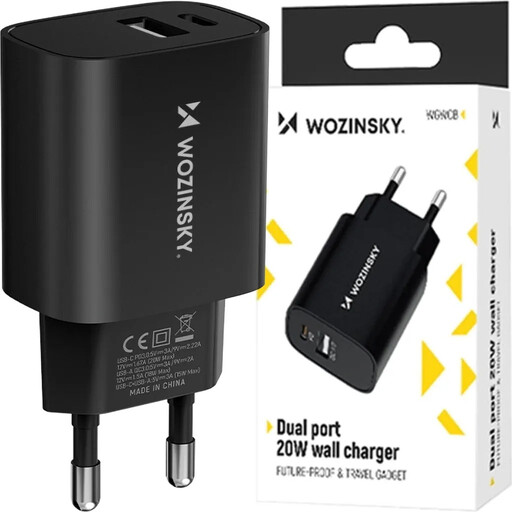
Why This Fits Their Persona: Ideal for users seeking a straightforward and budget-friendly solution to quickly charge their smartphone and another device, like headphones. Its compact design also makes it practical for travel.
Sidesteps the incompatible protocol trap by supporting both Power Delivery and Quick Charge. This ensures most modern smartphones are charged at the correct speed.
Offers two useful ports, USB-C (up to 20W) and USB-A (up to 18W), in one compact body. Its broad protocol support ensures high compatibility.
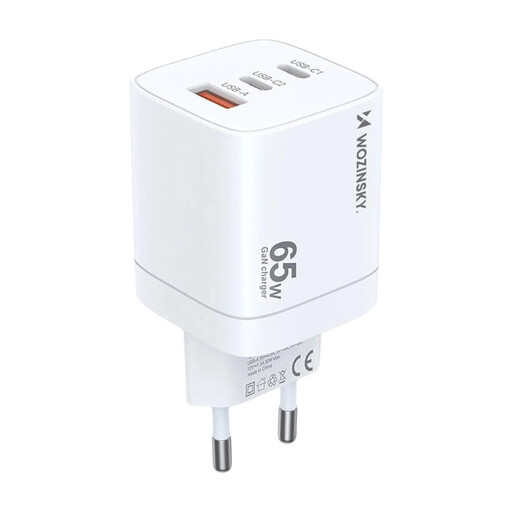
Why This Fits Their Persona: Perfect for users who need to charge a laptop, smartphone, and tablet simultaneously, whether in the office, at home, or on the go. GaN technology ensures a compact form factor despite its high power.
Solves the problem of misleading power claims. The specifications clearly show that a single USB-C port delivers up to 65W, enough for a MacBook. When using two ports, the power is intelligently split (e.g., 45W + 18W).
Combines a high 65W output with compact GaN technology and three ports (2x USB-C, 1x USB-A). This replaces multiple individual adapters and reduces cable clutter.
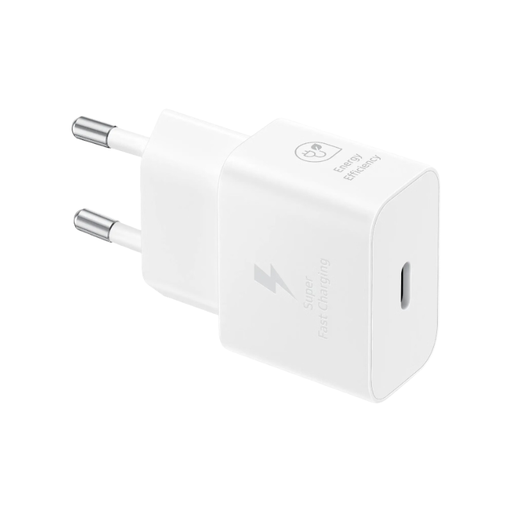
Why This Fits Their Persona: Designed for owners of modern Samsung smartphones (Galaxy S-series) or iPhones who want to safely and reliably max out their device's charging speed.
This charger explicitly supports PPS (Programmable Power Supply). This bypasses the protocol incompatibility trap and fully enables the "Super Fast Charging" feature on Samsung devices.
As an original accessory, it provides charging performance perfectly tuned for Samsung devices. The GaN technology ensures a compact design, and the included USB-C cable is a handy bonus.
We've compiled a complete, real-time updated list of products that fully meet these strict selection criteria and German safety regulations.
Check two things in the technical specs of your smartphone, tablet, or laptop: the maximum supported charging power in watts (W) and the required fast-charging protocol (e.g., Power Delivery, PPS). Compare this information with the charger's specifications. A charger with Power Delivery (PD) is generally a safe bet for most modern devices.
A GaN charger uses gallium nitride instead of silicon, which makes it smaller, lighter, and more energy-efficient at the same power output. It generates less waste heat, which extends its lifespan and improves safety. This advantage is especially noticeable in high-power chargers (45W and up) and travel chargers.
Yes, that is perfectly safe. Modern USB-C chargers, especially those with Power Delivery, communicate with the connected device. The charger only supplies as much power as the device requests. So you can easily use your 65W laptop adapter to charge your headphones without risking any damage.