
Same-day & Next-day Delivery

Quality Guaranteed

Unlock Your Welcome Offers: FREE Delivery | Up to 80% OFF | Free 30-day JoyPlus trial
Download the APP
If you’re looking to buy rice flour, you’ll find a range of flour types, pack sizes and product names online. The key difference isn’t the packaging, but the type of rice used and what the flour is intended for. For mochi, for example, you’ll usually need glutinous rice flour, while regular rice flour may be more suitable for pancakes, sauces or gluten-free baking.
“Glutinous Rice Flour”, “Sticky Rice Flour” and “Bột Nếp” all refer to glutinous rice flour. It’s made from glutinous rice and develops an elastic, chewy texture when heated. That’s just what you want for mochi, tangyuan and many rice cakes.
Regular rice flour, often labelled “Rice Flour” or “Bột Gạo”, tends to produce a softer, finer or slightly crumbly result. It’s suitable for dishes such as bánh xèo and bánh cuốn, as well as batters, sauces and certain baked goods. The two products aren’t interchangeable in every recipe.
Rice is naturally gluten-free. However, processing information may warn that traces of other allergens could be present. For example, Mikko Rice Flour may be processed in a facility that also handles ingredients containing gluten.
If you need to follow a gluten-free diet for medical reasons, always check the current packaging, ingredients list and allergen information. A general product claim isn’t a substitute for individual dietary advice.
Terms such as “for all recipes” or “especially versatile” don’t tell you whether a flour is suitable for mochi, rice noodles or a crispy coating. Instead, check:
For rice flour for baking, soups and sauces, regular rice flour is a practical starting point. It has a fairly neutral flavour and can be used as a thickener. However, it may not be enough on its own to create a light texture in gluten-free baking; depending on the recipe, you may need other flours or starches.
Glutinous rice flour for mochi and other chewy desserts is made from glutinous rice. It gives them their characteristic elasticity, but it won’t replace regular rice flour in every recipe.
A product labelled “100% rice flour” or “100% glutinous rice flour” has a straightforward ingredients list. Rice noodle mixes, on the other hand, may contain tapioca flour, salt, turmeric or other ingredients. So check the ingredients list even if the product looks like a pure rice product at first glance.
A 250 or 400 g pack is enough if you’re just trying rice flour out. If you regularly make Asian desserts, rice noodles or gluten-free baked goods, 500 g or larger packs can make it easier to plan your shopping. Once opened, store rice flour in a cool, dry place away from light, and keep it sealed as airtight as possible. Moisture can affect how freely it flows and how well it performs.
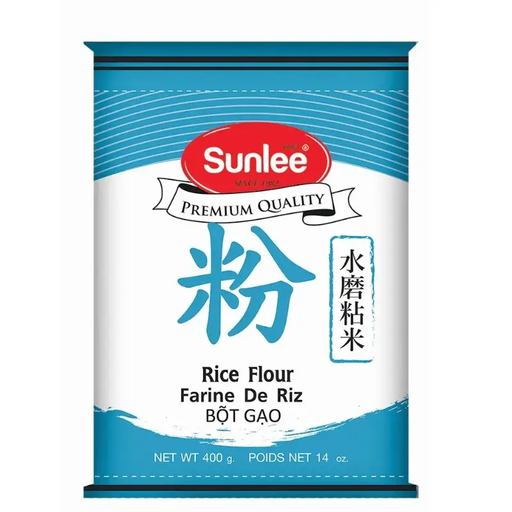
Why this product suits these needs: The 400 g pack is ideal for trying rice flour for the first time, whether you’re making desserts, sauces or baked goods with rice flour.
The name “Rice Flour” distinguishes it from glutinous rice flour. The ingredients list names white rice as the main ingredient.
Fine texture and a 400 g pack. According to the product information, it’s suitable for desserts, rice noodles, and thickening soups and sauces.
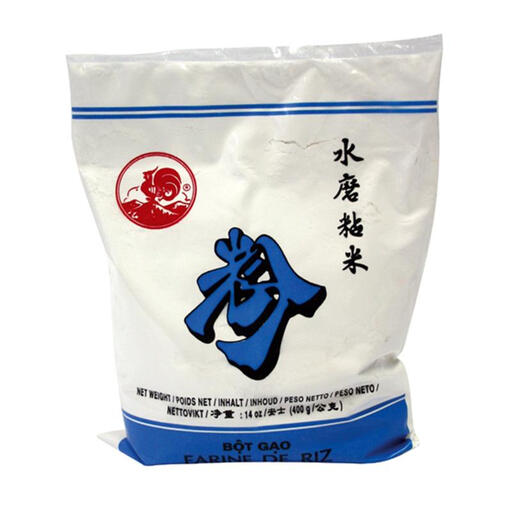
Why this product suits these needs: This Thai rice flour is designed for a wide range of uses in Asian cooking and baking.
The product description specifies 100% Thai rice and a neutral flavour, rather than leaving the mix of ingredients unclear.
Finely milled and, according to the supplier, gluten-free, with no added salt or sugar.
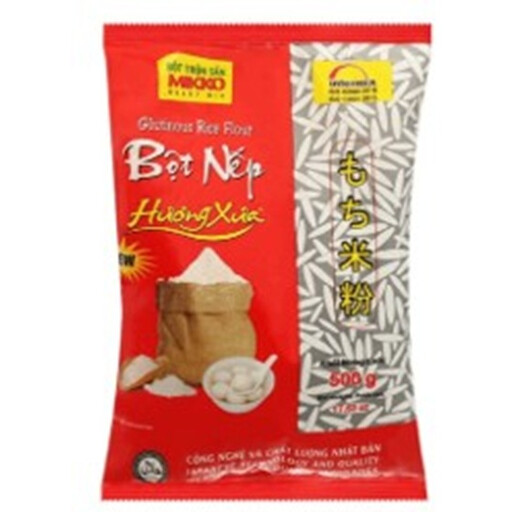
Why this product suits these needs: The 500 g pack is aimed at anyone who regularly makes mochi, Vietnamese rice cakes or glutinous rice desserts.
The clear label identifies it as glutinous rice flour, helping you avoid using it by mistake for light batters or classic sauces.
Finely milled and, according to the product information, suitable for mochi, bánh trôi, bánh ít, rice cakes and thickening.
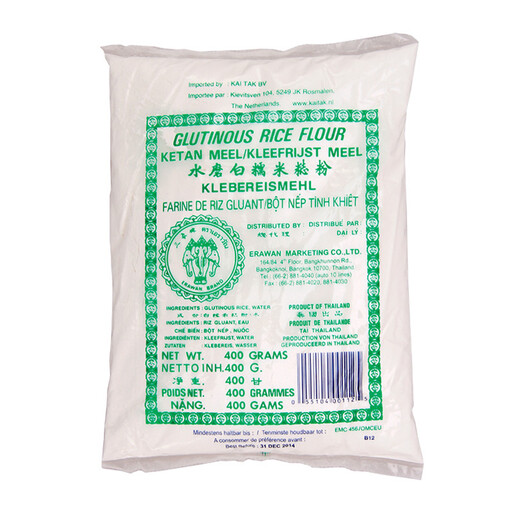
Why this product suits these needs: It’s suitable for Japanese and South-East Asian recipes where glutinous rice flour is used to create an elastic texture.
The ingredients list names glutinous rice and water, making it easy to distinguish from regular rice flour for light batters.
400 g pack, made with glutinous rice and water, with nutritional information provided per 100 g.
We’ve put together a complete, regularly updated list of products that meet these strict selection criteria and the safety regulations in force in the EU.
Rice is naturally gluten-free. However, processed products may carry warnings about possible traces of other grains or allergens. If you need to avoid gluten strictly, check the label on every pack and contact the manufacturer if you’re unsure.
You can make the swap in sauces, soups and some batters, but not always in a one-to-one ratio. Rice flour doesn’t contain gluten, so it creates a different texture. For gluten-free baking, you may need to combine it with other flours or starches. The recipe you’re following is the best guide.
You’ll generally need glutinous rice flour for mochi, not regular rice flour. Look for names such as “Glutinous Rice Flour”, “Sticky Rice Flour”, “Bột Nếp” or “Klebreismehl”. Regular rice flour is more commonly used for rice noodles, crispy pancakes and many sauces.