
Lieferung heute & morgen

Qualitätsgarantie

Willkommens-Angebote freischalten: KOSTENLOSE Lieferung | Bis zu 80 % RABATT | Kostenlose 30-Tage-JoyPlus-Testphase
App herunterladen
Damp walls, condensation on the windows, or a musty smell in the basement—problems with high humidity are common in many households. An electric dehumidifier can be an effective solution to regulate your indoor climate and prevent mould growth. However, the market is saturated, and many devices fail to live up to their advertising claims.
As your Joybuy Product Recommendation Officer, I'm here to help you separate fact from marketing fiction. In this guide, I'll show you the most common pitfalls to avoid and which technical features you should really focus on to find the perfect unit for your needs.
Many buyers are quickly disappointed when their new device doesn't deliver the expected performance. This is often due to two common misconceptions fuelled by marketing claims.
To avoid a bad purchase, you should base your decision on objective technical data. The following three points are of central importance.
The required capacity depends directly on the room size and humidity level. As a rule of thumb:
Ensure that the performance rating is always considered in the context of the room size. A dehumidifier for a small apartment requires less capacity than a unit intended to keep an entire basement dry.
For use in cool environments, such as a basement dehumidifier, the specified operating temperature range is crucial. Look for devices that still work efficiently at temperatures as low as 5–10°C. An integrated auto-defrost function is essential here. It detects ice formation on the compressor, briefly pauses the dehumidifying cycle to melt the ice, and thus ensures consistently stable performance. This is a key factor when using a dehumidifier against mould.
An electric dehumidifier often runs for many hours. An energy-saving dehumidifier with a built-in hygrostat is therefore a wise investment. The hygrostat continuously measures the humidity and automatically turns the unit off once the target level is reached, and back on when the humidity rises.
Other useful features include:
Based on the criteria mentioned, we have compiled a selection of units suitable for different user profiles.
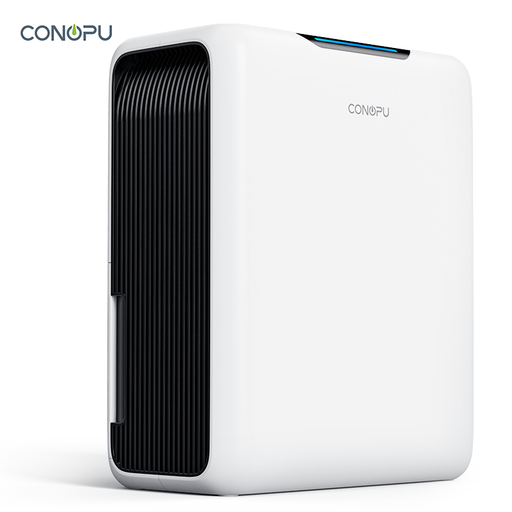
Why This Fits Their Persona: Ideal for users who need a quiet dehumidifier for the bedroom or office. Its Peltier technology enables low-noise operation that won't disturb sleep or concentration.
Addresses the noise pitfall with a specific, low noise level of approx. 30 dB. The performance rating is clearly tailored to smaller rooms up to 20 m?, avoiding false expectations.
Very quiet operation thanks to semiconductor technology and a 24-hour timer function for on-demand, energy-saving use.
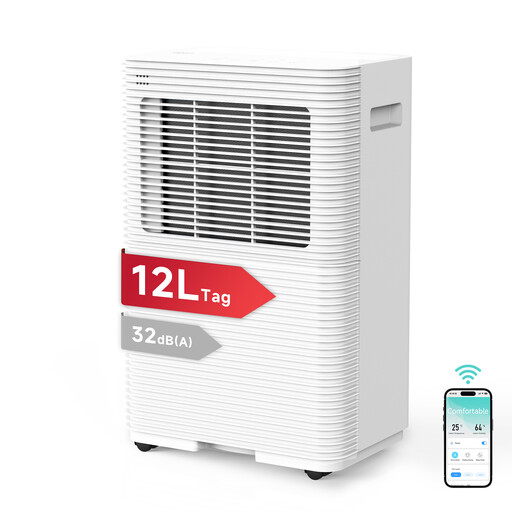
Why This Fits Their Persona: Perfect for tech-savvy users looking for a flexible solution for their apartment. The app control allows you to manage it on the go, while the laundry mode simplifies daily routines.
Offers specific modes (Auto, Dry, Sleep) tailored to real-world use cases. The smart control helps to actively manage energy consumption and adapt performance to actual needs.
WiFi control via an app for flexible scheduling and remote access. A dedicated mode for drying laundry and a quiet sleep mode (32 dB) offer a high level of convenience.
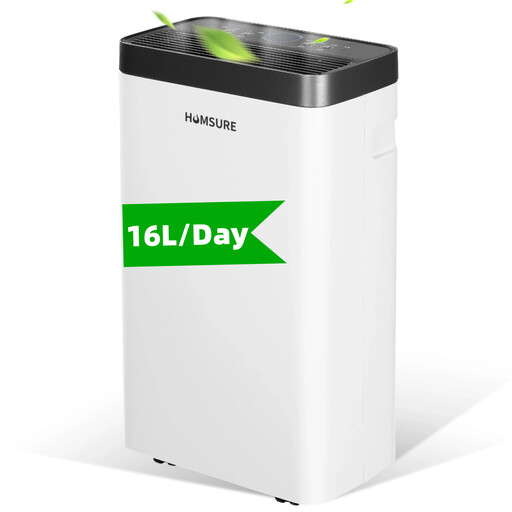
Why This Fits Their Persona: Designed for homeowners who need a robust solution for the basement, garage, or laundry room. This requires continuous operation and reliable performance in cold conditions.
Counters the "cold conditions" pitfall with an operating temperature range suitable for basements and an integrated auto-defrost function. The option for a drainage hose solves the problem of constant emptying.
Reliable operation even at lower temperatures (down to 7°C according to the manufacturer) and the option for continuous water drainage via the included hose.
We have compiled a complete, up-to-date list of products that fully meet these strict selection criteria and all relevant safety regulations.
For optimal air circulation, the dehumidifier should be placed as freely as possible in the centre of the room. Maintain a distance of at least 20–30 cm from walls and furniture to ensure the air intake and outlet vents are not blocked. For localised moisture problems, such as a damp wall, the unit can be positioned nearby, but always with sufficient clearance from the wall itself.
Power consumption depends on the unit's wattage and its daily runtime. Compressor dehumidifiers typically have a higher power draw (approx. 150–350 watts) than Peltier units (approx. 40–70 watts), but they offer significantly higher dehumidification performance. An energy-saving dehumidifier with an automatic hygrostat is the most efficient, as it only turns on when the humidity rises above the set level.
The ideal runtime depends on the initial humidity level and your desired target. In a very damp room, it may be necessary to run the unit continuously for 24 hours at first. Once a relative humidity of 50–60% is achieved, it's usually sufficient to let the built-in hygrostat control the unit. The dehumidifier will then only switch on as needed for a few hours a day.