
Lieferung heute & morgen

Qualitätsgarantie

Willkommens-Angebote freischalten: KOSTENLOSE Lieferung | Bis zu 80 % RABATT | Kostenlose 30-Tage-JoyPlus-Testphase
App herunterladen
An electric ceramic fan heater 2000 W can provide additional short-term warmth in living rooms, home offices or bedrooms. However, wattage is not the only factor to consider. Room size, controls, noise level, safety features and how you intend to use the heater are all important.
A 2000 W appliance can use up to 2 kWh per hour of operation on its highest setting. You can estimate the actual cost using this formula:
Power in kW × operating time in hours × electricity price per kWh = electricity cost
An energy-saving fan heater will not automatically use less electricity if it runs continuously at full power. In practice, several heat settings, a thermostat and an Eco mode are useful. These features can reduce operating time or power consumption, but they do not replace a specific cost calculation.
Claims such as “up to 25 m²” depend on insulation, ceiling height, outdoor temperature and the desired room temperature. A fan heater for 15–25 m² is more suitable as supplementary heating in an enclosed room. In poorly insulated rooms or with doors left open, heat can be lost considerably more quickly.
A fan heater with remote control, timer and oscillation is convenient. However, if the display is difficult to read or the temperature can only be adjusted roughly, ease of use remains limited. The noise level should also be stated in decibels. Marketing terms such as “whisper-quiet” are difficult to assess without a measured value.
A PTC ceramic heater uses a ceramic heating element with a temperature-dependent electrical characteristic. The appliances considered here have maximum outputs of 1500 or 2000 W. For a medium-sized room, it is important to check not only the maximum output but also whether a lower setting is available.
Look for:
A temperature control range of, for example, 5 to 35 °C in 1-degree increments allows more precise adjustment than a simple rotary control. The actual control accuracy depends on the model and the manufacturer’s specifications.
For bedrooms and workspaces, a quiet fan heater with a clearly stated decibel value is a sensible choice. Some models specify values of around 25 to 42 dB; however, how loud the appliance seems depends on the distance, fan setting and room acoustics.
A fan heater with oscillation distributes the airflow across an angle. Angles of 70°, 90° or 120° can help direct air towards a larger area. However, this feature does not replace suitable positioning. The air outlet should remain unobstructed and should not point directly at curtains, furniture or easily flammable materials.
An electric space heater should have at least overheat protection and tip-over protection. The appliance should switch off automatically if it overheats or falls over. These features reduce certain risks, but they do not make unattended use entirely safe.
Also bear in mind:
The CE marking is an important indication of conformity for the European market. However, it is not an independent quality assessment. Also check the operating instructions, manufacturer’s information, warranty and the responsible contact address.
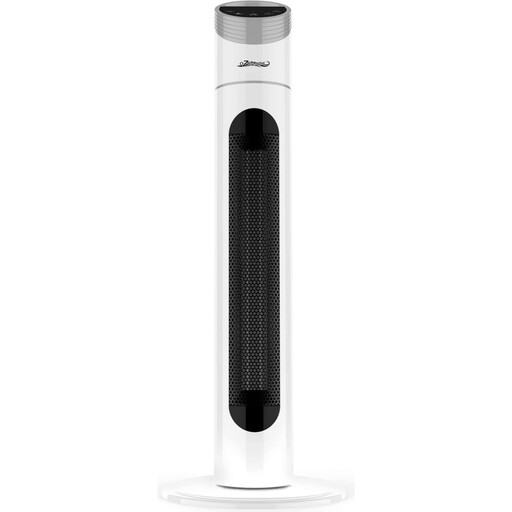
Why this product suits this profile: With a 2000 W PTC ceramic heater and two operating settings, this model offers a straightforward solution for occasional supplementary warmth in living rooms or workspaces.
The product details specify the heating technology, power consumption, 120° oscillation, as well as overheat and tip-over protection. A timer or remote control is not listed in the available information.
2000 W maximum output, PTC ceramic technology, two heat settings and 120° oscillation.

Why this product suits this profile: This model is aimed at households looking to combine temperature control, a remote control, a timer and a documented noise range.
The specifications state 15–25 m², 25–42 dB, 70° oscillation, a 12-hour timer and a temperature setting of 5–35 °C. The advertised energy saving of up to 40% should be understood as a manufacturer’s claim.
Remote control, timer, precise temperature selection, 70° oscillation, plus stated overheat and tip-over protection features.
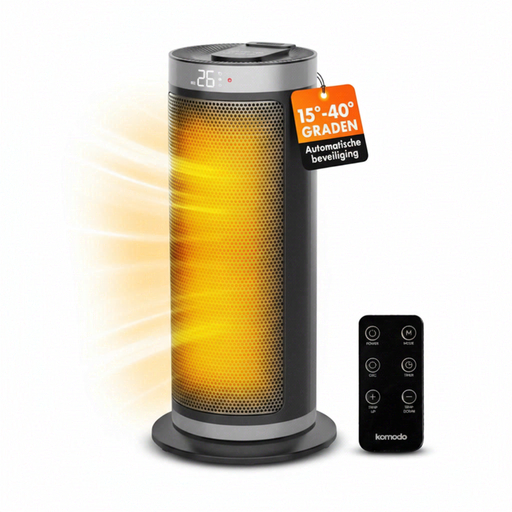
Why this product suits this profile: For users with changing requirements, three power settings, Eco mode, remote control, thermostat and oscillation can be combined in a practical way.
The product description lists 750, 1500 and 2000 W, Eco mode, 90° oscillation, a timer, tip-over protection and overheat protection. The IP66 rating should be checked against the instructions before using the appliance in damp rooms.
Three power settings, Eco mode, 90° oscillation and a 24-month warranty according to the product information.
We have put together a complete, regularly updated list of products that fully meet these strict selection criteria and the safety regulations applicable in the EU.
At full power, the calculated consumption is 2 kWh per hour. A thermostat, lower heat settings and a timer can limit the actual operating time. The individual electricity tariff determines the cost.
This can work with an average ceiling height and suitable insulation, particularly as supplementary heating. The manufacturer’s stated room coverage is only a guideline. Large windows, draughts or open doors may mean that the heater needs to run for longer.
Use while you are sleeping should follow the operating instructions. A fan heater with timer, overheat protection and tip-over protection offers additional automatic shut-off features, but it should not be covered or operated close to bedding or curtains. When leaving the room, switch off the appliance and disconnect it from the mains.