
Lieferung heute & morgen

Qualitätsgarantie

Willkommens-Angebote freischalten: KOSTENLOSE Lieferung | Bis zu 80 % RABATT | Kostenlose 30-Tage-JoyPlus-Testphase
App herunterladen
An electric fan heater can warm individual rooms for short periods without the need for a fixed heating installation. For bedrooms, living rooms, home offices or smaller offices, however, wattage is not the only consideration. The design, noise level, controls and safety features all determine whether the appliance remains practical for everyday use.
A 2000-watt fan heater can warm a room quickly, but at full power it also uses 2 kWh per hour of operation. The actual cost depends on your electricity tariff and how long the appliance runs. A simple calculation is:
Power in kW × operating hours × electricity price = electricity cost
A 2 kW appliance running for one hour uses 2 kWh in theory. A thermostat or ECO mode can reduce the operating time or the heating power switched on, but it cannot replace good insulation or turn a fan heater into an inherently economical continuous heater.
Fan heaters actively circulate warm air around the room. This can distribute heat more quickly, but it also creates operating noise. If you plan to use the appliance in a bedroom or office, look for a specific dB rating. Terms such as “whisper-quiet” without a measured value are only of limited significance.
A fan heater with overheat protection and tip-over protection provides additional safeguards. Even so, the appliance must be placed on a stable, dry and level surface. Curtains, furniture, paper and textiles should be kept at least around 1 metre away from the air outlet. The appliance must never be covered or used to dry clothing.
For small personal areas, a 1200- or 1500-watt model may be sufficient. Appliances rated at 1800 to 2000 watts are more suitable for larger rooms or spaces that need to warm up quickly. However, the stated room size is only a guide: ceiling height, insulation, outdoor temperature and open doors can all have a significant impact on heating performance.
A portable room heater with two power settings is more flexible in everyday use than an appliance that operates solely at full power. Also check whether the manufacturer’s stated floor area is realistic for your own conditions.
A ceramic fan heater often uses a PTC heating element. In the appliances featured here, the power is controlled electronically or via several settings. Oscillation, meaning the automatic swivelling of the appliance, distributes the airflow across a wider angle.
A convector, by contrast, works through natural air circulation without a constant fan-driven airflow. An oil-filled radiator releases heat more slowly, but can remain warm for some time after being switched off. The right design therefore depends on how you intend to use it:
An electric heater with remote control is practical if you want to operate the appliance from the sofa or bed. A fan heater with timer switches off automatically after the selected period. Depending on the model, the timer settings range from 1 to 12 hours or up to 24 hours.
Look for a clearly readable display, adjustable temperature settings and a suitable wall socket with the appropriate load rating. Extension leads and multi-socket adaptors should only be used if they are explicitly suitable for the required power. The instruction manual for the specific model takes precedence.
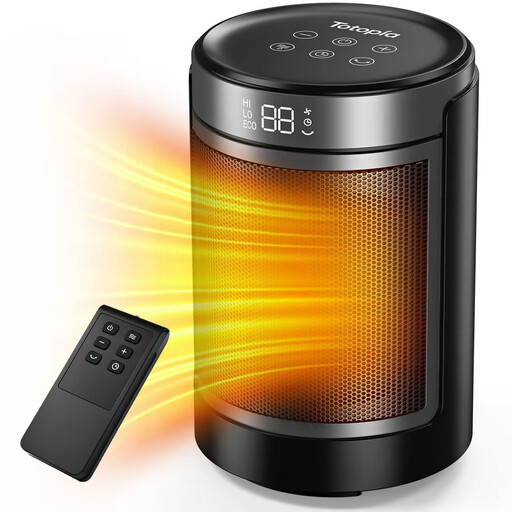
Why this product suits this profile: This compact appliance offers fan-only operation, 750 watts, 1500 watts and ECO mode, as well as a remote control. This makes it possible to adjust the power for small rooms, work areas or the bedroom.
The four operating modes mean you do not have to heat continuously at maximum power. A timer from 1 to 12 hours and tip-over protection complete the basic equipment.
PTC ceramic heating element, LED display, remote control, oscillation, plus overheat and tip-over protection.

Why this product suits this profile: This model combines an adjustable temperature range of 5 to 35 °C, remote control, 70° oscillation and a stated noise range of 25 to 42 dB.
The specific dB range is more informative than a simple marketing claim about quiet operation. Tip-over protection, overheat protection and a child lock are also specified.
2000 watts, PTC technology, 12-hour timer, 5–35 °C thermostat and several layers of protection according to the product information.
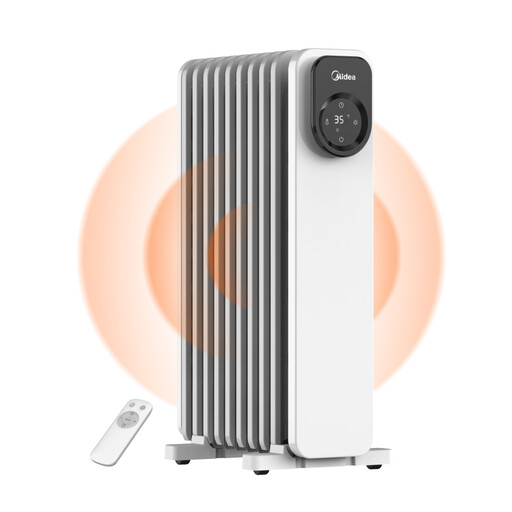
Why this product suits this profile: This portable oil-filled radiator is intended for well-insulated rooms or occasional use. Its design operates without a continuous fan-driven airflow, making it suitable for living rooms, bedrooms or home offices.
The product information explicitly states that it is intended for use in well-insulated rooms or occasionally. This avoids making a blanket claim that it is suitable for every room size.
Oil-filled design, thermostat, remote control, LED touchscreen, plus overheat and tip-over protection according to the description.

Why this product suits this profile: This model features four heating modes, an ECO function, a 24-hour timer, a thermostat from 5 to 35 °C and a stated noise level of up to 38 dB in the lowest mode.
The noise level is specified for the different operating settings. The timer, ECO mode and thermostat help limit unnecessary running time in sleeping or working areas.
Remote control, oscillation, child lock, overheat protection and tip-over switch according to the product description.
Before buying, measure the intended location and take the cable length into account. An appliance with a 1.5-metre cable is not automatically suitable for every position. The following points are also important:
A convector such as the Aigostar Convector Heater, with 1800 to 2000 watts, thermostat, LED control panel, 24-hour timer, anti-tip and overheat protection, can be an alternative to a traditional fan heater. The manufacturer states that it is suitable for an area of 20 to 25 m²; this should always be checked against the conditions in your own room.
We have put together a complete, regularly updated list of products that fully meet these strict selection criteria and the safety regulations applicable in the EU.
An appliance rated at 2000 watts uses 2 kWh per hour at full power in theory. A 1500-watt appliance uses 1.5 kWh per hour. A thermostat, ECO mode and a limited timer duration can reduce actual consumption if they cause the appliance to run less often or at a lower power level.
This depends on the instruction manual and the specific features provided. A timer and overheat or tip-over protection improve operating safety, but they do not replace supervision. The appliance must be positioned with plenty of clearance, must not be covered and should be checked for damage to the cable or casing before use.
A general service life cannot be determined from the wattage alone. Regularly removing dust from the air inlet, storing the appliance in a dry place and operating it according to the instructions can help extend its usable life. If you notice a burning smell, smoke, unusual noises or a damaged cable, switch off the appliance immediately and disconnect it from the mains.