
Lieferung heute & morgen

Qualitätsgarantie

Willkommens-Angebote freischalten: KOSTENLOSE Lieferung | Bis zu 80 % RABATT | Kostenlose 30-Tage-JoyPlus-Testphase
App herunterladen
A glass container with a lid should keep leftovers fresh, make transport easier and take up as little space as possible. In practice, however, problems are often caused not by the glass itself, but by unsuitable lids, missing temperature information or an impractical shape.
That is why it is worth looking at the actual product features before buying. The following tips will help households, families, working people and keen cooks choose a suitable glass food storage container or glass freshness container.
The description airtight glass container alone says very little. What matters is how the lid closes. A simple wooden or plastic lid placed on top may be sufficient for dry foods, but it is not automatically suitable for soups, sauces or transport.
For liquid foods, all-round silicone seals and side clips are useful. An airtight glass container should also include clear information about the seal and closure system.
According to the product information, a glass container may be suitable for use in the oven or microwave, while the lid may not be. If a plastic lid is used in the oven, it may warp or become damaged.
Moving frozen glass straight into a hot oven can also cause thermal stress. The manufacturer’s instructions must therefore be followed. Hot containers should not be placed directly in cold water or on very cold surfaces either.
A large capacity is practical for family-sized portions, but takes up more room in the fridge. For meal prep, rectangular or square containers are often easier to organise than round ones. If you want to buy several containers, look for matching base dimensions and a stackable design.
Borosilicate glass is used in several of the containers listed. According to LocknLock product information, the relevant models are designed for temperatures of up to 400 °C without the lid. Tefal and Emsa specify temperatures of up to 420 °C without the lid for selected glass containers. These values apply only under the stated conditions and do not automatically apply to the lid.
There are also differences when it comes to freezer use: according to the product information, some models are suitable for temperatures down to –20 °C, while others can withstand down to –40 °C. Check the temperature range if you want to freeze meals in individual portions.
An airtight glass container should have a clearly visible silicone seal and a sturdy closure. Four-sided closure systems distribute pressure evenly and can be more practical for liquids, dressings or soups than a simple lid that rests on top.
With decorative storage jars featuring wooden lids, dry-food storage is usually the priority. Coffee, tea, pasta, flour and biscuits can be stored neatly inside. Whether liquids can be stored safely must be expressly stated in the relevant product description.
Also pay attention to the external dimensions. The stated capacity alone does not indicate whether a glass container for meal prep will fit in your bag, microwave or fridge shelf.
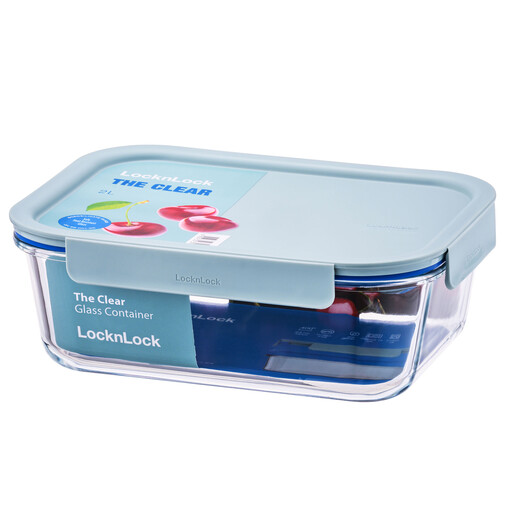
Why this product suits this profile: Its compact size is ideal for snacks, side dishes and smaller everyday portions. According to LocknLock product information, the container is suitable for the oven, microwave, freezer and dishwasher; the lid must be removed before heating.
The product information specifies a silicone seal and a stackable design. This makes the closure type and storage features clearer than with a simple lid that rests on top.
380 ml capacity, transparent glass surface and, according to the product information, dishwasher-safe cleaning.
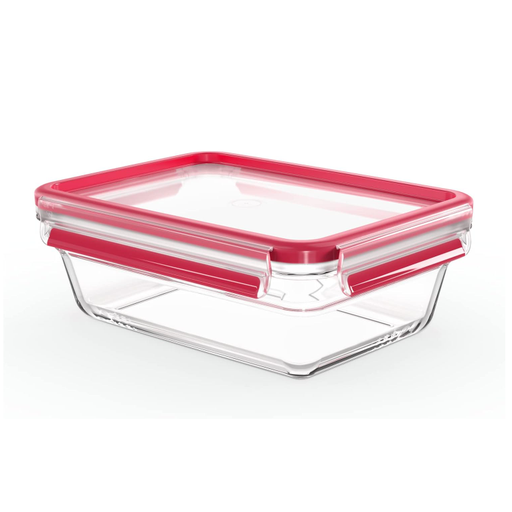
Why this product suits this profile: The rectangular glass container is designed for leftovers, meal prep and organised food storage. According to Tefal product information, it is suitable for the microwave, freezer down to –40 °C, oven up to 420 °C and dishwasher.
The information specifies a specially developed seal and a stacking rim. The lid must still be removed before heating, as instructed.
1.3 l capacity, rectangular shape, stackable rim and stated suitability for the oven, freezer and dishwasher.
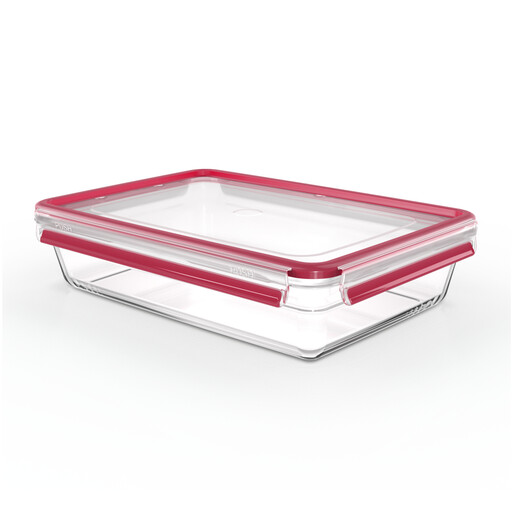
Why this product suits this profile: Its large capacity is suitable for family meals, fruit or several portions. According to Emsa product information, the container is stackable and suitable for the oven, microwave, freezer and dishwasher.
The information includes specific temperature limits and mentions a reinforced rim and a stacking rim. This makes planning fridge and freezer storage easier.
3 l capacity, described as leakproof, stackable and suitable for cleaning in the dishwasher.
We have put together a complete, regularly updated list of products that fully meet these strict selection criteria and the safety regulations applicable in the EU.
A glass container with a lid is easy to care for when all individual parts are taken into account. If the lid has a seal, remove the silicone ring regularly, provided this is recommended in the instructions. This makes it easier to remove residue and moisture. Wooden lids should generally be cleaned by hand and dried thoroughly.
Before every use, check the glass and lid for:
It is not possible to give a general lifespan. This depends on the material, frequency of use, cleaning and how temperature changes are handled. Damaged glass containers should no longer be used.
That depends on the model. The glass container is often microwave-safe, while the plastic lid is not. Some lids may also require a steam vent to be opened. Check the manufacturer’s information before heating.
As a general rule: glass without the lid can be placed in the oven if the model is specifically approved for this use. Plastic or wooden lids must not be put in the oven. Temperature limits and instructions for avoiding thermal shock must be followed.
Do not fill the container to the brim, clean the seal carefully and close all fasteners fully. For soups and sauces, a model with an all-round silicone seal and several locking points is recommended. Before transporting it, check that the lid is sitting evenly.