
Lieferung heute & morgen

Qualitätsgarantie

Willkommens-Angebote freischalten: KOSTENLOSE Lieferung | Bis zu 80 % RABATT | Kostenlose 30-Tage-JoyPlus-Testphase
App herunterladen
A glass and stainless steel kettle is more than just a kitchen appliance; it's often a design statement and a commitment to healthier water consumption. However, the market is saturated with models that look impressive but quickly disappoint in practice. Before you make a decision, it's crucial to understand the common pitfalls that often only become apparent after the purchase. This guide will help you separate the good from the bad and find a model that is both functional and durable.
Many buyers focus on appearance and power ratings, overlooking critical details that significantly impact daily use and the appliance's lifespan.
To avoid a bad purchase, you should focus on a few essential technical features and material standards.
The heart of any glass kettle is its water container. Here, heat-resistant safety glass (often referred to as borosilicate glass) is the top choice. It is not only robust against sudden temperature changes but also taste-neutral and does not release any substances into the water. For the stainless steel, you should look for food-grade quality. A concealed stainless steel heating element is also an important feature. It prevents direct contact between the water and the heating coil, which makes cleaning significantly easier and reduces limescale buildup on the element itself.
A 1.7-litre glass kettle has established itself as the standard size for most households. This quantity is sufficient to prepare several cups of tea or to pre-boil water for cooking pasta. Key safety features that every model should have include an automatic shut-off after reaching the boiling point, as well as boil-dry and overheat protection. These mechanisms ensure that the device switches off automatically if it is accidentally turned on while empty.
A cordless kettle that can be lifted from its 360° rotating base offers maximum flexibility for filling and pouring. A clearly visible water level indicator helps you heat only the amount of water you need, thus saving energy. An integrated cord storage in the base also keeps your worktop tidy.
Instead of presenting an overwhelming list, we are highlighting one model that effectively meets a common requirement.
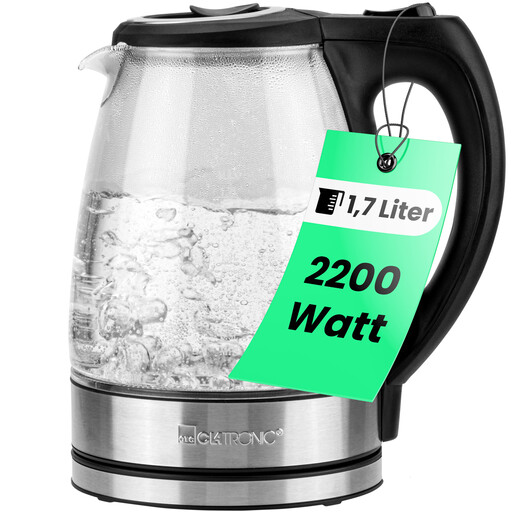
Why This Fits Their Persona: This model combines a large 1.7-litre capacity with a powerful output of up to 2200 watts, ideal for meeting the fast-paced demands of the morning. The glass and stainless steel material combination satisfies modern design and health standards.
According to the manufacturer, the water container is made of heat-resistant safety glass and the heating element is concealed, which minimises contact with undesirable materials and simplifies cleaning.
Comprehensive safety features (automatic/manual shut-off, boil-dry/overheat protection) and practical details like the 360° rotating connector and cord wrap.
This model is a good example of an all-rounder that meets the most important criteria. Depending on your specific needs, such as adjustable temperatures for use as a glass tea kettle or a particularly quiet operation, it may be worthwhile to explore other options.
We have compiled an up-to-date list of products that meet these strict selection criteria and safety regulations.
1. What is the best way to remove limescale from a glass and stainless steel kettle? To descale, fill the kettle with a mixture of water and white vinegar (in a 1:1 ratio) or a special descaling solution. Let the mixture sit for about an hour (do not boil), and then rinse the appliance thoroughly with clean water several times. For stubborn deposits, the process can be repeated or the soaking time extended.
2. Is a glass kettle really a healthier choice than a plastic one? Glass has the objective advantage of being taste-neutral and not releasing chemicals like plasticisers or microplastics into the water. Additionally, limescale deposits are immediately visible, which encourages more regular cleaning. Models made from high-quality, BPA-free plastic are also an option, but glass offers clear advantages in terms of material purity and taste neutrality.
3. What exactly does "BPA-free" mean for a kettle? BPA (Bisphenol A) is an industrial chemical used to make certain plastics. It is suspected of being harmful to health. A kettle labelled "BPA-free" does not use this substance in any plastic parts that come into contact with food. However, it is important to know that this is not a guarantee that no other, less-known chemical compounds are present in the plastic. To be on the safe side, choose a model where the water only comes into contact with glass and stainless steel.