If a high fibre content is your top priority for a weekend breakfast, compare the nutrition information per 100 g: Nestlé FITNESS, with 9.4 g, and Nestlé CINI MINIS, with 6.4 g of fibre per 100 g, both meet the relevant EU threshold of 6 g per 100 g, according to Nestlé Cereals Germany. CINI MINIS are cinnamon-flavoured cereals rather than classic cornflakes, and contain 24 g of sugar per 100 g according to the manufacturer. Unsweetened cornflakes may suit different priorities, but their name alone doesn’t prove they’re high in fibre.
Which option might suit you
Fibre first
If you’re specifically looking for a high-fibre cereal for your weekend breakfast, check the figure in the nutrition information. Under EU Regulation (EC) No 1924/2006, a ‘high fibre’ claim requires at least 6 g per 100 g or 3 g per 100 kcal. The words ‘wholegrain’ or ‘organic’ alone don’t tell you whether a product meets this threshold.
Less sugar, simple cornflakes
If you prefer unsweetened cornflakes as the base for your breakfast, compare sugar and fibre separately. REWE lists its unsweetened organic cornflakes as containing less than 0.5 g of sugar and 4.1 g of fibre per 100 g.
Cinnamon flavour for breakfast together
If flavour is the deciding factor for you, cinnamon-flavoured cereals could be an alternative to cornflakes. According to the manufacturer, Nestlé CINI MINIS contain 6.4 g of fibre and 24 g of sugar per 100 g, so both figures are worth considering.
What to look for when buying
First decide whether fibre content, lower sugar or flavour matters most to you. Then compare figures using the same basis, and check the ingredients and allergen information on the current pack if you have any dietary requirements.
| Criteria |
What to check when buying |
Who it matters most to |
| Fibre |
Fibre per 100 g. For the EU ‘high fibre’ claim, products must contain at least 6 g per 100 g or 3 g per 100 kcal. |
I want to choose a cereal for my weekend breakfast whose fibre content genuinely supports the claim I’m looking for. For around 50% of consumers, this evidence is the top priority when choosing. |
| Sugar and ingredients |
Compare sugar per 100 g and the ingredients list separately from the fibre content. |
I’d rather have unsweetened cornflakes as a simple breakfast base; I can also get fibre from other parts of my breakfast. Around 30% of consumers prioritise low sugar and simple ingredients. |
| Flavour |
For cinnamon-flavoured cereals, check the flavour, sugar and fibre per 100 g. |
For our breakfast together, the cinnamon flavour is the main consideration, but I still want to check the nutrition information. Around 20% of consumers put flavour first when making this choice. |
Common misconceptions
-
‘Organic’ or ‘wholegrain’ automatically means ‘high fibre’
These descriptions don’t replace the fibre figure. REWE lists its unsweetened organic cornflakes as containing 4.1 g of fibre per 100 g, which is below the EU threshold of 6 g per 100 g for a ‘high fibre’ claim.
Check the fibre content per 100 g on the pack. If the alternative threshold is being used instead, the figure per 100 kcal is the one that matters.
-
High fibre means low sugar
These need to be considered separately: Nestlé Cereals Germany lists CINI MINIS as containing 6.4 g of fibre and 24 g of sugar per 100 g, and FITNESS as containing 9.4 g of fibre and 8.8 g of sugar per 100 g.
Compare both figures in the per-100 g column when deciding between these cereals.
-
Checking grains and allergen information only after buying
If you need to avoid certain ingredients, you can’t rely on the fibre figure alone. Nestlé lists wholegrain wheat and barley malt extract for FITNESS; other cereals may contain different grains or carry relevant ‘may contain’ warnings.
Before buying, check the ingredients and allergen information on the specific pack.
Brands and product ranges to consider
The information below relates to the specific cereals named, not to every product in each brand’s range.
Nestlé FITNESS
These wholegrain cornflakes may be worth considering if the stated fibre content is your main selection criterion.
- According to Nestlé Cereals Germany, they contain 9.4 g of fibre and 8.8 g of sugar per 100 g.
- The manufacturer lists 61.1% wholegrain wheat and barley malt extract, so these aren’t pure cornflakes or a wheat-free option.
Nestlé CINI MINIS
Cinnamon-flavoured cereals for a breakfast where flavour takes priority over plain cornflakes.
- According to Nestlé Cereals Germany, they contain 6.4 g of fibre per 100 g, meeting the per-100 g threshold for a ‘high fibre’ claim.
- The manufacturer also lists 24 g of sugar per 100 g. CINI MINIS aren’t classic cornflakes.
REWE Bio
These unsweetened organic cornflakes make a corn-based breakfast option for anyone keeping a close eye on sugar.
- REWE lists 99% corn and less than 0.5 g of sugar per 100 g.
- At 4.1 g of fibre per 100 g, they’re below the per-100 g threshold for a ‘high fibre’ claim. If you have allergies, it’s also important to check the ‘may contain’ information on the pack.
Kellogg's
Kellogg's classic Corn Flakes and products from the All-Bran range need to be considered individually.
- REWE lists Kellogg's Corn Flakes as containing 3 g of fibre and 8 g of sugar per 100 g.
- Kellogg's lists ALL-BRAN APFEL-FEIGE as containing 4.5 g of fibre per 30 g serving. This isn’t a classic cornflake, and serving-size figures shouldn’t be treated as equivalent to per-100 g figures.
EDEKA Bio
These unsweetened organic cornflakes are another corn-based option if simple ingredients are your priority.
- EDEKA24 lists the product as containing 99.4% corn and 0.6 g of sugar per 100 g.
- If a high fibre content is a deciding factor, check the fibre figure on the specific pack.
Cereals at Joybuy
This selection includes wholegrain and cinnamon-flavoured cereals, as well as a fruit muesli as an alternative to cornflakes. Check the nutrition information and ingredients on each pack, especially if fibre, sugar or allergens are important to your decision.
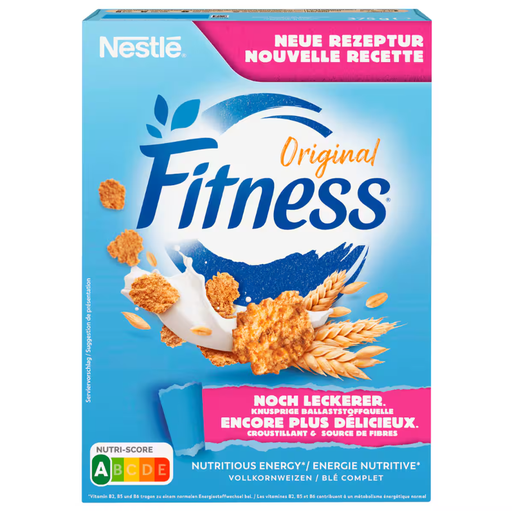 Image unavailable
Nestlé Fitness Original Whole Grain Cereal 375 g
A wholegrain cereal for a weekend breakfast if you’re looking for a flake-style option. Check the fibre content and the ingredients and allergen information for this 375-g pack; the name doesn’t indicate that it’s made from corn.
View at Joybuy
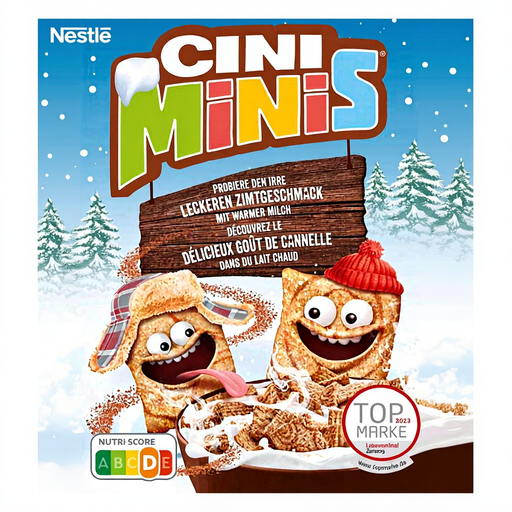 Image unavailable
Nestlé Cini Minis cinnamon cereal squares 375 g
For a shared breakfast when you fancy a cinnamon flavour. This 375-g variety comes in cereal squares rather than classic cornflakes; compare fibre and sugar using the latest nutrition information on the pack.
View at Joybuy
 Image unavailable
Kölln 50% fruit muesli No Added Sugar 500 g
A breakfast alternative if you’re open to fruit muesli instead of cornflakes. The pack contains 500 g; check the sugar, fibre and ingredients in the nutrition information rather than assuming the variety name means it’s low in sugar.
View at Joybuy
Frequently asked questions
When can a cereal be described as ‘high fibre’?
For a ‘high fibre’ claim or any similar wording, EU Regulation (EC) No 1924/2006 requires at least 6 g of fibre per 100 g or 3 g per 100 kcal. Check the relevant basis in the nutrition information for the specific product.
Is a wholegrain claim enough to show that a cereal is high in fibre?
No. For a ‘high fibre’ claim, it’s the fibre content that counts, not the wholegrain claim alone. Compare the latest nutrition table with the EU thresholds before describing a cereal this way.
Are unsweetened cornflakes automatically high in fibre?
No. ‘Unsweetened’ on its own says nothing about fibre content. REWE lists its unsweetened organic cornflakes as containing less than 0.5 g of sugar and 4.1 g of fibre per 100 g; the latter is below the per-100 g threshold for a ‘high fibre’ claim.
What should I check before serving if someone has allergies?
Read the ingredients and allergen information on the current pack of the variety you’ve chosen. Nestlé lists wholegrain wheat and barley malt extract for FITNESS; the grains and ‘may contain’ warnings can differ for other cereals.


