Breakfast shoppers prioritising fibre
If you’re specifically looking for flakes that meet the EU nutrition claim ‘high in fibre’, the stated amount per 100 g matters more than the word ‘wholegrain’ on the front of the pack.


For a breakfast that takes diabetes into account, it’s worth assessing high-fibre flakes and unsweetened cornflakes separately. Compare fibre, carbohydrates and sugars per 100 g, then work out the carbohydrates in the portion you actually eat. A low sugar figure alone doesn’t mean a product is high in fibre or that a portion fits your personal eating plan.
If you’re specifically looking for flakes that meet the EU nutrition claim ‘high in fibre’, the stated amount per 100 g matters more than the word ‘wholegrain’ on the front of the pack.
If sugar content is your first priority, unsweetened cornflakes may be worth considering. Still, check the fibre and total carbohydrates separately.
If you’re managing your meal’s carbohydrates because of diabetes, you’ll need both the nutrition figures per 100 g and the amount that actually goes into your bowl.
First decide whether a stated high fibre content or an unsweetened corn base matters more to you. Whichever you choose, check the carbohydrates in the portion you plan to eat.
A good fit if: You’re looking for flakes whose nutrition figures meet the threshold for the ‘high in fibre’ claim.
The trade-off: Even if the fibre figure meets the threshold, you still need to take the carbohydrates in your portion into account.
A good fit if: You’re mainly looking for an unsweetened corn base and want to compare the stated sugar content.
The trade-off: Unsweetened doesn’t automatically mean high in fibre or low in carbohydrates.
| Criterion | What to check | Who it matters most to |
|---|---|---|
| Fibre | Compare fibre per 100 g. For the EU nutrition claim ‘high in fibre’, Regulation (EC) No 1924/2006 specifies at least 6 g per 100 g or 3 g per 100 kcal. | If I choose flakes for their fibre, I don’t want to rely on ‘wholegrain’ alone; around 33% of consumers put fibre first when making this choice. |
| Carbohydrates and portion size | Work out the carbohydrates per 100 g for the amount you actually eat. Account for the other parts of the meal separately. | I want to understand the carbohydrate content of my whole meal based on my usual bowl; around 45% of consumers prioritise portion planning. |
| Sugar and ingredients | Compare sugars and total carbohydrates separately. If needed, check the ingredients and allergen information on the pack you buy. | When choosing unsweetened cornflakes, I also want to know exactly what I’m eating; around 22% of consumers prioritise sugar and ingredients. |
According to REWE, REWE Bio unsweetened cornflakes contain less than 0.5 g of sugar but 4.1 g of fibre per 100 g. That’s below the EU threshold of 6 g of fibre per 100 g for the corresponding nutrition claim.
Read the sugar and fibre figures as two separate entries in the nutrition table.
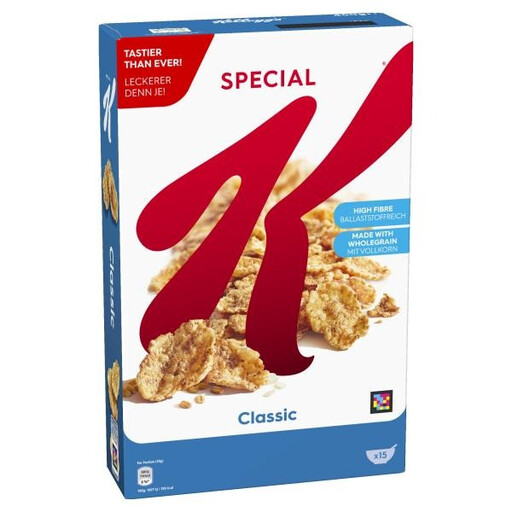
Kellogg’s lists 6.2 g of fibre and 84 g of carbohydrates per 100 g for Special K Classic. The fibre figure therefore doesn’t tell you how many carbohydrates are in your portion.
Weigh or measure your usual serving, and include milk, yoghurt, fruit or other toppings as part of the meal.
Depending on the type of flakes, wheat, barley or warnings about possible traces of allergens may be relevant. Information can vary between packs when recipes change.
If you need to avoid certain ingredients, check the ingredients list and allergen information on the exact pack you’re buying.
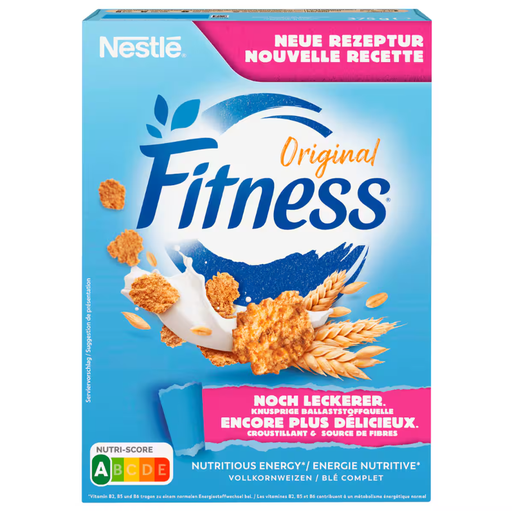
The FITNESS range includes wholegrain flakes. When comparing products, check the nutrition table for the specific variety rather than relying on the range name alone.
Special K Classic is a mix of flakes made with rice, wholegrain wheat and barley; the figures below apply to this variety.
REWE Bio unsweetened cornflakes are a corn-based option to compare with wholegrain flakes.
EDEKA Bio offers an unsweetened cornflake variety; the information here relates to this product.
This selection includes two wholegrain flake varieties and unsweetened cornflakes. The nutrition information on each pack and the portion you actually eat are what matter when choosing between them.
 No image available
A choice to consider when comparing flakes with a stated fibre content: Kellogg’s lists 6.2 g of fibre, 84 g of carbohydrates and 12 g of sugar per 100 g for Special K Classic. The mix contains wheat and barley; check the allergen information on the pack.
 No image available
A wholegrain flake option if you want to compare fibre, sugar and carbohydrates using the information on the specific pack. Also check the ingredients and work out the nutrition figures for your portion.
 No image available
An unsweetened cornflake option to compare with wholegrain flakes. Check the sugar, fibre and total carbohydrates separately on the pack; ‘unsweetened’ doesn’t remove the need to check your portion size.
For this EU nutrition claim, Regulation (EC) No 1924/2006 requires at least 6 g of fibre per 100 g or 3 g per 100 kcal. The claim describes the fibre content, not whether a portion is suitable for you personally if you have diabetes.
No. REWE lists less than 0.5 g of sugar but 4.1 g of fibre per 100 g for REWE Bio unsweetened cornflakes. This amount of fibre is below the EU threshold of 6 g per 100 g for the ‘high in fibre’ claim.
Compare the carbohydrates per 100 g with the amount of flakes you actually eat, and take the other parts of the meal into account. A serving size printed on the pack isn’t a personal recommendation for your diet or treatment plan.
The pack gives you the ingredients, allergen information and nutrition figures for the specific variety you’re using. Nestlé warns that recipes for FITNESS products may change, so the information on the pack you buy is the one to rely on when making your choice.