
Lieferung heute & morgen

Qualitätsgarantie

Willkommens-Angebote freischalten: KOSTENLOSE Lieferung | Bis zu 80 % RABATT | Kostenlose 30-Tage-JoyPlus-Testphase
App herunterladen
A blunt kitchen knife makes precise cutting harder and can be more difficult to handle if it slips. But when choosing a knife sharpener, it’s important to look beyond claims such as ‘quick’ or ‘multi-functional’. The design, sharpening stages, stability and suitability for your knife all matter.
A sharpener with several slots isn’t automatically suitable for every task. Some models combine coarse sharpening, fine sharpening and honing, while others have just one sharpening unit. Check what each stage actually does and whether it’s intended for straight or serrated blades.
A manual knife sharpener needs to stay firmly in place on the worktop while you use it. A slippery base or weak suction cup can make it harder to keep the sharpener under control. If you’re choosing a knife sharpener with a suction cup, the surface should be clean, flat and as smooth as possible. It may not grip as well on porous or uneven worktops.
A honing steel realigns the cutting edge of a suitable knife, but it doesn’t usually remove as much material as an abrasive sharpener. A whetstone for knives allows for more precise sharpening, but it takes practice and careful control of the sharpening angle. An electric or manual knife sharpener isn’t always a direct substitute for a honing steel or whetstone.
Knife sharpeners with sharpening wheels use different materials, depending on the model. Stainless steel may be used for coarser sharpening, while ceramic is often intended for finer sharpening. The right choice depends on the design and the manufacturer’s guidance.
A 3-stage knife sharpener can combine several steps in one tool. Before buying, check whether the stages are clearly labelled as coarse, fine and, where applicable, honing. For many households, a clearly labelled system is easier to use than a model with an unclear description of its functions.
The angle affects how the cutting edge is sharpened. According to the product description, the ZWILLING TWINSHARP has a preset angle of around 35° and is designed for knives with straight edges. A preset angle can make sharpening easier, but you should still check that the sharpener is suitable for your knife.
For high-quality knives or those with particularly thin blades, follow the manufacturer’s guidance. Not every kitchen knife sharpener is suitable for every blade shape.
Compact models can be stored in a drawer. For example, the ‘Knife Sharpener 215x50x55mm’ measures 215 × 50 × 55 mm. Other points to consider before buying include:
Remove any sharpening dust after use. Only clean knives and sharpeners with water to the extent permitted in the relevant product description.
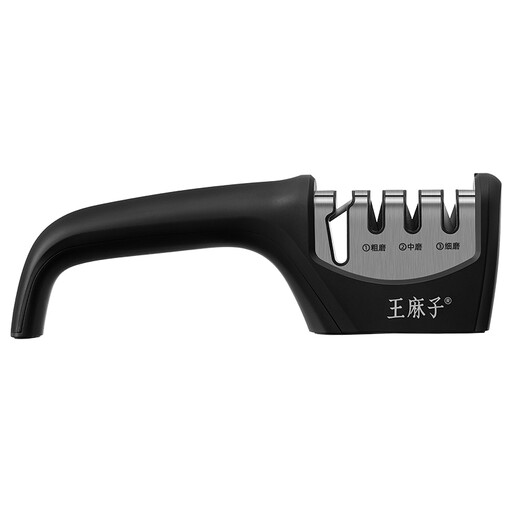
Why it suits this type of user: The four-in-one design is for households looking for several functions in one compact tool.
Its range of functions means you may not need to buy several separate sharpeners. Check what each section is for before use.
Several sharpening functions in one tool; the manufacturer describes it as suitable for kitchen knives.
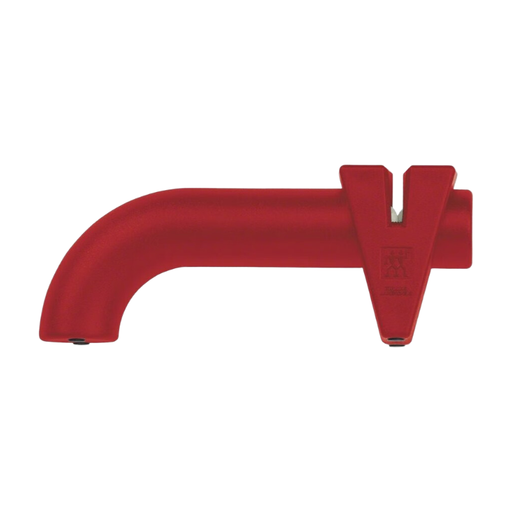
Why it suits this type of user: This 17 cm model combines stainless steel and ceramic wheels with a preset sharpening angle.
The product description specifies separate functions for coarse and fine sharpening. The angle is preset, so you don’t need to guide the knife freehand.
ABS plastic body; stainless steel and ceramic wheels; preset angle of around 35° for straight edges.
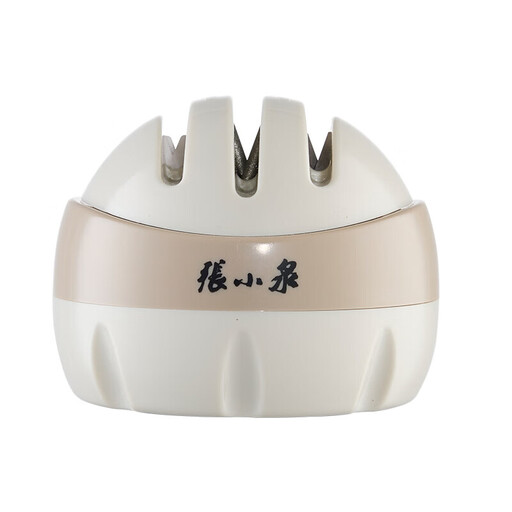
Why it suits this type of user: The single handle and suction-cup design are intended to minimise the need to guide the knife by hand.
The suction cup helps address the issue of stability. Use it only on a clean, flat and suitable surface.
Suction-cup design; single handle; described as a multi-function household knife sharpener.
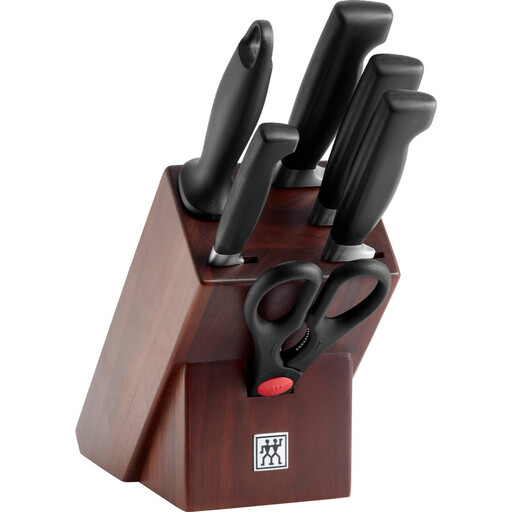
Why it suits this type of user: This knife block set brings together four knives, a honing steel, kitchen scissors and a knife block for a range of cutting tasks.
Rather than choosing individual knives and storage separately, you can see exactly what’s included. According to the product description, the knives are not dishwasher-safe.
Seven-piece set; FRIODUR ice-hardened special formula steel blades according to the product description; 23 cm honing steel.
We’ve put together a complete, regularly updated list of products that meet these strict selection criteria and the safety regulations in force in the EU.
It depends on the quality of the knife, the chopping board and how often you use it. A honing steel can help maintain the cutting edge if you cook regularly. A knife sharpener with sharpening wheels, however, shouldn’t be used more often than necessary, as sharpening removes material.
No. Check the blade shape, edge type and manufacturer’s guidance. Many manual knife sharpeners are designed for straight-edged kitchen knives. Serrated knives, very thin blades or specialist Japanese edges may need a different method.
A honing steel is useful for regular maintenance of the cutting edge. A whetstone allows for more flexible sharpening, but takes more practice. A manual knife sharpener with a preset angle is usually easier to use. The right choice depends on how much control, experience and time you want to put into knife care.