
Lieferung heute & morgen

Qualitätsgarantie

Willkommens-Angebote freischalten: KOSTENLOSE Lieferung | Bis zu 80 % RABATT | Kostenlose 30-Tage-JoyPlus-Testphase
App herunterladen
LED lamps are a standard feature in many German households. Even so, buying the wrong product can lead to unnecessary costs: a bulb may not fit the existing socket, a supposedly dimmable lamp may flicker with a wall dimmer, or a smart LED lamp may fail to connect to the home Wi-Fi network.
The product name alone says little about whether a lamp is truly suitable. The decisive factors are the socket, brightness, colour temperature, shape, power supply and intended location. The following selection guide from the Joybuy Product Recommendation Officer explains what households, tenants and smart-home users should consider when choosing LED lamps in 2026.
With traditional incandescent bulbs, brightness was often estimated by wattage. With LED lighting, however, the key measurement is luminous flux in lumens. Depending on its design, a 6 W LED lamp can produce around 510 lumens, while a 15 W LED lamp can reach approximately 1,500 lumens.
Wattage primarily indicates energy consumption. When comparing products, buyers should therefore check the lumen rating first, followed by the power consumption.
An E27 LED lamp has a large screw base, while an E14 LED lamp is designed for smaller sockets. The diameter and height must also fit the light fixture. A G45 lamp measuring 80 mm in height may be suitable for a small table or pendant lamp, whereas larger A60 or spiral shapes require more space.
Before buying, unscrew the existing bulb and check the socket, available space and the fixture’s maximum rated wattage.
A dimmable LED lamp will not necessarily work with every existing dimmer. Smart LED lamps are often dimmed via an app or voice control and, according to their product specifications, must not be used with a conventional wall dimmer. With non-dimmable LED bulbs, a dimmer can cause flickering or operating problems.
For German households, LED bulbs rated for 220–240 V and fitted with the appropriate socket are standard. E27 is suitable for many ceiling, floor and table lamps, while E14 is commonly used in smaller fixtures and chandeliers.
Also pay attention to the IP rating. A product with IP20 is intended for dry indoor spaces and is not suitable for bathrooms, outdoor areas or direct exposure to moisture. The operating temperature specified by the manufacturer and the fixture’s ventilation requirements should also be observed.
A warm-white LED lamp at approximately 2,700 to 3,000 K creates a welcoming, comfortable atmosphere. Neutral white at around 4,000 K is well suited to work areas, for example. Daylight white at approximately 6,500 K can be chosen for functional spaces, although it produces a noticeably cooler effect.
When choosing smart LED lamps, check whether a 2.4 GHz Wi-Fi connection, a specific app or a voice assistant such as Alexa or Google Assistant is required. For battery-powered products, battery capacity, charging connector and runtime are important comparison points.
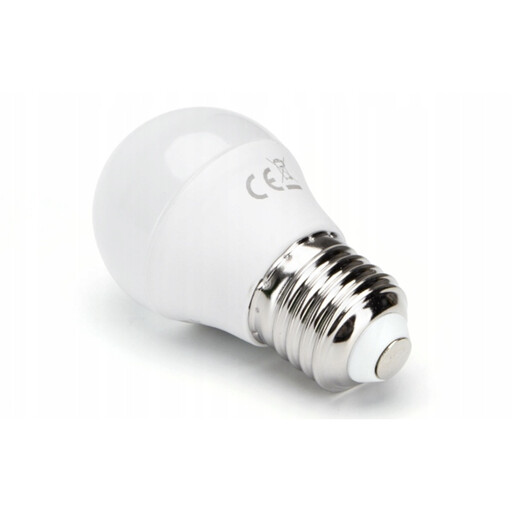
Why It Suits This User Profile: Ideal for tenants and first-time buyers looking for a compact E27 solution for bedrooms, living rooms or table lamps.
The specifications clearly state the socket, voltage, luminous flux and dimensions, making it easier to verify compatibility before installation.
6 W, 510 lm, 3,000 K, E27 socket and compact dimensions of 45 × 80 mm.
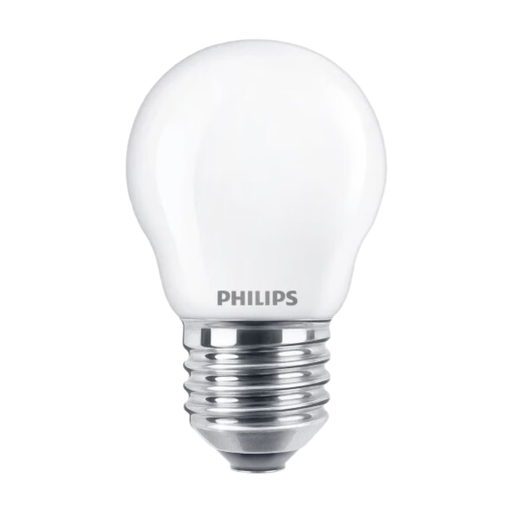
Why It Suits This User Profile: For buyers who prefer a classic matte design, warm-white light and clearly stated consumption data.
The lamp is explicitly labelled as non-dimmable, making it easier to match the product to the existing wiring and controls.
2.2 W, 250 lm, 2,700 K, E27 socket, energy efficiency class E and a stated service life of 15,000 hours.

Why It Suits This User Profile: Ideal for kitchens, cabinets, hallways and shelving where illumination is needed without installing additional wiring.
PIR detection, USB charging and adhesive mounting are clearly specified. Before installation, the surface must be clean, dry and suitable.
Two lights with 21 LEDs, an 800 mAh battery, motion detection from 3–5 m and three colour temperatures ranging from 2,800 to 7,000 K.
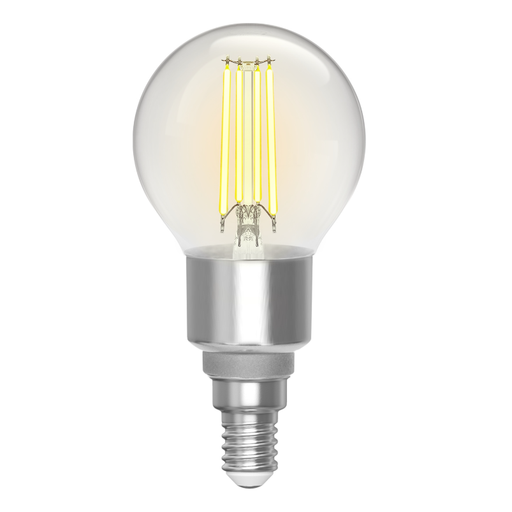
Why It Suits This User Profile: For users with E14 fixtures who want to combine app control, voice commands and adjustable light colours in one product.
The product specifications list E14, 2.4 GHz Wi-Fi, Bluetooth pairing and app-based dimming. According to the description, no additional hub is required.
RGB+CCT, 2,700–6,500 K, approximately 350–400 lm, plus support for AigoSmart, Alexa and Google Assistant.
The complete selection includes LED bulbs, smart LED lamps, LED night lights, LED floor lamps and other solutions for different rooms and requirements.
Consumption depends on the lamp’s wattage and how long it is used. A 6 W LED lamp running for ten hours consumes 0.06 kWh. To calculate the operating cost, multiply this figure by your electricity rate. The wattage stated on the packaging is therefore more useful than broad promises about cost savings.
The stated service life is a manufacturer’s estimate and depends, among other factors, on switching frequency, ambient temperature and ventilation. The products in this selection list service lives of 15,000, 20,000 or 25,000 hours, for example. These figures do not guarantee identical performance in every household.
No. Check specifically whether the product is labelled as dimmable and which control method it supports. A smart LED lamp may be dimmed via an app, while a non-dimmable E27 LED lamp is suitable only for a standard on/off switch. If you are unsure, compare the lamp’s technical specifications with those of the existing dimmer.