
Lieferung heute & morgen

Qualitätsgarantie

Willkommens-Angebote freischalten: KOSTENLOSE Lieferung | Bis zu 80 % RABATT | Kostenlose 30-Tage-JoyPlus-Testphase
App herunterladen
A liposomal serum is often marketed as offering modern active-ingredient technology, intense hydration and visible skincare benefits. However, the term alone does not tell you whether a product suits your skin or your existing routine. If you want to buy an anti-ageing serum, a hyaluronic acid serum or a vitamin C serum, you should therefore look more closely at the formulation, how it is used and its skin tolerance.
Liposomes are small carrier structures that can encapsulate certain ingredients. This can influence the formulation, but it does not automatically guarantee better results for the skin. What really matters is which active ingredients are included, their concentration, the stability of the formulation and regular use.
You should therefore check the complete INCI list, rather than focusing solely on the term “liposomal”. For example, a product may contain hyaluronic acid, retinol, vitamin C or glycolic acid without all of these ingredients being encapsulated in the same way.
A glycolic acid serum can support skin renewal cosmetically, but glycolic acid can also irritate sensitive skin. Retinol, retinaldehyde and retinyl palmitate also require gradual introduction. If a product contains fruit acids or vitamin A derivatives, using broad-spectrum sun protection during the day is advisable.
If you have sensitive or dry skin, start by using the product only a few times a week. If redness, stinging or persistent irritation occurs, stop using it for a while. The product instructions and your individual tolerance are the key factors.
Claims such as “instant firming”, “deep regeneration” or “maximum absorption” should be viewed critically. Instead, check the following:
For dry skin, a hydrating serum containing hyaluronic acid, glycerine, ceramides or skin-identical lipids is often the priority. For dull skin, vitamin C derivatives and antioxidant ingredients may be worth considering. Peptides, silicon compounds and selected plant extracts are often used to support skin that is losing firmness.
A firming face serum should not be promoted solely on the basis of a lifting effect. Check which specific ingredients support this skincare focus. If you are considering a serum for all skin types, it is also important to check whether the texture suits your own skin. A lightweight formulation may be suitable for combination skin, while dry skin may need an additional cream.
Do not use several highly active products together without considering how they interact. Using a glycolic acid serum alongside a retinol serum or a highly concentrated vitamin C product can make your skincare routine unnecessarily demanding, especially if you have sensitive skin. A simple routine consisting of cleansing, a suitable serum, moisturiser and sun protection is usually easier to follow consistently.
If you have a known skin condition, are pregnant or are undergoing medical treatment, you should discuss choosing products containing retinoids or strong acids with an appropriate medical professional. Cosmetic serums are not intended to treat medical conditions.
A pump dispenser or a tightly sealed dispenser reduces contact with air and fingers. With a 30 ml product, the coverage depends on how much you use. Only a few drops are generally needed for the face, neck and décolleté. Store the serum according to the manufacturer’s instructions and pay attention to the symbol indicating how long it can be used after opening.
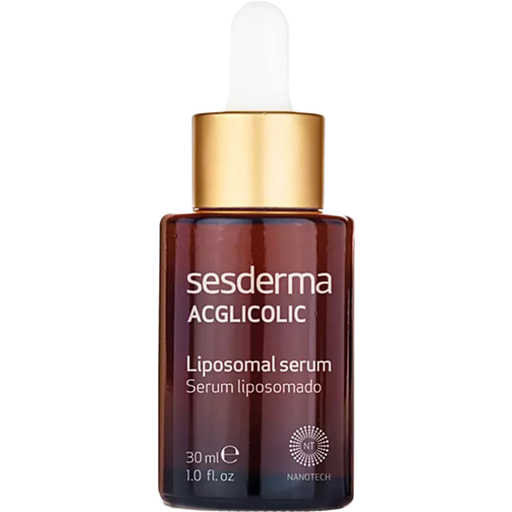
Why this product suits this profile: The formulation combines free and liposomally formulated glycolic acid with hyaluronic acid and vitamins C and E. This makes it appealing to people looking for an acid serum with an additional focus on hydration.
The choice of ingredients makes the skincare focus clearer than simply describing the product as liposomal. If used during the day, sun protection should be part of your routine.
Glycolic acid, hyaluronic acid, and vitamins C and E in a 30 ml serum; according to the product information, it is intended for all skin types.
Why this product suits this profile: Ferulic acid, phloretin and a vitamin C derivative create the stated antioxidant focus. Retinol and moisturising ingredients complement the active-ingredient profile.
The specific combination of active ingredients is clearly stated. Because it contains retinol, introduce it gradually and use sun protection during the day.
Ferulic acid, phloretin, ascorbyl glucoside, retinol, glycerine and hyaluronic acid; dispenser for measured application.
Why this product suits this profile: According to the product description, the serum contains three forms of hyaluronic acid as well as ceramides, essential fatty acids and phytosphingosine. It also contains retinol and retinaldehyde.
The formulation combines hydration and barrier care, rather than simply promoting the presence of hyaluronic acid. Fragrance allergens and vitamin A ingredients should be taken into account before buying.
Three forms of hyaluronic acid, ceramides and fatty acids; 30 ml content and morning and evening use according to the product information.
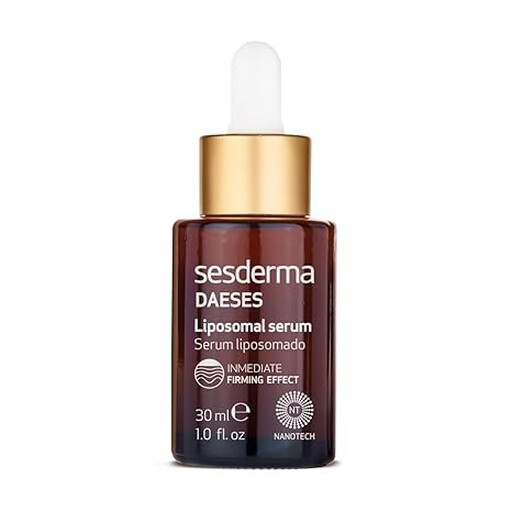
Why this product suits this profile: Its stated focus is skincare for a smoother-looking and firmer complexion. The formulation contains, among other ingredients, liposomal organic silicon, acacia extract, glycerine and peptides.
The product information clearly states the ingredients, volume and intended use. If you are sensitive to fragrance, check the complete information on the packaging.
Liposomal organic silicon, acacia extract and peptides; according to the product information, it is intended for all skin types and daily facial skincare.
A liposomal serum contains active ingredients that may be partially enclosed in liposomes. This carrier structure is a formulation technology. Whether the product suits your skin also depends on its active-ingredient profile, texture, preservatives and tolerance.
The best-before date and the open-jar symbol on the packaging are the key points of reference. After opening, the serum should be kept tightly closed, protected from excessive heat and stored according to the manufacturer’s instructions. Changes in smell, colour or consistency may indicate that you should stop using the product.
This depends on the individual formulations. If you are using several active products, it is advisable to apply them at different times and introduce them gradually. Acids and retinoids can place greater demands on the skin. A vitamin C serum, a retinol serum and an acid product should therefore not be used at the same time without checking the product information.