
Lieferung heute & morgen

Qualitätsgarantie

Willkommens-Angebote freischalten: KOSTENLOSE Lieferung | Bis zu 80 % RABATT | Kostenlose 30-Tage-JoyPlus-Testphase
App herunterladen
Reading glasses should magnify small text in books, documents and on your smartphone without becoming impractical in everyday use. However, many buyers focus solely on the dioptre strength or the price. This can lead to common poor purchases: the glasses are too strong, sit unstably or are unsuitable for the intended viewing distance.
This guide explains which details matter before you buy and which models are suitable for the office, home and different reading habits.
Reading glasses are often offered with specifications such as 150D, 200D, 250D, 300D, 350D or 400D. In retail, these usually correspond approximately to 1.5 dpt to 4.0 dpt. A pair of 3.5 dpt reading glasses or 4.0 dpt reading glasses is therefore not automatically more suitable than reading glasses with a lower strength.
If the magnification is too strong, the field of vision can become impractical at normal reading distances. Conversely, a strength that is too low may mean that the text still does not appear sufficiently clear. If you already have an individual prescription, different values for each eye or visual discomfort, you should seek advice from an optician or ophthalmologist when choosing your glasses.
Rimless reading glasses have a discreet appearance and may have less frame material in front of the eyes. However, you should pay particular attention to the stability of the attachment and how the glasses are stored. Full-frame reading glasses completely surround the lenses and use a different frame construction. This can be important when carrying them around every day or putting them on and taking them off frequently.
It is not just design terminology that matters. The actual build quality, how the glasses sit on your nose and the fit of the arms are also crucial.
Classic reading glasses are primarily designed for close-up tasks. Books and smartphones are usually held closer than a computer monitor. If you are looking for reading glasses for the office and home, you should therefore check the distance at which they are intended to be used.
The reading glasses described here are not intended for driving, safety-related work or operating heavy machinery. The product information expressly states that they must not be used as safety glasses or while driving.
First, use an existing pair of glasses or professional advice as a guide. The range includes, among others:
The “D” used in product names indicates the strength in hundredths of a dioptre: 300D corresponds approximately to 3.0 dpt. This does not replace an individual eye test.
Rimless reading glasses may appeal to users who prefer a discreet-looking design. Half-frame reading glasses sit in the lower part of your field of vision. This makes it easier to look over the top of the glasses when glancing up occasionally. Full-frame reading glasses, on the other hand, feature fully enclosed lenses.
Several models are available in a classic style as unisex reading glasses for both women and men. However, colour and frame shape should not replace checking the fit and strength.
Use a soft microfibre cloth and keep your glasses in a case whenever possible. Avoid extreme heat and prolonged exposure to direct sunlight. Young children should not have unsupervised access to the glasses, as the lenses or frame may break if handled improperly.
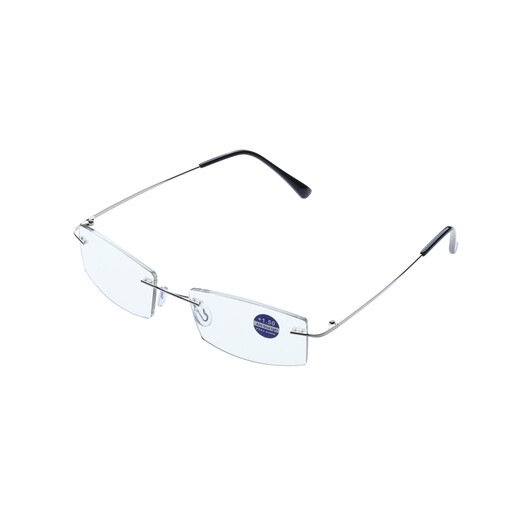
Why this product suits this profile: The rimless design and 200D strength are suitable for buyers looking for discreet reading glasses for simple close-up tasks.
The strength is clearly stated as 200D. This makes it easier to choose based on the required magnification rather than just the design.
Rimless design, silver-coloured finish and 200D strength.
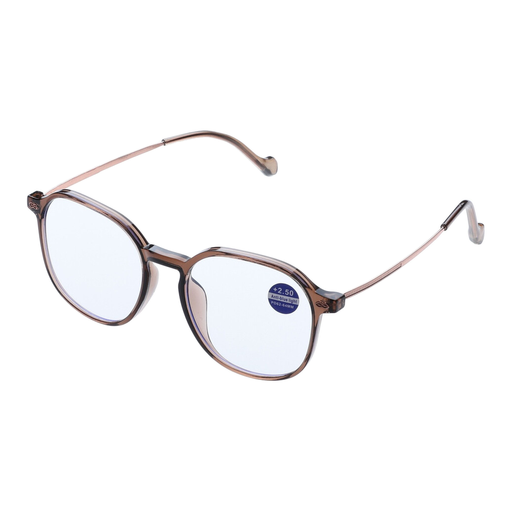
Why this product suits this profile: With a full frame and 350D strength, these reading glasses are aimed at users who prefer a classic, fully enclosed frame for regular close-up tasks.
The product name specifies both the frame type and strength. This makes it easier to compare with rimless or half-frame alternatives.
Full-frame construction, transparent tea-coloured finish and 350D strength.
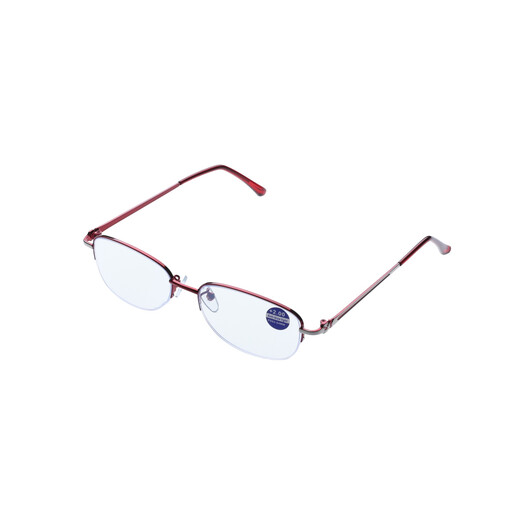
Why this product suits this profile: These half-frame reading glasses are designed for users who regularly switch between close-up tasks and looking up, for example at a desk.
The half-frame design is explicitly described as suitable for occasionally looking up. Nevertheless, the glasses should only be used for close-up tasks.
Half-frame design, 300D strength, red colour and, according to the product description, a protective case.
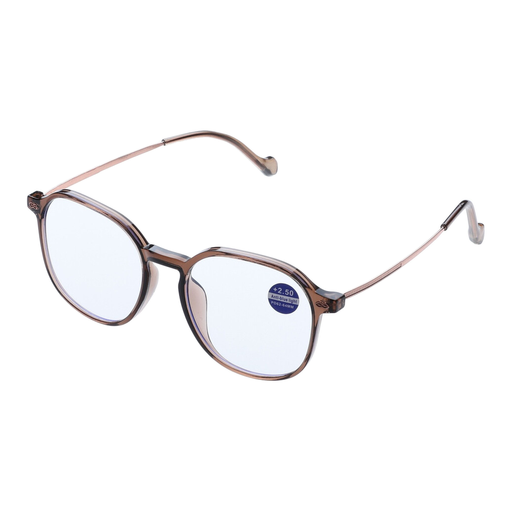
Why this product suits this profile: The 400D version is intended for users who need stronger magnification when reading very small text.
The 400D strength is clearly stated. Before buying, check whether it suits your personal reading distance and whether you find it comfortable to use.
Full-frame construction, transparent tea-coloured finish and 400D strength.
We have put together a complete, regularly updated list of products that fully meet these strict selection criteria and the safety regulations applicable in the EU.
This depends on viewing distance, text size and changes in your individual vision. Available models often start at 1.5 dpt and go up to 4.0 dpt. There is no universally reliable recommendation. If you experience headaches, double vision or persistent eye strain, stop using the glasses and seek professional advice.
Their lifespan depends on the frame, lenses, daily use and storage. A microfibre cloth and case help prevent scratches and deformation. Check the product information on the relevant product page or label for details of the warranty and expected durability.
Reading glasses may be suitable for short screen distances. However, a monitor is often further away than a book. If you work at a computer for many hours, you should carefully check the distance, seating position and strength. Simple reading glasses are not safety glasses or occupational eyewear and must not be used for driving.