
Lieferung heute & morgen

Qualitätsgarantie

Willkommens-Angebote freischalten: KOSTENLOSE Lieferung | Bis zu 80 % RABATT | Kostenlose 30-Tage-JoyPlus-Testphase
App herunterladen
Reading glasses should magnify small print and be easy to use at work or at home. However, eye-catching product claims do not automatically lead to the right choice. Three common purchasing mistakes often result in unnecessary expense: choosing magnification that is too strong, selecting an unsuitable frame or having unrealistic expectations about how the glasses should be used.
Descriptions such as 300D reading glasses or 400D reading glasses may initially seem clear-cut. For the products featured here, this marking describes the respective magnification level. However, it should not automatically be equated with an individually measured prescription or a pair of glasses prescribed by an optician or doctor.
Magnification that is too strong can restrict your field of view when reading and make it harder to orientate yourself. For ordinary book pages, documents or screens, a lower level may be sufficient. Reading glasses with high magnification are more suitable for very small print or particularly detailed text.
Full-frame reading glasses completely surround the lenses and can therefore provide a stable fit. Half-frame reading glasses make it easier to shift your gaze into the distance over the lower edge of the glasses. This is useful if you occasionally look at a monitor, telephone or another person while reading.
Frameless reading glasses have a subtle appearance and can be less visually prominent. However, you should pay particular attention to how the lenses are attached, the stability of the arms and suitable storage. The frame is therefore not merely a style choice.
Red reading glasses, silver reading glasses or a transparent frame can complement your personal style. For use at work and at home, however, the fit, lens position and ease of care are also important. Product descriptions such as ‘classic style’ or ‘for women and men’ do not replace details about the actual size and individual comfort.
The available options range from 150D reading glasses through 200D reading glasses, 250D reading glasses and 300D reading glasses to 350D reading glasses and 400D reading glasses. As a practical guide:
This classification is intended as a guide based on the product marking. If you already wear prescription glasses, frequently experience headaches or eye discomfort, or notice different levels of visual acuity between your eyes, you should have your individual prescription checked by a qualified optician.
For frequently switching between near and distance vision, half-frame reading glasses may be suitable. The models featured here are designed to make it easier to change your line of sight when looking upwards. A full-frame version may be useful if you view the reading area through the lenses continuously.
Frameless reading glasses should be handled carefully and stored in a case when not in use. Regardless of the design, the lenses should sit as centrally as possible in front of your eyes and the arms should not press against your head.
Depending on the model, the product descriptions mention metal or plastic frames, magnifying lenses and, in some cases, a protective case. A case reduces the risk of scratches in your bag or on your desk. A soft microfibre cloth is recommended for cleaning. Extreme heat and prolonged direct sunlight should be avoided.
Important: The reading glasses listed are neither safety glasses nor prescription glasses. They must not be used for driving, operating heavy machinery or as personal protective equipment. Stop using them if you experience headaches or eye strain. Keep the glasses away from small children, as broken lenses or frames can cause injury.
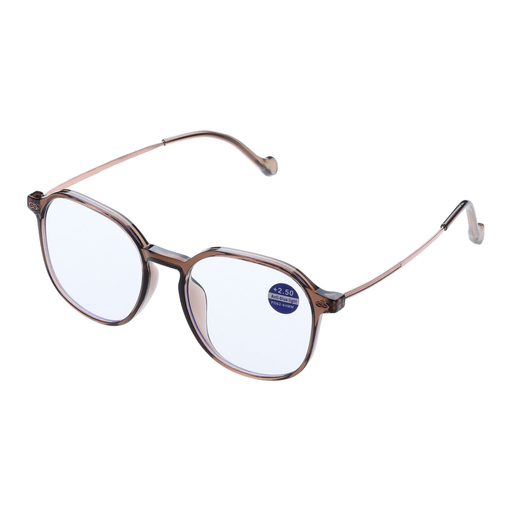
Why this product suits the profile: The 150D version offers low magnification for users looking for simple reading glasses for books, larger print and occasional screen use.
The lower level reduces the risk of choosing unnecessarily strong magnification too quickly. The full frame keeps the lenses completely enclosed.
Unisex design, transparent tea tint and full-frame construction for everyday use.
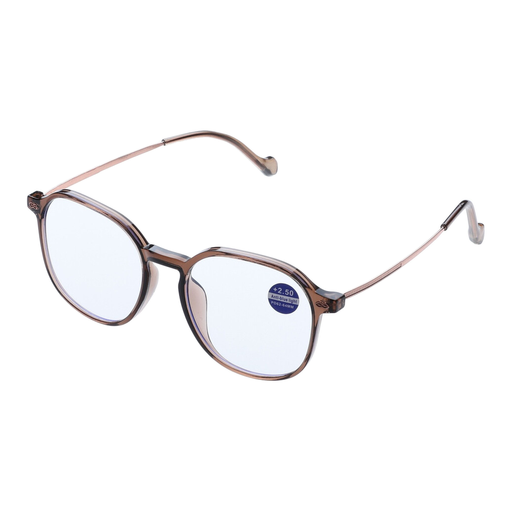
Why this product suits the profile: The high 400D magnification is intended for very small print and detailed text, provided that this strength is suitable for your individual visual task.
The specific 400D marking makes it easier to compare this option with others in the range. The full frame completely surrounds the lenses.
Clearly stated high magnification, transparent frame and described suitability for use at work and at home.
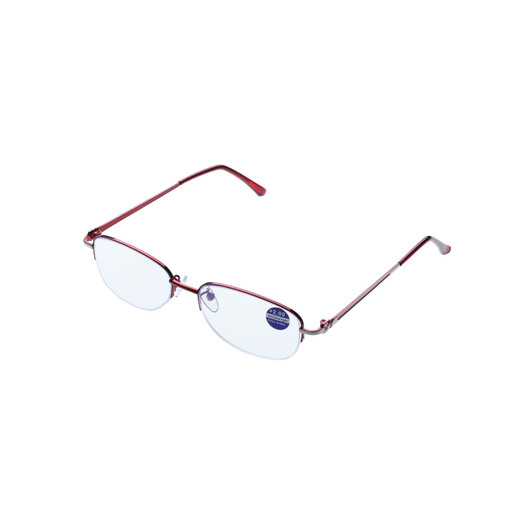
Why this product suits the profile: The half-frame design supports reading with occasional glances at a monitor, television or conversation partner. The red colour option adds a distinctive accent.
The design is made for changing lines of sight, so you do not need to take off your glasses every time you briefly look into the distance.
Half-frame design, 200D marking and red unisex styling for use at work and at home.
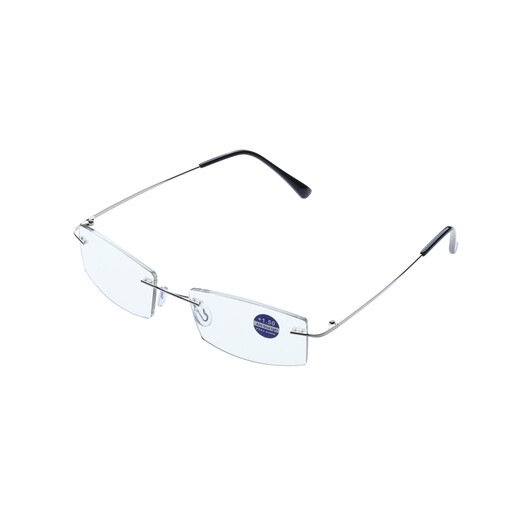
Why this product suits the profile: The frameless design and silver finish are aimed at users who prefer understated glasses for their desk, documents and screen.
The product details clearly state the magnification level. With the frameless design, a case helps protect the more delicate construction in everyday use.
Frameless construction, silver finish and 200D version for close-up reading tasks.
We have put together a complete, regularly updated list of products that fully meet these strict selection criteria and the safety regulations applicable in the EU.
For screen use, the actual distance from the monitor is the first thing to consider. Half-frame reading glasses can be practical if you frequently switch between documents, your keyboard and your surroundings. For prolonged screen use, you should not choose stronger magnification than necessary. Good lighting and regular breaks are also important.
Their lifespan depends on the material, daily use, care and storage. Scratches, bent arms or lenses that remain permanently out of alignment can affect usability. A protective case, a microfibre cloth and avoiding heat can help keep the glasses in good condition. Replace the glasses if they show visible damage.
The price depends, among other things, on the magnification level, frame shape, material and items included. Before buying, you should therefore compare not only the price but also the specific D marking, design, safety information and whether a case is included. If you need an individually determined prescription, a simple pair of reading glasses cannot replace prescription glasses from an optician.