
Lieferung heute & morgen

Qualitätsgarantie

Willkommens-Angebote freischalten: KOSTENLOSE Lieferung | Bis zu 80 % RABATT | Kostenlose 30-Tage-JoyPlus-Testphase
App herunterladen
A stainless steel kitchen sieve is a staple in many UK homes. It helps you drain pasta, wash vegetables, sift flour and drain small ingredients. However, kitchen sieves vary considerably in material thickness, hole size, stability and ease of cleaning.
If you focus only on the shiny finish or a lengthy product description, you could miss important details. Here are three common buying pitfalls:
For a stainless steel sieve, the material specification, finish and construction all matter. Stainless steel is generally corrosion-resistant and, when cleaned properly, retains fewer odours than porous materials. Even so, the product details should clearly state which grade of stainless steel the sieve is made from.
For example, the Zwilling model is described as 18/10 stainless steel. This refers to steel containing 18 per cent chromium and 10 per cent nickel. It’s a clear material specification, but you should still check the rest of the design. Look for:
A pasta strainer for a family-sized portion needs different dimensions from a small flour sieve. A diameter of around 15 cm works well for smaller quantities, straining tea or rinsing individual ingredients. Larger models are more practical for pasta, bigger quantities of vegetables or salad.
The Zwilling Stainless Steel Kitchen Strainer for Pasta has a diameter of 24 cm and is described as having an integrated side handle and raised base. This can be useful when draining larger portions, provided the sieve fits your sink and the pan you’re using.
Before buying an extendable sink strainer, check the internal width of your sink. According to the product details, the model with a 3.6-litre capacity measures 53.5 × 24.7 × 10.5 cm. Its extendable design is useful if you want it to rest across sinks of different sizes. However, the maximum span and load capacity are still important considerations for the space where you plan to use it.
Mesh size determines which foods the sieve will hold back. A traditional draining sieve with larger openings is suitable for pasta and vegetables. A finer stainless steel sieve is a good choice for flour, icing sugar, sauces or smaller ingredients.
Use this guide to help you choose:
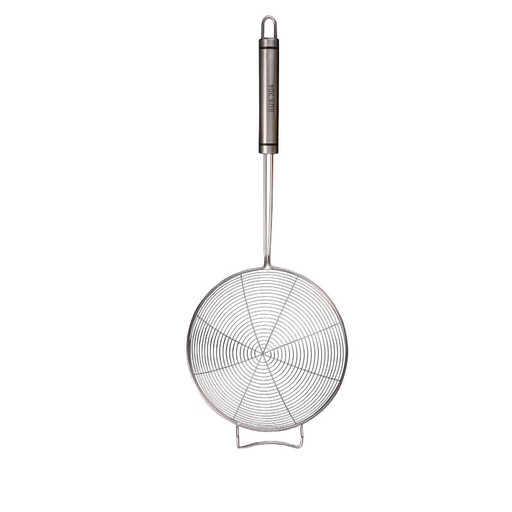
Why it suits this profile: This compact 15 cm handheld sieve is ideal for smaller quantities and takes up little storage space.
The stated 304 stainless steel construction and compact design give you clear criteria to consider, rather than relying on appearance alone.
15 cm diameter; described as a handheld mesh strainer for smaller portions.
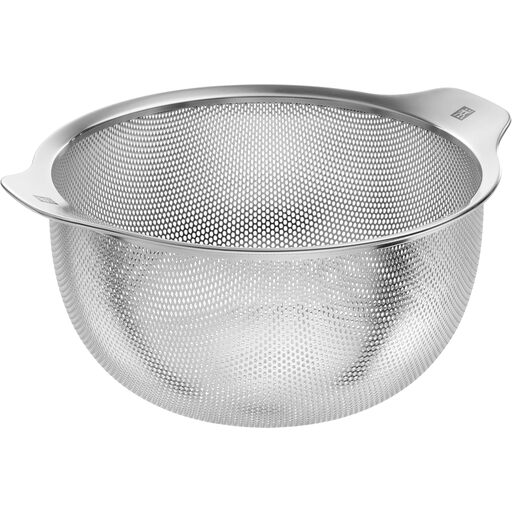
Why it suits this profile: This 24 cm model is designed for larger portions and combines side handles with a raised base.
The diameter, integrated handles and raised base are all clearly specified, making it easier to check the details before you buy.
18/10 stainless steel; 24 cm diameter; integrated side handles; described as dishwasher-safe in the product details.
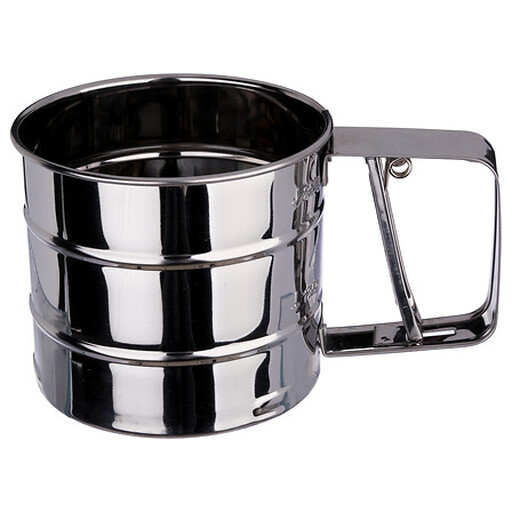
Why it suits this profile: Its compact design is suitable for flour, icing sugar, liquids and small ingredients in the kitchen, bakery or catering.
At 10.3 × 9.3 × 15.5 cm, it’s clearly a small sieve rather than a full-sized pasta strainer.
Compact dimensions; stainless steel; described as suitable for flour, liquids, icing sugar and small ingredients.
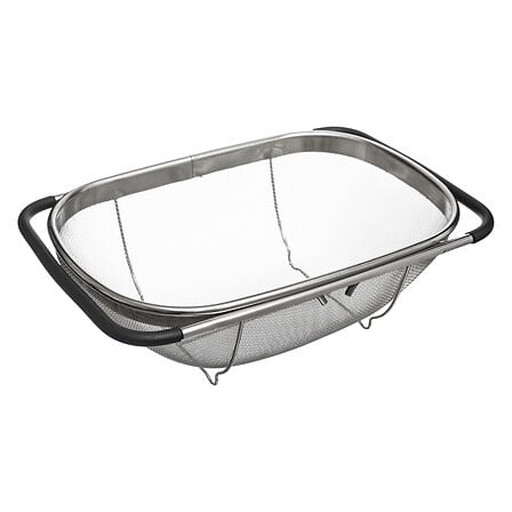
Why it suits this profile: This extendable sink strainer is aimed at households, caterers and frequent users who want to drain varying quantities directly over the sink.
The dimensions, capacity and extendable design are specified, so you can check in advance whether the sieve will fit your sink.
3.6-litre capacity; extendable design; 53.5 cm long; stated as suitable for food contact.
We’ve put together a complete, regularly updated list of products that meet these strict selection criteria and the safety regulations in force in the EU.
Even a dishwasher-safe sieve should be cleared of any larger food scraps after draining. For fine mesh, rinse it from the back. Once clean, let the sieve dry completely, especially around the handle joints and rim.
Avoid using it over an open flame or on hot surfaces unless the manufacturer explicitly says it’s suitable. If a stainless steel kitchen sieve is visibly misshapen, has sharp edges or has damaged handles, stop using it.
A sieve with a diameter of around 15 cm may be enough for small portions. For family-sized servings and larger quantities, 24 cm or a model with a capacity of several litres is usually more suitable. The key factors are the size of your pan and sink, and the quantity of food you usually prepare.
No. Check the product details for each model. If it’s explicitly described as dishwasher-safe, you can clean it according to the manufacturer’s instructions. If the information is unclear, washing it by hand with warm water and a mild detergent is the safer option.
A flour sieve usually has a finer mesh and is designed for flour, icing sugar or small particles. A draining sieve or pasta strainer generally has larger openings and a greater capacity, so liquid can drain quickly from pasta, vegetables or fruit.