
Lieferung heute & morgen

Qualitätsgarantie

Willkommens-Angebote freischalten: KOSTENLOSE Lieferung | Bis zu 80 % RABATT | Kostenlose 30-Tage-JoyPlus-Testphase
App herunterladen
A high-quality stainless steel colander is an indispensable tool in any kitchen. However, the market is flooded with products that overpromise and underdeliver. Many models quickly prove to be a poor investment—they rust, warp, or are simply impractical to use. This guide will show you which objective features to look for to find a durable, functional product that reliably gets the job done.
Before making a purchase, it's helpful to understand the typical flaws of budget models. These three issues often lead to frustration and unnecessary expense:
To avoid these problems, focus your attention on a few critical technical specifications. These are what define the quality and longevity of a kitchen colander.
The term "stainless steel" alone is not a sufficient quality indicator. Pay attention to the specific alloy. A proven standard for food-grade applications is 18/10 stainless steel. This number indicates the ratio of chromium (18%) to nickel (10%). The high nickel content provides excellent corrosion resistance against food acids and salts, making the material exceptionally durable and easy to clean. A stainless steel colander of this grade is a long-term investment.
A good stainless steel pasta strainer or salad colander is distinguished by its thoughtful design. Instead of a fine, delicate wire mesh, models made from perforated stainless steel are often the more stable and hygienic choice. The smooth surfaces and rounded holes prevent food residue from getting stuck and make cleaning significantly easier.
Another critical feature is the base. A flat bottom or a solid, continuous base ring ensures the colander stands securely in the sink or on the countertop, even when fully loaded. For design-conscious households, some models are designed as a stainless steel bowl with a colander function. Such designer kitchen tools can be used for serving salad or pasta immediately after draining. Common sizes, like a 20 cm colander, offer a good balance between capacity and manageability.
Instead of making a blanket recommendation, we have identified products tailored to specific user profiles and requirements.
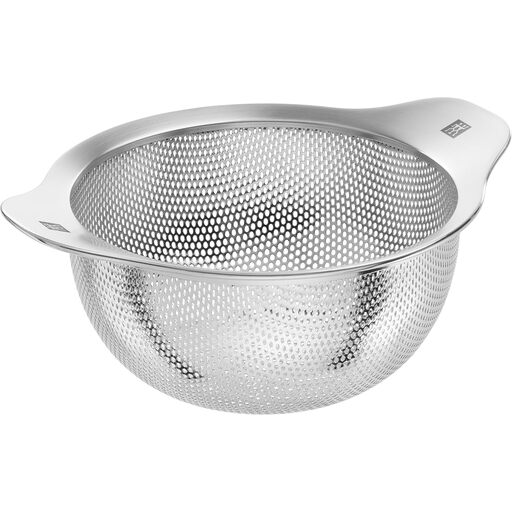
Why it's a match: Ideal for smaller households or for straining small portions. The design by Matteo Thun and Antonio Rodriguez makes it an aesthetic object that functions as a strainer, colander, and serving bowl, fitting seamlessly into a modern kitchen.
Its 18/10 stainless steel construction prevents rust and warping. The flat base ensures stability and prevents it from tipping over in the sink.
Multifunctional 3-in-1 design (strainer, colander, bowl) with a high-quality, satin finish.
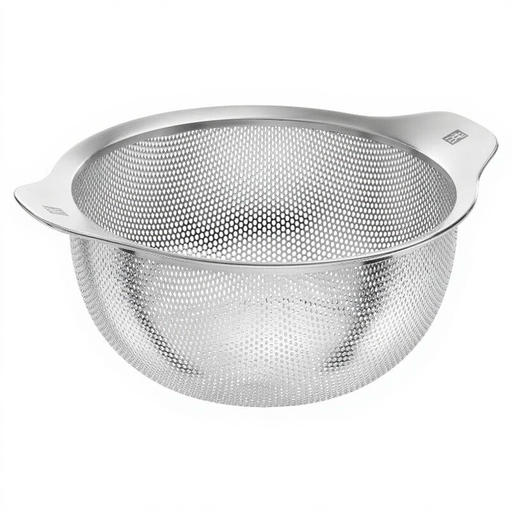
Why it's a match: The 20 cm size is an all-rounder for the family household. It's perfect for draining pasta, washing large quantities of salad, or rinsing vegetables. A practical and robust workhorse for daily use.
The sturdy, perforated steel construction is resistant to deformation. The solid, flat base provides a secure footing even when full, preventing accidents.
Ideal size for versatile applications (e.g., as a stainless steel pasta strainer or salad colander) and is space-saving as it's stackable with other sizes in the series.
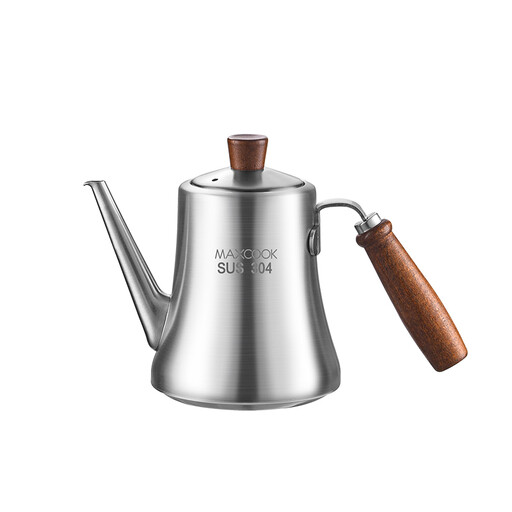
Why it's a match: This product complements a high-end kitchen setup. For those who value a cohesive aesthetic with premium materials like stainless steel and wood, this dispenser is a fitting addition to their collection of designer kitchen tools.
While not a colander, it solves a similar problem: leaky and unsightly kitchen tools. This dispenser is made from durable 304 stainless steel, is leak-proof, and features an elegant design.
Leak-proof "eagle beak" spout and a material combination of robust stainless steel and a beechwood handle.
We have compiled a comprehensive, up-to-date list of products that meet these strict selection criteria.
Most high-quality stainless steel colanders, especially those made from 18/10 alloys, are suitable for cleaning in the dishwasher. However, to preserve a satin or polished finish long-term, manufacturers often recommend hand washing. Avoid using abrasive cleaners or steel brushes, as they can scratch the surface. Always follow the manufacturer's care instructions.
Stainless steel marked as 18/10 stainless steel (also known as material number 1.4301 or AISI 304) offers very high corrosion resistance. The chromium content forms a passive protective layer, while the nickel content increases resistance to acids. Cheaper steel grades with lower or no nickel content can be more susceptible to surface rust, especially when in contact with salt, harsh detergents, or if the surface is damaged.
Although the terms are often used interchangeably in everyday language, there is a technical difference. A classic "sieve" has a fine wire mesh and is used for straining sauces or sifting flour. A "colander" (also called a strainer) has larger, punched holes and is primarily used for quickly draining pasta or washing salad and vegetables. Modern products like the Zwilling Kitchen Strainer combine these functions with a sturdy, perforated stainless steel construction that is as robust as a colander and as versatile as a sieve.