
Lieferung heute & morgen

Qualitätsgarantie

Willkommens-Angebote freischalten: KOSTENLOSE Lieferung | Bis zu 80 % RABATT | Kostenlose 30-Tage-JoyPlus-Testphase
App herunterladen
A stainless steel kitchen sieve should drain pasta, rinse rice, wash vegetables or lift fried food from hot oil. In practice, however, problems are often caused not by the sieve itself but by an unsuitable design. A small kitchen sieve can become unstable when handling family-sized portions, fine mesh can clog when sifting flour, and a handle without sufficient clearance may heat up when working at the hob.
This buying guide from the Joybuy Product Recommendation Officer helps you assess marketing claims based on specific product features.
“Stainless steel” initially describes only a group of materials. For everyday kitchen use, more precise information is more helpful, such as 304 stainless steel, 18/8 or 18/10. If information about material quality is missing altogether, it is harder to assess resistance to moisture, salt and acids.
Stainless steel also needs care: salt, acidic food or detergent residue should not be left on the surface for long periods. Thorough drying after cleaning is advisable.
A coarsely perforated pasta colander lets water drain quickly, but is less suitable for fine ingredients such as flour, icing sugar or very small grains of rice. A fine-mesh sieve, on the other hand, retains small particles but can become clogged more quickly when used with starchy foods.
So consider the intended use:
A dishwasher-safe sieve made entirely from stainless steel is generally easier to clean than a model with wooden or plastic components. Nevertheless, harsh detergents, high temperatures or metal brushes can affect the surface.
With the PURECOOK set, for example, the bamboo lids must not be placed in the dishwasher. The stainless steel and plastic sieves are stated to be dishwasher-safe, while hand washing is recommended to help protect the plastic frame over the long term.
304 stainless steel is also commonly referred to as 18/8 stainless steel. The numbers indicate the approximate proportions of chromium and nickel. With 18/10 stainless steel, the nickel content is accordingly around ten per cent. This information makes comparisons easier, but does not replace proper care.
Also look for:
A smaller kitchen sieve with a handle may be sufficient for individual portions. Families and people who regularly drain pasta or vegetables will generally benefit from a larger freestanding model with side handles.
A diameter of around 16 cm is suitable for smaller preparation tasks. Models measuring 22 to 27 cm offer more capacity for vegetables, fruit or rice. A deep sieve basket holds more food, but also requires more space in the sink and cupboard.
Side handles make it easier to carry a filled stainless steel colander. A stable base prevents the basket from standing directly in the draining water. For use in a pan, however, a long handle and a pan-rim hook are important.
With a stainless steel skimmer or hotpot sieve, the handle should be sufficiently far away from the hot liquid. Heat protection reduces heat transfer, but does not automatically keep the handle cool indefinitely. Take care when the utensil is in prolonged contact with boiling water or hot oil.
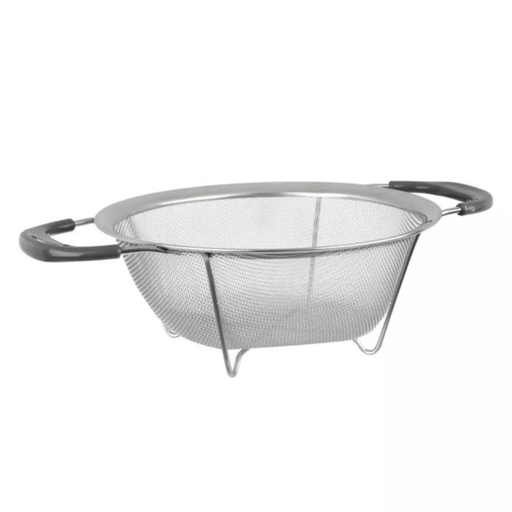
Why this product suits this profile: The 22 cm sieve covers everyday tasks such as sifting flour, draining pasta and rinsing fruit. The plastic frame keeps the weight low.
The stated diameter and fine mesh structure are more informative than a vague “all-purpose” claim. However, the plastic frame is not intended for boiling-hot liquids above 70 °C.
316 stainless steel mesh, 22 cm diameter and stated dishwasher suitability.
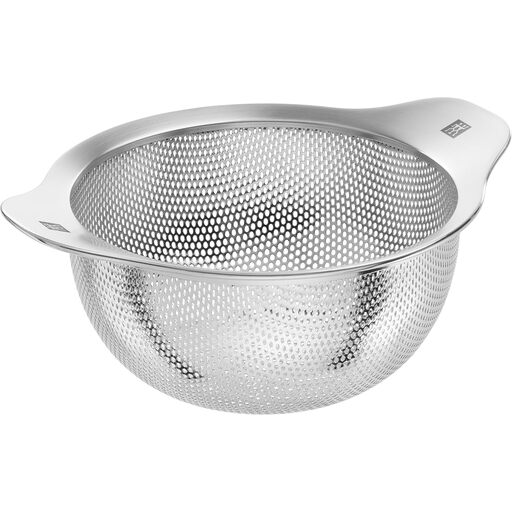
Why this product suits this profile: The combination of sieve, draining bowl and stand is ideal for organised kitchen routines. Several sizes can be stacked inside one another.
The flat base and two stainless steel handles reduce reliance on the edge of the sink. The model is dishwasher-safe; hand washing may help protect the satin finish.
18/10 stainless steel, 3-in-1 design and stackable sizes of 16, 20 and 24 cm.
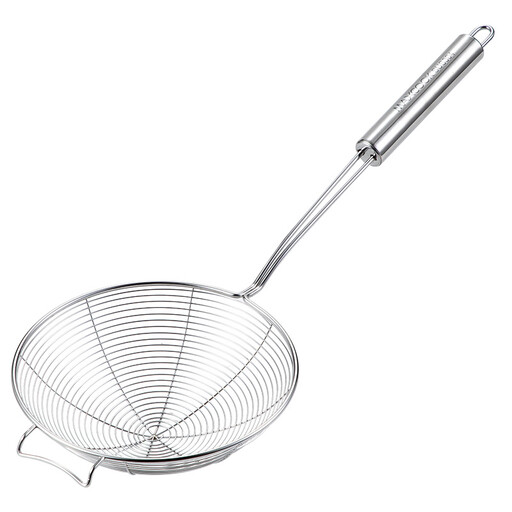
Why this product suits this profile: The deep sieve head is suitable for noodles, dumplings, hotpot ingredients, cooked food and fried food. A pan-rim hook makes it easier to rest the utensil temporarily.
The intended use is more clearly defined by the sieve head, hook and handle design than with a flat draining sieve. The handle may become hot after prolonged exposure to heat.
304 stainless steel, widened and deepened sieve head, plus hanging loop and pan-rim hook.
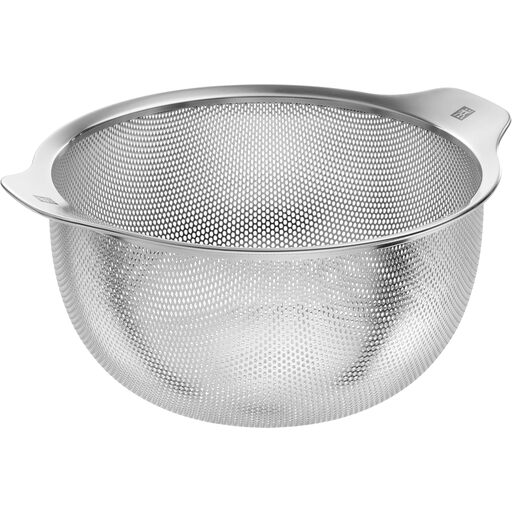
Why this product suits this profile: The large diameter and side handles are well suited to family-sized portions of pasta, vegetables or fruit.
The wide base provides a raised position, while the integrated handles make carrying easier. If you have a small sink, check the available space before buying.
18/10 stainless steel, 24 cm diameter and stated dishwasher suitability.
After use, rinse a stainless steel sieve promptly with warm water and mild washing-up liquid. A soft brush or sponge removes residue without unnecessarily scratching the surface. Avoid steel wool, harsh scouring agents and aggressive acidic cleaners.
With a stainless steel colander, pay particular attention to the rim areas and handle connections. Allow the sieve to dry completely before putting it away in the cupboard. Bamboo lids must not be placed in the dishwasher, microwave or oven. Plastic frames should not be exposed to boiling liquids where the product information rules this out.
We have put together a complete, regularly updated list of products that fully meet these strict selection criteria and the safety regulations applicable in the EU.
For individual portions, 16 to 20 cm is often sufficient. For several people or larger quantities, around 22 to 27 cm is more practical. Also check that the sieve fits in your sink, cupboard and dishwasher.
No. The relevant product information is decisive. Models made entirely from stainless steel are often easy to care for, while wooden handles, bamboo lids or plastic frames may have specific restrictions. Even where dishwasher use is permitted, hand washing may help protect the surface and attached materials.
Remove salt, acidic food and food residue promptly, clean the sieve with mild washing-up liquid and dry it thoroughly. Steel wool and harsh cleaners can damage the surface. Small scratches or manufacturing marks are not automatically a quality defect in metal products.