
Lieferung heute & morgen

Qualitätsgarantie

Willkommens-Angebote freischalten: KOSTENLOSE Lieferung | Bis zu 80 % RABATT | Kostenlose 30-Tage-JoyPlus-Testphase
App herunterladen
A good stainless steel kitchen strainer seems like a simple purchase. But as anyone who has discovered rust spots on a supposedly stainless sieve, dealt with a wobbly handle, or scraped flour clumps from a poorly made mesh knows: the devil is in the details. Many products fail to live up to their marketing promises. This guide will show you what to look for to find a durable and functional kitchen strainer that reliably gets the job done.
Before we dive into quality features, it's important to understand the typical weaknesses that often only become apparent after a few weeks of use.
To avoid these pitfalls, you should focus on three objective characteristics. These determine the longevity, functionality, and safety of your kitchen tool.
The most important feature of a durable kitchen strainer is the material. Look for the designations 18/10 stainless steel or 304 stainless steel.
A stainless steel colander made from these materials is an investment that pays off with a significantly longer lifespan.
Solid construction is crucial for daily use. Check the following aspects:
Not every strainer is suitable for every task. The mesh size determines its intended use:
A well-curated kitchen strainer set often combines various sizes and mesh gauges, covering most use cases.
Here are some product recommendations tailored to different needs and kitchen profiles.
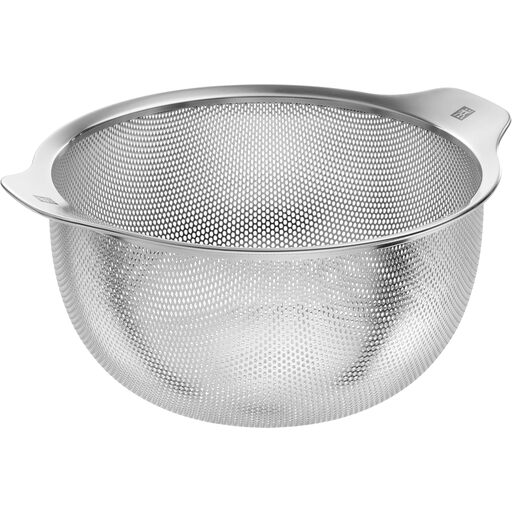
Why This Fits Their Persona: Ideal for cooks who value the highest material quality and thoughtful design. Perfect for preparing larger quantities, such as for family meals or preserving.
Made from 18/10 stainless steel, it bypasses the rust trap. The wide base ensures stability and hygiene, as the strainer doesn't sit directly in sink water.
Excellent corrosion and acid resistance. The integrated handles and stable base offer maximum safety when handling hot foods.
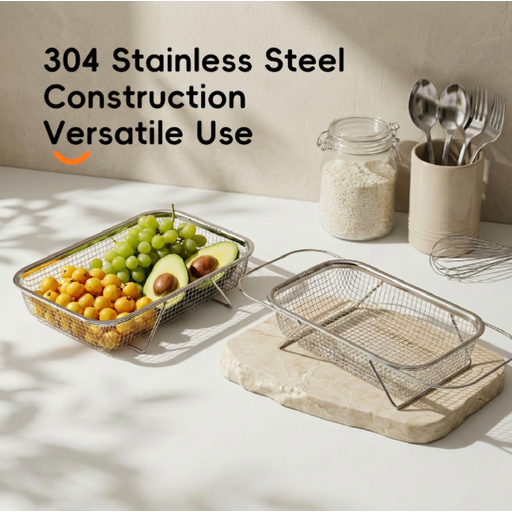
Why This Fits Their Persona: Perfect for kitchens with limited space. This extendable strainer adapts to different sink sizes and allows for hands-free work.
The 304 stainless steel construction prevents rust. Its design as an over-the-sink strainer solves the problem of stability and hygiene by keeping it elevated above the sink floor.
Flexibly extendable and stores compactly. Ideal for washing vegetables and draining dishes directly over the sink.
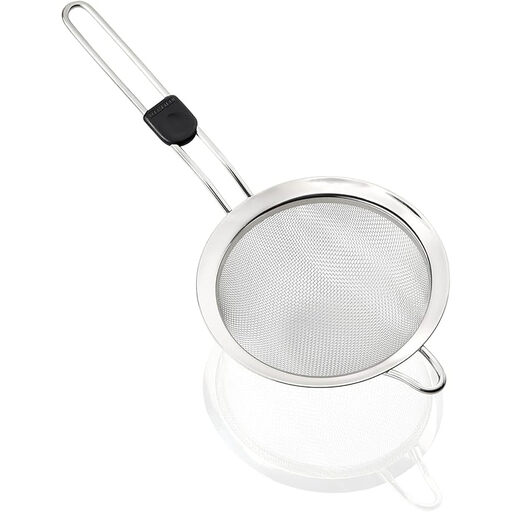
Why This Fits Their Persona: Indispensable for anyone who bakes regularly or prepares fine sauces. This sieve is specifically designed for precisely sifting powdered sugar or flour.
The sturdy stainless steel construction and ergonomic handle with a thumb rest prevent the wobbly handle pitfall. The fine-mesh sieve is precisely designed for its purpose.
High-quality stainless steel and a thoughtfully designed handle for comfortable use. The practical hanging loop allows for tidy storage.
We have compiled a complete, up-to-date list of products that fully meet these strict selection criteria and safety standards.
1. Can a stainless steel kitchen strainer go in the dishwasher? Yes, most high-quality kitchen strainers made of 18/10 or 304 stainless steel are dishwasher-safe. This is one of the most convenient features of the material. To maximise its lifespan and prevent water spots, it's recommended to remove the strainer from the machine soon after the cycle and let it dry. For very fine sieves, a quick manual cleaning with a brush can help remove all particles.
2. What is the difference between a colander and a sieve? A colander (often also called a pasta strainer) typically has larger, punched holes and a rigid, bowl-like shape. It is designed for quickly draining large amounts of liquid from solid foods like pasta or vegetables. A sieve, on the other hand, has a fine wire mesh and is used for more delicate tasks like sifting flour, straining sauces, or washing small grains.
3. How do I choose the right size for my kitchen strainer? The right size depends on your household and cooking habits.