
Lieferung heute & morgen

Qualitätsgarantie

Willkommens-Angebote freischalten: KOSTENLOSE Lieferung | Bis zu 80 % RABATT | Kostenlose 30-Tage-JoyPlus-Testphase
App herunterladen
A good stainless steel kitchen strainer is an indispensable tool in any kitchen. However, the search for the right model can quickly become overwhelming. Many products advertised as "rust-proof" quickly show unsightly spots, their handles loosen, or the fine mesh warps. As your Joybuy Product Recommendation Officer, I'll help you recognize the common pitfalls and make an informed decision based on objective criteria.
Before you invest, you should know the two main reasons why many buyers are disappointed with their new kitchen tool.
To avoid a bad purchase, focus on three verifiable features that determine durability and functionality.
Pay close attention to the exact material specification. The designation 304 stainless steel (also known as 18/8 or 18/10) is a reliable indicator of high quality. This alloy contains a significant amount of chromium and nickel, making it particularly resistant to rust and acids. It is food-safe, flavor-neutral, and suitable for contact with all types of food. A product made from this material is a solid foundation for long-term use.
Different designs make sense depending on the intended use:
A good design makes daily work easier. Look for ergonomically shaped handles that provide a secure grip even when wet. A flat, stable base prevents tipping. For fine-mesh sieves, a hook or loop opposite the handle is practical for resting the sieve securely on pots or bowls.
Here are some recommendations tailored to different needs and kitchen profiles.
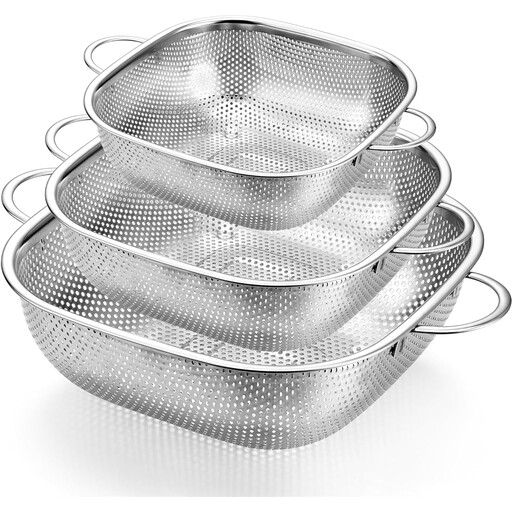
Why it's a good fit: Ideal for a kitchen starter kit or for replacing several old strainers at once. This set provides a functional baseline for the most common tasks, from washing berries to draining pasta.
Instead of a single, ill-fitting strainer, you get three different sizes. The solid steel construction is a significant upgrade from wobbly plastic models and is less prone to warping.
The set includes three colanders in the common sizes of 20 cm, 24 cm, and 28 cm. They are stackable for space-saving storage.
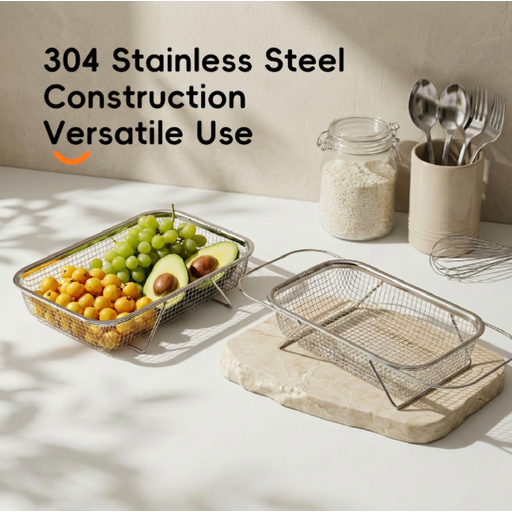
Why it's a good fit: Perfect for anyone who frequently washes vegetables or drains dishes directly in the sink and wants to keep their countertop clear. A very practical solution for kitchens with limited space.
This model solves the problem of unstable strainers that tip over in the sink. The extendable design ensures it fits most sink sizes, thus avoiding a classic bad purchase.
Made from 304 stainless steel for high corrosion resistance. The extendable design is flexible and creates a stable, hands-free draining station directly over the sink.
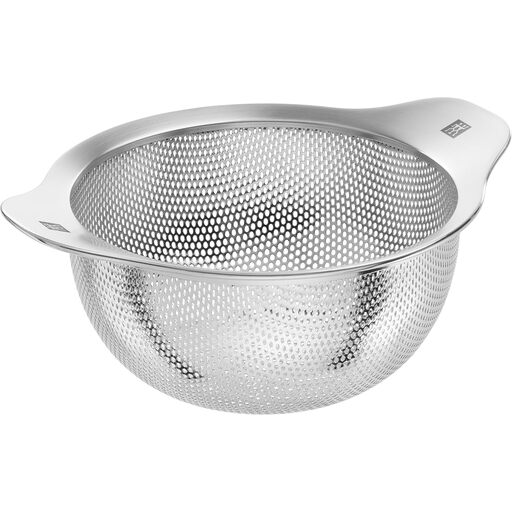
Why it's a good fit: For home chefs who value outstanding materials, thoughtful design, and maximum durability. A tool that not only performs but also impresses aesthetically.
This model avoids the trap of "false economy." Instead of a cheap sieve that rusts or breaks, you invest in a product made of 18/10 stainless steel, designed for very high corrosion resistance and stability.
Crafted from high-quality 18/10 stainless steel with a satin finish. The flattened base ensures a secure stand and also allows it to be used as a serving bowl. Dishwasher-safe for easy cleaning.
We have compiled a complete, up-to-date list of products that fully meet these strict selection criteria and German safety regulations.
Yes, kitchen utensils made from 304 stainless steel are generally suitable for cleaning in the dishwasher. The material is resistant to the heat and detergents. To maintain the shiny surface long-term, occasional hand washing can be beneficial. After the dishwasher cycle, the strainer should be dried completely to avoid water spots or potential transfer rust from other items.
Although the terms are often used interchangeably, there is a functional difference. A colander (or strainer) is a rigid bowl with larger, punched holes. It is ideal for quickly separating liquid from solid foods like pasta or cooked vegetables. A sieve has a fine wire mesh and is used for tasks requiring more precision, such as sifting flour, straining broth, or making a smooth purée (straining sieve).
Ideally, a fine-mesh sieve should be rinsed under running water immediately after use, before food particles can dry on. For stubborn particles, a dish brush can help. Brush from the outside (the convex side) inwards to push the particles out of the mesh. For oily or sticky residues, soaking in warm, soapy water can help.