
Lieferung heute & morgen

Qualitätsgarantie

Willkommens-Angebote freischalten: KOSTENLOSE Lieferung | Bis zu 80 % RABATT | Kostenlose 30-Tage-JoyPlus-Testphase
App herunterladen
A good kitchen strainer is an unsung hero that significantly simplifies daily kitchen tasks. However, the selection is vast, and not every model lives up to its promise. An unsuitable strainer can be frustrating to use and may even pose a hygiene risk. Before you make a decision, it's crucial to understand the common weaknesses that often only become apparent after a few weeks of use.
Many buyers invest in a new strainer only to discover shortly after that it fails to meet basic requirements. These three problems are particularly widespread:
To avoid a bad purchase, you should pay attention to three key features. These define the functionality, durability, and safety of a kitchen strainer.
Material quality is the most important criterion for a hygienic and durable stainless steel strainer. Look for the specification 304 stainless steel or 18/10. These numbers describe an alloy containing 18% chromium and 10% nickel.
A strainer made from this material is food-safe, flavor-neutral, and generally dishwasher-safe without losing quality.
The openings in the strainer determine its primary use. There are two main types:
The shape of the strainer should suit your kitchen and cooking habits.
Here are some models tailored to specific needs that meet the quality criteria mentioned.
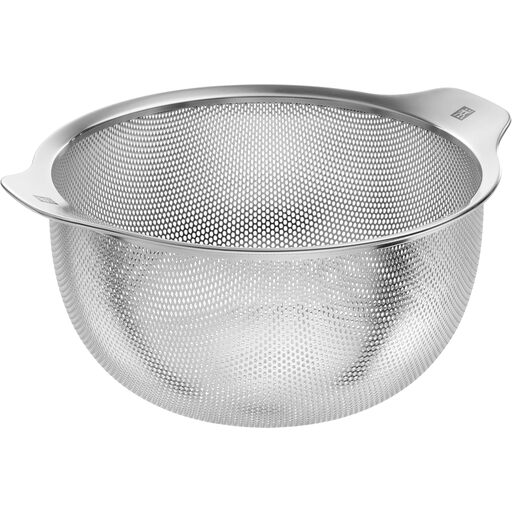
Why This Fits Their Persona: Ideal for preparing family-sized meals. The large 24 cm diameter easily holds a large portion of pasta or a whole head of lettuce. Its robust construction is designed for daily, intensive use.
The integrated handles and stable base are part of a seamless construction. This prevents the wobbling or breaking that often occurs with welded-on parts.
Made from high-quality 18/10 stainless steel, it is extremely durable and corrosion-resistant. The elevated base ensures that strained food doesn't sit in the drained water.
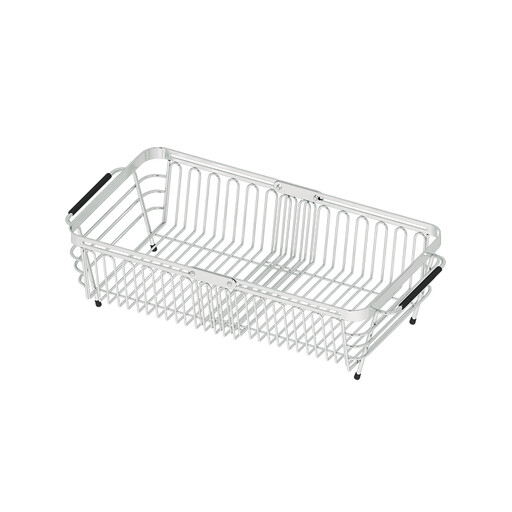
Why This Fits Their Persona: Perfect for kitchens with limited counter space. This basket is placed directly over the sink, keeping the countertop free. It doubles as a dish drainer and a colander for vegetables.
Instead of needing a bulky, separate strainer that takes up storage, this model combines multiple functions into one space-saving design. It solves the problem of limited space.
The telescopic frame is adjustable from 29 cm to 44 cm, fitting most sinks. Its construction from 304 stainless steel ensures it remains rust-free and durable.
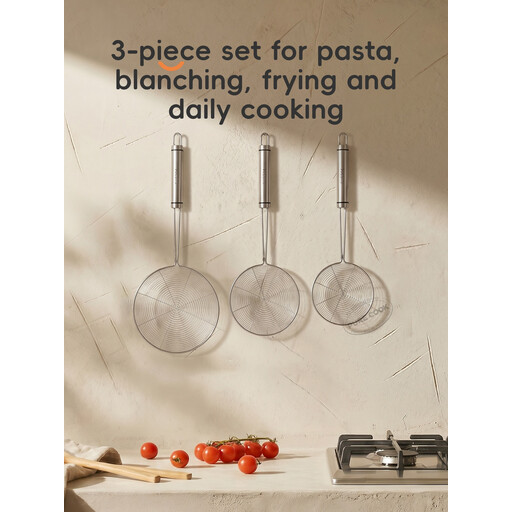
Why This Fits Their Persona: This set provides the right tool for every task. Whether blanching, frying, or straining small quantities, the three different sizes cover a wide range of cooking applications.
Instead of relying on a single, ill-suited universal strainer, this strainer set offers specialized tools. The fine mesh is designed for precision tasks, preventing the loss of fine ingredients that would happen with a coarse pasta strainer.
The one-piece forged construction ensures a smooth surface with no burrs where dirt could get trapped. Being made from 304 stainless steel makes the set robust and hygienic.
We have compiled a complete, up-to-date list of products that fully meet these strict selection criteria and safety regulations.
1. How do you properly clean a fine-mesh strainer? A fine-mesh strainer should ideally be rinsed from both sides under running water immediately after use, before food particles can dry. For stubborn residues, a soft dish brush can help. Many high-quality stainless steel strainers are dishwasher-safe, but always check the manufacturer's instructions.
2. Which stainless steel is truly rust-proof for a kitchen strainer? For maximum rust resistance, you should choose a stainless steel strainer of grade 304 or 18/10. These alloys offer high protection against corrosion from water, salts, and food acids and are the standard choice for high-quality kitchen utensils.
3. Can you use a kitchen strainer for baking? Yes, a fine-mesh strainer makes an excellent flour sifter. It aerates the flour and removes lumps, resulting in a lighter batter. It is also equally suitable for dusting cakes with powdered sugar or cocoa.