
Lieferung heute & morgen

Qualitätsgarantie

Willkommens-Angebote freischalten: KOSTENLOSE Lieferung | Bis zu 80 % RABATT | Kostenlose 30-Tage-JoyPlus-Testphase
App herunterladen
A waterproof permanent marker seems like a simple tool—until it fails when you need it most. Whether in the warehouse, the office, or on a creative project, an unreliable marker leads to smeared labels, faded ink, and ultimately, frustration. Many products promise durability, but the reality is often different. Before you buy another pack of useless markers, you should know the common pitfalls.
The 2 Most Common Problems When Choosing Permanent Markers:
A good universal marker has to do more than just write on paper. It must adhere reliably to various materials, dry quickly, and have a long lifespan.
To avoid a bad purchase, you should focus on three core technical features that distinguish a high-quality marker from an inferior one.
Not every permanent ink is suitable for all surfaces. For professional use, you need a marker with an ink specifically designed for non-porous materials.
The tip determines the marker's ideal application. Choosing between a fine round tip and a versatile chisel tip is crucial for the final result.
A good permanent marker should be an investment, not a disposable item. Features like dry-out protection and refillability are indicators of a well-designed product.
Based on the criteria above, we have identified a few models that are particularly well-suited for different user profiles.
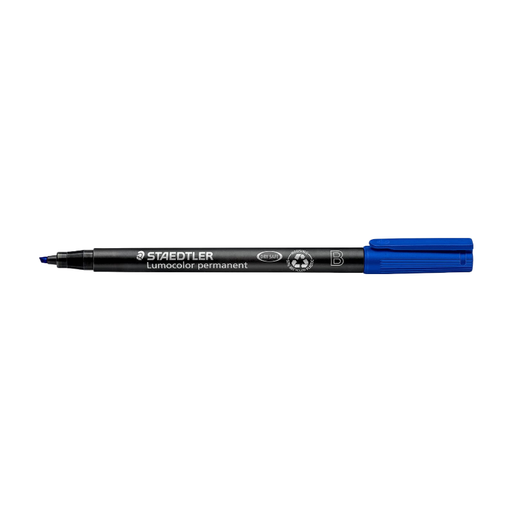
Why This Fits Their Persona: Ideal for users in logistics and trades who need a robust and versatile labeling solution. The chisel tip allows for both wide, highly visible markings on boxes and finer notes on delivery slips.
The ink is smudge-proof and waterproof on almost all surfaces, adhering reliably to plastic containers and metal shelves without smearing.
Variable line width (1.0 mm or 2.5 mm) thanks to the chisel tip. The DRY SAFE technology prevents it from drying out. Plus, the marker is refillable.
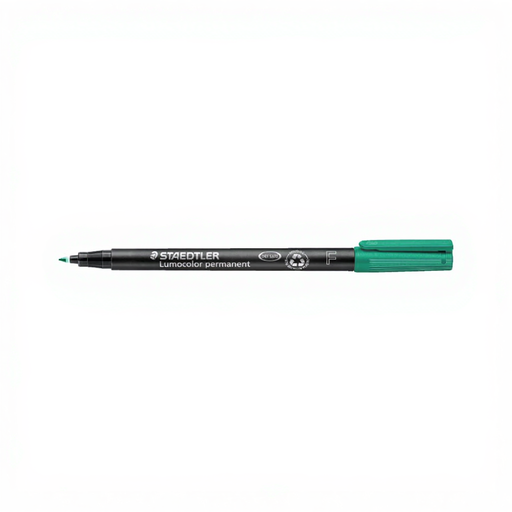
Why This Fits Their Persona: Perfect for architects, designers, and anyone who needs to create precise, permanent labels in tight spaces in the office or lab. The fine tip is excellent for technical drawings, circuit diagrams, or labeling sample vials.
The ink adheres exceptionally well to overhead transparencies, plastic sleeves, and glass without bleeding. Its quick-drying property prevents smudging during detailed work.
A very fine tip (approx. 0.6 mm) for maximum precision. According to the manufacturer, the barrel is made of 97% recycled plastic and is also refillable.
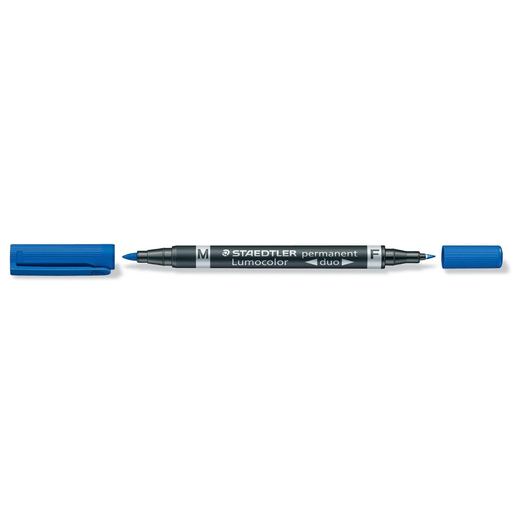
Why This Fits Their Persona: The perfect all-in-one tool for anyone who doesn't want to carry multiple markers. Suitable for teachers, lecturers, and flexible office use, where you might need to write on a transparency one moment and label a binder the next.
Both tips are fed by the same high-quality, quick-drying ink that adheres permanently to almost any surface and resists drying out.
Two markers in one: A fine tip (F, approx. 0.6 mm) and a medium tip (M, approx. 1.5 mm) in a single barrel. This offers maximum flexibility with a minimal footprint.
We've compiled a complete, up-to-date list of products that fully meet these strict selection criteria.
1. How do you remove waterproof permanent marker from smooth surfaces like plastic or glass? Although the ink is designed to be permanent, it can often be removed from non-porous surfaces with a solvent. A cloth soaked in isopropyl alcohol (rubbing alcohol) or a special ink stain remover can dissolve the marking in most cases. Always test on an inconspicuous area first to ensure the surface is not damaged.
2. What does the "DRY SAFE" technology in STAEDTLER markers mean? "DRY SAFE" is a technology developed by STAEDTLER to prevent the marker from drying out. According to the manufacturer's specifications (tested per ISO 554), the pen can be left uncapped for days without the tip drying up. This is achieved through a special ink formula and a cap design that minimises evaporation and keeps the tip moist.
3. Are refillable permanent markers an economical choice? Yes, in the long run. While the initial purchase price of a high-quality, refillable marker is higher than a disposable one, the cost of a refill ink is significantly lower than buying a whole new marker. This not only reduces ongoing expenses but also helps the environment by cutting down on plastic waste.